
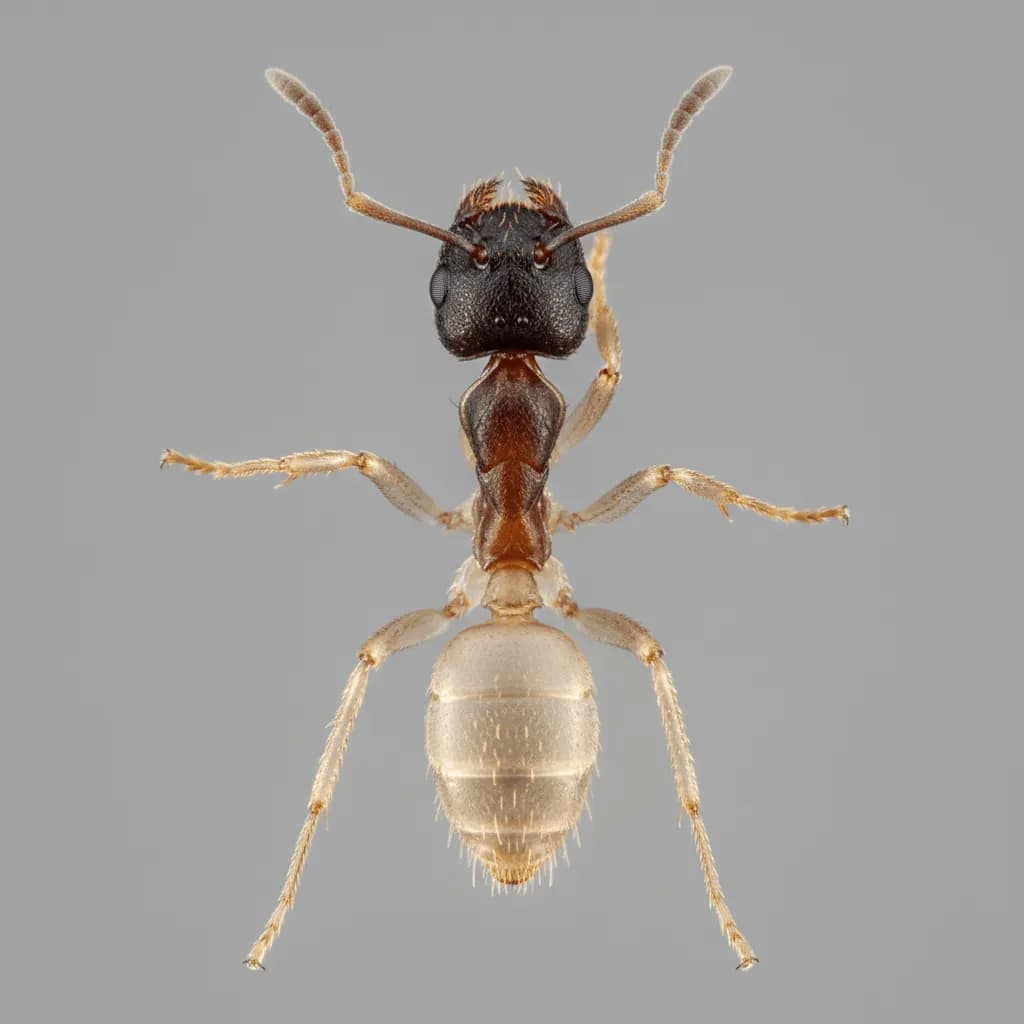
Ghost Ant
Tapinoma melanocephalum
Also known as: Black-Headed Ant
The Ghost Ant is a tropical species that infests heated buildings in the southern United States and has become established indoors throughout the country. Its translucent legs and gaster make it extremely difficult to see on white countertops. Like Pharaoh ants, ghost ant colonies have multiple queens and bud readily when disturbed by repellent chemicals.
Identification
Size
1.3-1.5 mm
Color
Dark brown head and thorax with a pale, almost translucent abdomen and legs
Key Trait
The pale, nearly invisible abdomen makes workers look like tiny ghosts moving across light-colored surfaces.
Behavior & Habitat
Workers follow erratic trails and are strongly attracted to sweet liquids. Colonies bud aggressively when exposed to repellent sprays. They are active year-round in climate-controlled buildings.
Habitat: Outdoors in leaf litter, under bark, and at the bases of plants. Indoors they nest in wall voids, behind cabinetry, between books, inside potted plants, and in any warm, humid void near food and water.
Diet: Strongly prefers sweets and honeydew; also feeds on grease and dead insects.
Signs of Infestation
- Nearly invisible tiny ants on white countertops, visible mainly by their dark heads
- Trails near sinks, sugar bowls, and fruit bowls
- Ants in potted plant soil and saucers
Risks & Damage
Workers contaminate food surfaces and stored sweets, often going unnoticed due to their near-invisibility.
Budding behavior makes ghost ant colonies extremely persistent and frustrating for homeowners.
Prevention Tips
- 1.Never spray ghost ants - use bait-only strategies
- 2.Clean up sugary spills and store fruit in the refrigerator
- 3.Check potted plants for nesting before bringing them indoors
- 4.Seal tiny gaps around plumbing and electrical penetrations
- 5.Reduce humidity in bathrooms and kitchens with exhaust fans
Why DIY Treatment Often Falls Short
Ghost ants bud when exposed to repellent chemicals, just like Pharaoh ants. Over-the-counter sprays scatter the colony into multiple new nests. Their tiny size makes nest location extremely difficult without professional training.
Professional Treatment
Control relies on non-repellent liquid baits and gel baits placed along active trails and near nesting sites. Professionals avoid all repellent products. Monitoring over several weeks is required to confirm that all queens have been eliminated.
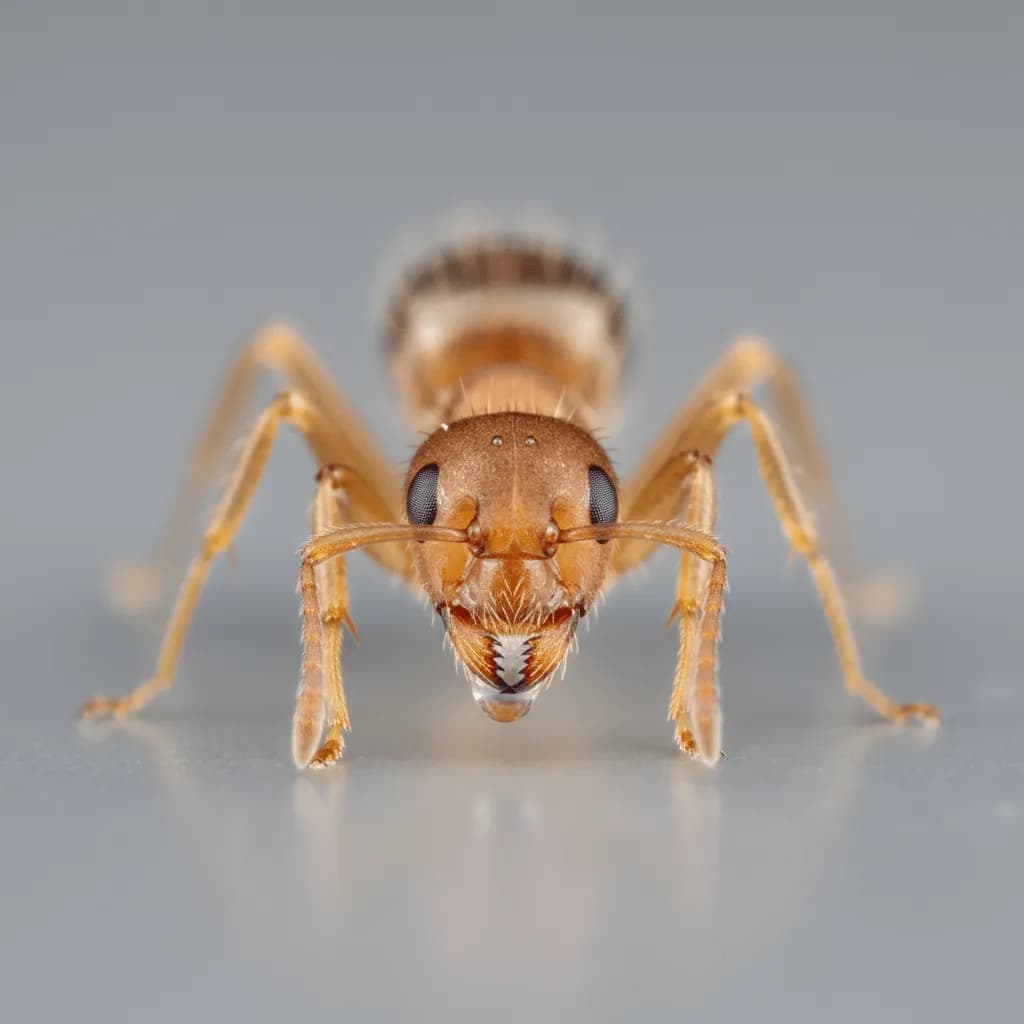
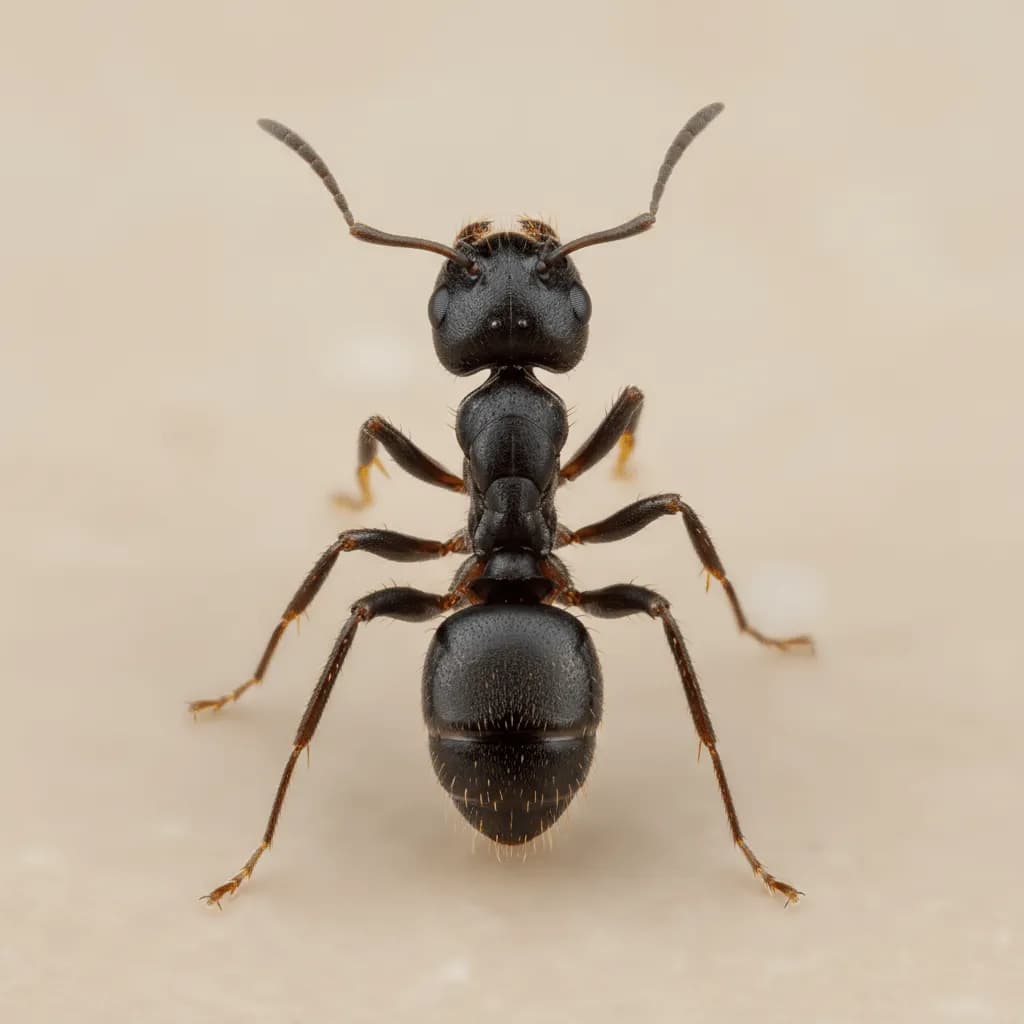
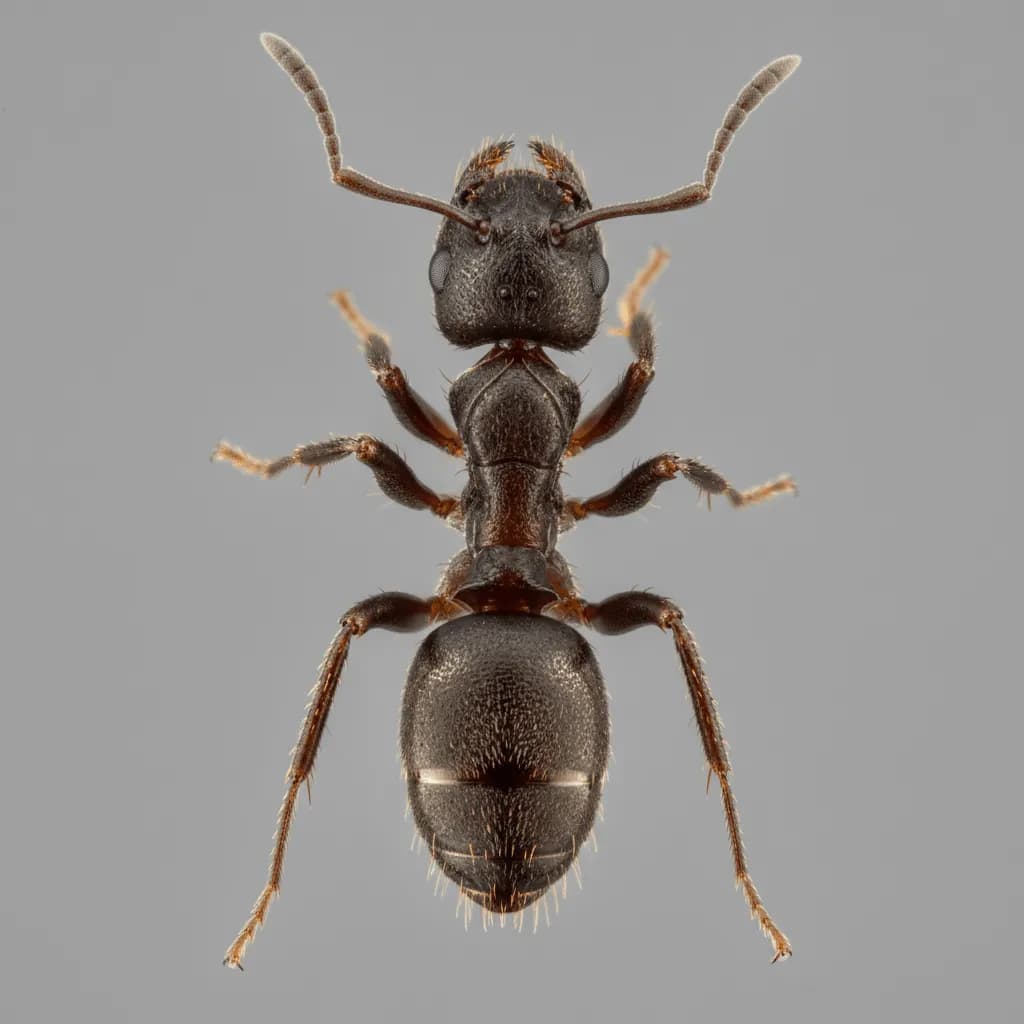
Frequently Asked Questions
Why can I barely see ghost ants?
Are ghost ants related to Pharaoh ants?
Can ghost ants survive outdoors in northern states?
Need Help With Ghost ant?
If you're seeing signs of ghost ant in or around your home, professional treatment is the fastest way to stop the problem. Lotus Pest Control offers free inspections to identify the issue and recommend the right solution.
At a Glance
- Category
- Ants
- Scientific Name
- Tapinoma melanocephalum
- Size
- 1.3-1.5 mm
- Color
- Dark brown head and thorax with a pale, almost translucent abdomen and legs
- Key Trait
- The pale, nearly invisible abdomen makes workers look like tiny ghosts moving across light-colored surfaces.
- Regions
- Southeast, South Central, Southwest
- Threat Level
- Low
- Risk Types
- foodnuisance
- Seasonal Activity
- MarAprMayJunJulAugSepOctNovDecJanFebnonelowmoderatehighpeak