
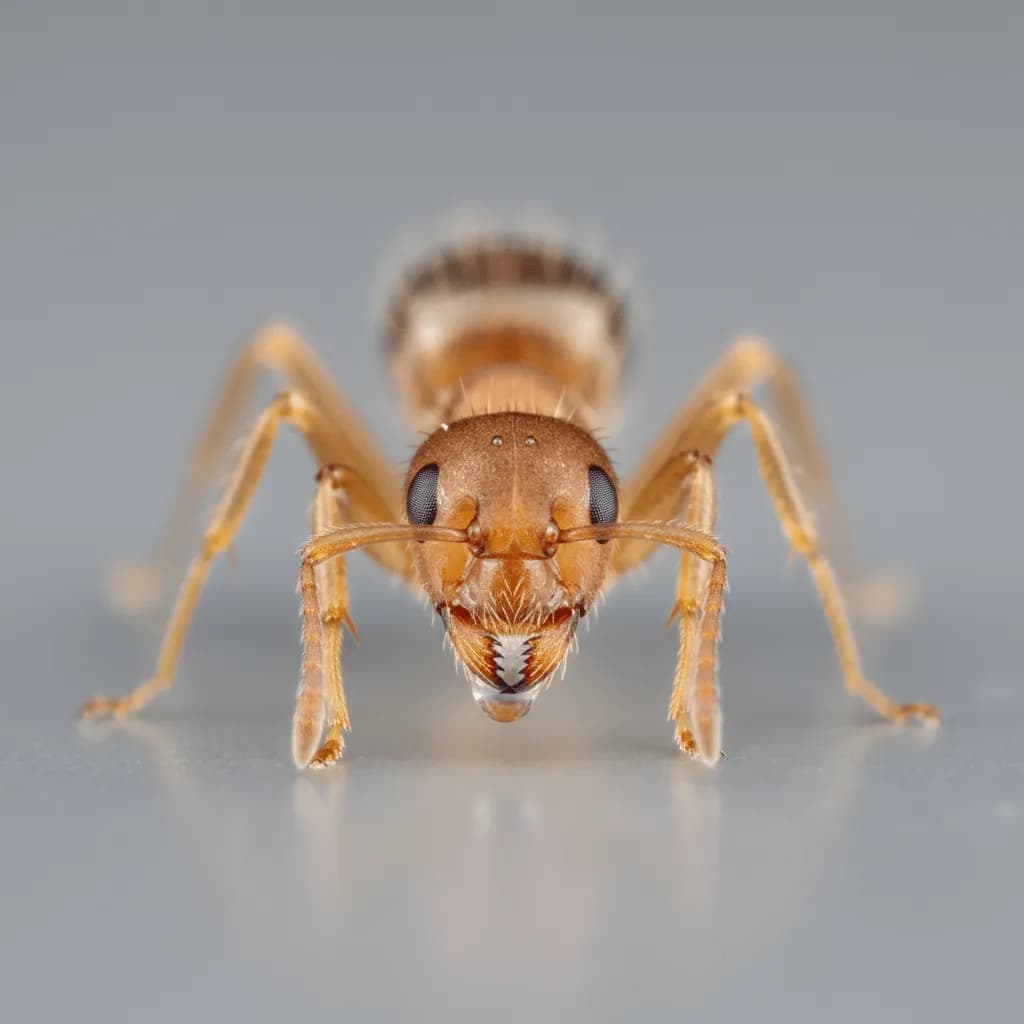
Pharaoh Ant
Monomorium pharaonis
Also known as: Sugar Ant
The Pharaoh Ant is a tiny tropical species that thrives in heated buildings throughout the United States. It is one of the most difficult household ants to control because colonies have multiple queens and readily bud into new colonies when stressed. It is a serious pest in hospitals, where it can transmit pathogens.
Identification
Size
1.5-2 mm
Color
Pale yellow to light reddish-brown with a darker abdomen tip
Key Trait
Extremely small size and pale coloring; colonies bud aggressively when disturbed.
Behavior & Habitat
Workers follow complex trail networks through wall voids, plumbing chases, and electrical conduits. Colonies bud rapidly when exposed to repellent chemicals, spreading the infestation to new areas. They are active year-round indoors.
Habitat: Strictly indoors in temperate regions; nests in warm, humid voids near food and water such as wall cavities behind dishwashers, inside electrical outlets, and between sheets of paper or linen. Common in hospitals, restaurants, grocery stores, and apartments.
Diet: Strongly prefers sweets, fats, and proteins; will feed on virtually any organic material including toothpaste, shoe polish, and IV solutions in hospitals.
Signs of Infestation
- Tiny pale ants on countertops, in cabinets, or near sinks
- Trails of minute ants inside electrical outlet covers
- Ants found in sterile areas of hospitals or food processing facilities
- Multiple trailing lines appearing in different rooms simultaneously
Risks & Damage
In hospitals, Pharaoh ants can mechanically transmit Salmonella, Staphylococcus, and Streptococcus by walking over wounds and sterile supplies.
Contaminates stored food and food preparation surfaces in homes and commercial kitchens.
Prevention Tips
- 1.Never spray Pharaoh ants with repellent products - this causes colony budding
- 2.Store all food in sealed containers and clean up crumbs immediately
- 3.Seal cracks around plumbing penetrations and electrical boxes
- 4.Coordinate treatment across all units in multi-unit buildings
- 5.Reduce moisture by fixing leaks and improving ventilation
Why DIY Treatment Often Falls Short
Pharaoh ants are notoriously resistant to DIY control. Repellent sprays cause the colony to bud, turning one infestation into a dozen. Over-the-counter baits often lack the slow-acting chemistry needed to reach all queens across a multi-queen supercolony.
Professional Treatment
Professional control relies exclusively on slow-acting bait systems placed along active trails and near nest sites. Technicians avoid all repellent products. In multi-unit buildings, coordinated building-wide treatment is essential. Several weeks of baiting with follow-up monitoring are typically required.
Related Pests
Frequently Asked Questions
Why are Pharaoh ants so hard to get rid of?
Can Pharaoh ants spread disease?
Why do I see Pharaoh ants near my bathroom but not the kitchen?
Need Help With Pharaoh ant?
If you're seeing signs of pharaoh ant in or around your home, professional treatment is the fastest way to stop the problem. Lotus Pest Control offers free inspections to identify the issue and recommend the right solution.
At a Glance
- Category
- Ants
- Scientific Name
- Monomorium pharaonis
- Size
- 1.5-2 mm
- Color
- Pale yellow to light reddish-brown with a darker abdomen tip
- Key Trait
- Extremely small size and pale coloring; colonies bud aggressively when disturbed.
- Regions
- Southeast, Northeast, Midwest, South Central, Southwest
- Threat Level
- High
- Risk Types
- healthfood
- Seasonal Activity
- MarAprMayJunJulAugSepOctNovDecJanFebnonelowmoderatehighpeak