
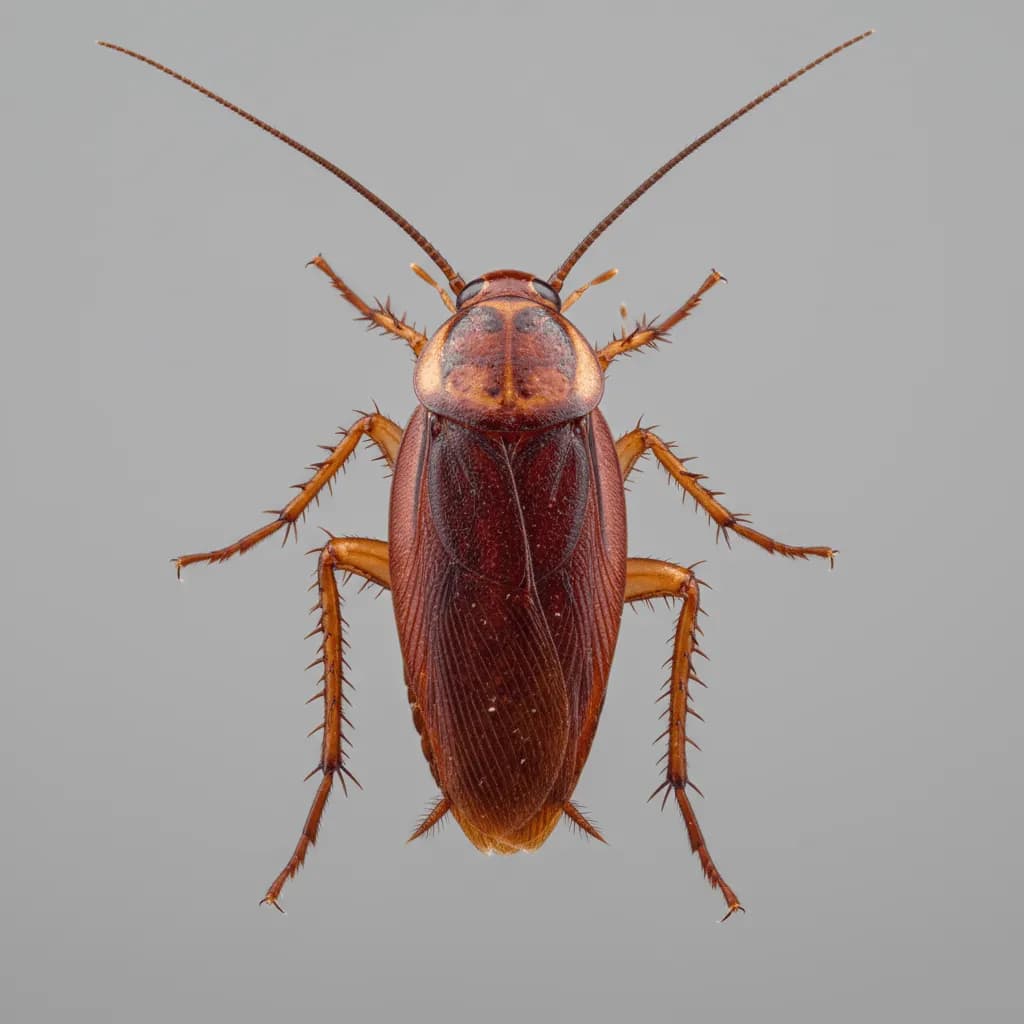
American Cockroach
Periplaneta americana
Also known as: Palmetto Bug, Water Bug, Flying Cockroach
The American Cockroach is the largest cockroach species commonly found in U.S. homes. Despite its name it is native to Africa and was introduced to North America in the 1600s. Adults can live for over two years. It prefers warm, moist environments and is often found in sewer systems, basements, and commercial kitchens.
Identification
Size
35-53 mm
Color
Reddish-brown with a yellowish figure-eight pattern on the pronotum
Key Trait
Largest common cockroach in homes; strong flier in warm weather; yellowish markings behind the head.
Behavior & Habitat
Adults can fly short distances in warm weather, often startling homeowners. They are nocturnal and prefer dark, damp areas. Large populations develop in sewer systems and migrate into buildings through drain pipes and utility openings.
Habitat: Sewer systems, basements, crawl spaces, steam tunnels, and boiler rooms. Outdoors in mulch beds, tree holes, and under porches. They enter structures through drains, foundation cracks, and garage doors.
Diet: Decaying organic matter, fermenting food, book bindings, wallpaper paste, leather, and hair.
Signs of Infestation
- Large reddish-brown roaches in basements, bathrooms, or kitchens at night
- Dark, cylindrical droppings with blunt ends in basements and crawl spaces
- Musty odor in heavily infested areas
- Brown egg cases approximately 8 mm long glued to surfaces near food sources
Risks & Damage
Spreads bacteria such as Salmonella and E. coli from sewers to food surfaces; allergens contribute to asthma.
Contaminates food storage areas in restaurants, grocery stores, and home pantries.
Prevention Tips
- 1.Install mesh screens over floor drains and sewer vents
- 2.Seal gaps around utility pipes entering the foundation
- 3.Reduce moisture in basements and crawl spaces with dehumidifiers
- 4.Remove leaf litter and mulch from the immediate foundation perimeter
- 5.Fix leaky pipes and eliminate standing water in basements
Why DIY Treatment Often Falls Short
American cockroaches often enter from the municipal sewer system, making the source population impossible for homeowners to address. Surface sprays kill individual roaches but do not prevent new arrivals from drains and utility penetrations.
Professional Treatment
Technicians apply targeted crack-and-crevice treatments in basements and crawl spaces, bait stations in wall voids and behind appliances, and insecticidal dust in sewer access points. Exterior perimeter treatments and drain treatments reduce migrating populations. Exclusion work seals entry points.
Related Pests
Frequently Asked Questions
Why do American cockroaches come out of drains?
Can American cockroaches fly?
Are palmetto bugs and American cockroaches the same?
Need Help With American cockroach?
If you're seeing signs of american cockroach in or around your home, professional treatment is the fastest way to stop the problem. Lotus Pest Control offers free inspections to identify the issue and recommend the right solution.
At a Glance
- Category
- Cockroaches
- Scientific Name
- Periplaneta americana
- Size
- 35-53 mm
- Color
- Reddish-brown with a yellowish figure-eight pattern on the pronotum
- Key Trait
- Largest common cockroach in homes; strong flier in warm weather; yellowish markings behind the head.
- Regions
- Southeast, South Central, Northeast, Midwest, Southwest
- Threat Level
- Moderate
- Risk Types
- healthfood
- Seasonal Activity
- MarAprMayJunJulAugSepOctNovDecJanFebnonelowmoderatehighpeak