
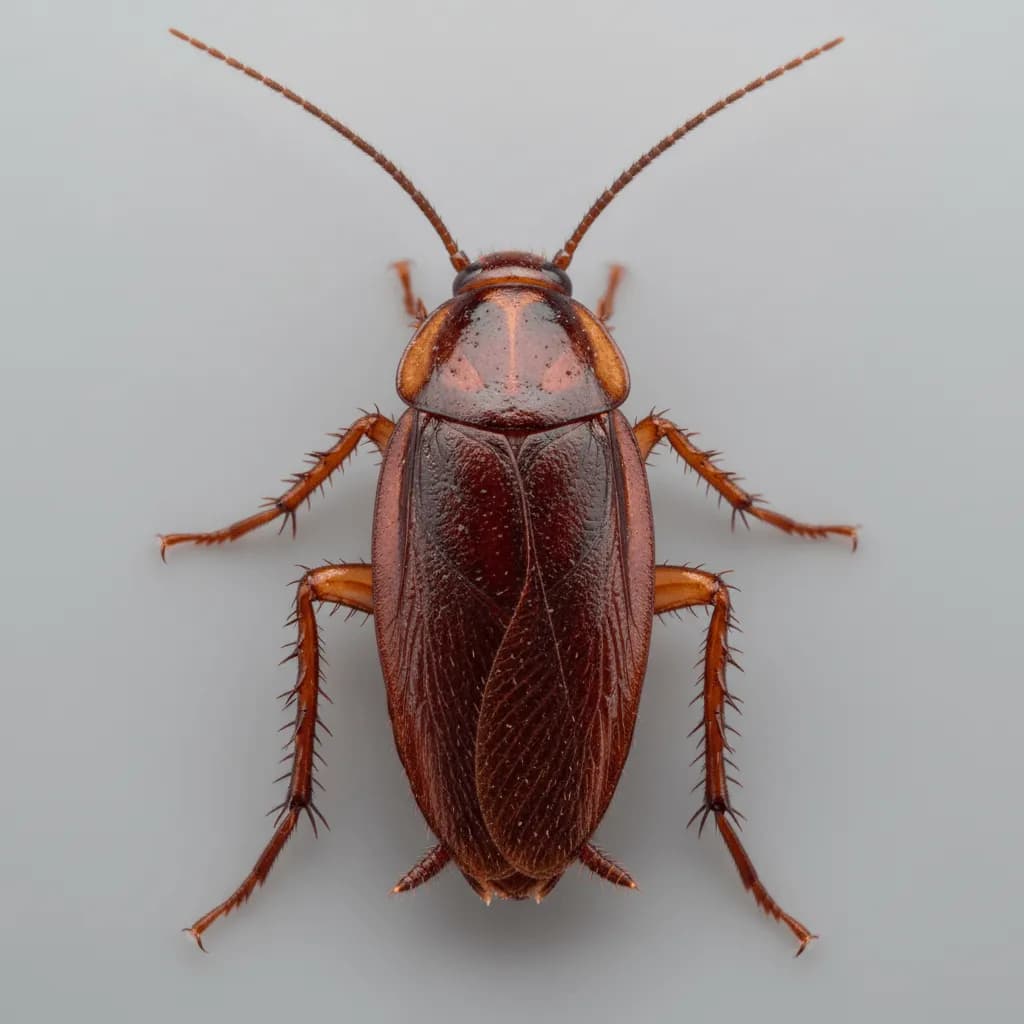
Smokybrown Cockroach
Periplaneta fuliginosa
Also known as: Smoky Brown Roach
The Smokybrown Cockroach is a large peridomestic species common in the southeastern United States. It is an excellent flier and is strongly attracted to exterior lighting. It primarily lives outdoors in tree holes, gutters, and attics but frequently invades homes through attic vents, soffits, and open doors.
Identification
Size
30-38 mm
Color
Uniform dark mahogany to black without lighter markings
Key Trait
Uniform dark color with no pale markings; strong flier attracted to lights at night.
Behavior & Habitat
Strong flier that is drawn to porch lights and illuminated windows at night. Highly dependent on moisture and will dehydrate quickly in dry conditions. It is more arboreal than other large cockroaches, frequently inhabiting tree canopy hollows.
Habitat: Tree holes, palm crowns, gutters, soffits, attics, and planter boxes. Enters homes through attic vents, weep holes, and gaps around doors and windows. Requires high humidity.
Diet: Decaying plant matter, dead insects, and any accessible human food.
Signs of Infestation
- Large dark cockroaches attracted to porch lights at night
- Roaches found in gutters, attics, and soffit areas
- Droppings in attic insulation and behind fascia boards
- Egg cases in sheltered outdoor areas near the roofline
Risks & Damage
Carries allergens and bacteria that can contaminate living spaces when they enter from outdoor harborage.
Their large size and ability to fly indoors causes significant alarm.
Prevention Tips
- 1.Replace white exterior lights with amber or sodium vapor bulbs to reduce attraction
- 2.Screen attic vents, soffit gaps, and weep holes with fine mesh
- 3.Keep gutters clean and free-flowing to eliminate moisture harborage
- 4.Trim tree branches that overhang the roof
- 5.Seal gaps around doors and windows with weatherstripping
Why DIY Treatment Often Falls Short
Smokybrown cockroaches breed outdoors and enter homes from attic and roof-level entry points that are difficult for homeowners to access and treat. Ground-level sprays miss the primary harborage areas entirely.
Professional Treatment
Technicians treat attic spaces, soffit voids, and gutter areas with residual insecticide and granular bait. Exterior lighting modifications and exclusion work at the roofline are recommended. Perimeter treatments around the foundation create a secondary barrier.
Related Pests
Frequently Asked Questions
Why do smokybrown cockroaches fly into my house at night?
Do smokybrown cockroaches infest indoors?
How do I tell smokybrown cockroaches from American cockroaches?
Need Help With Smokybrown cockroach?
If you're seeing signs of smokybrown cockroach in or around your home, professional treatment is the fastest way to stop the problem. Lotus Pest Control offers free inspections to identify the issue and recommend the right solution.
At a Glance
- Category
- Cockroaches
- Scientific Name
- Periplaneta fuliginosa
- Size
- 30-38 mm
- Color
- Uniform dark mahogany to black without lighter markings
- Key Trait
- Uniform dark color with no pale markings; strong flier attracted to lights at night.
- Regions
- Southeast, South Central, Mid Atlantic
- Threat Level
- Low
- Risk Types
- healthnuisance
- Seasonal Activity
- MarAprMayJunJulAugSepOctNovDecJanFebnonelowmoderatehighpeak