
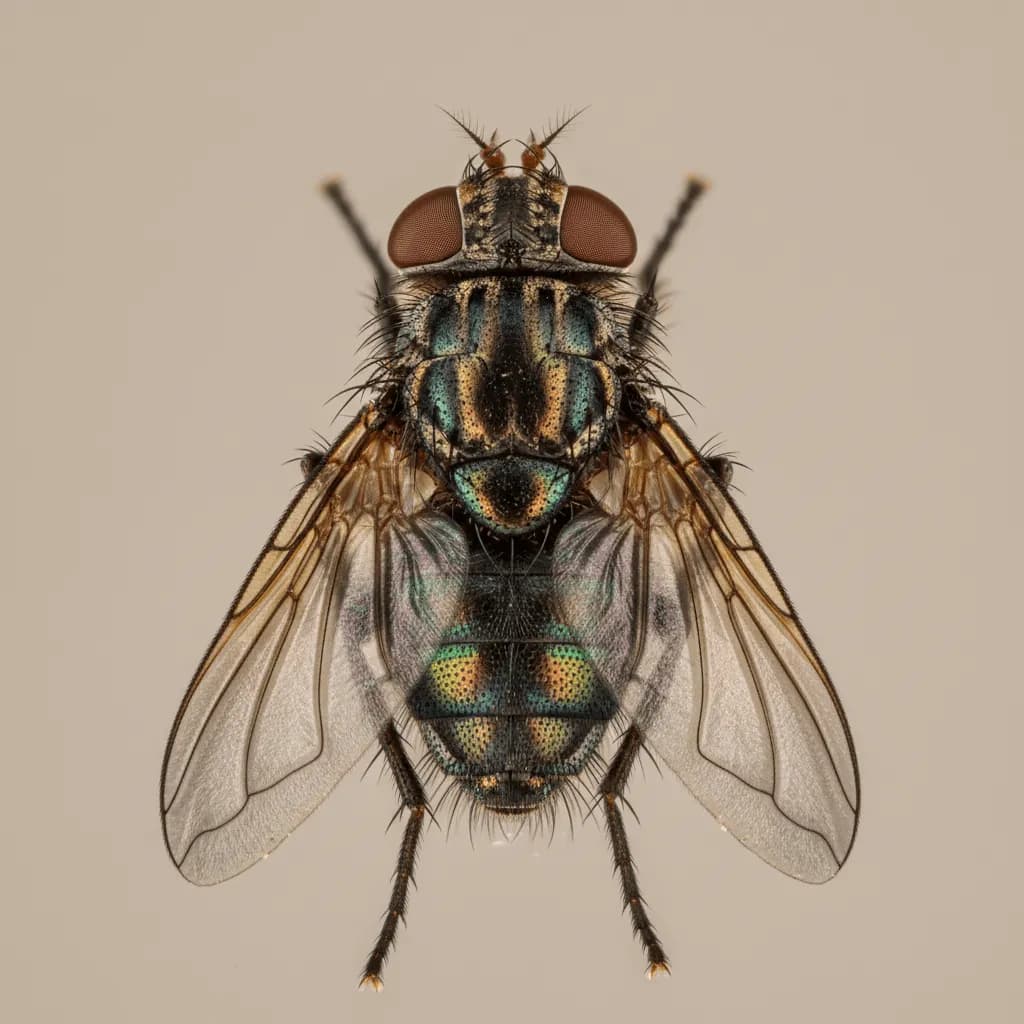
Cluster Fly
Pollenia rudis
Also known as: Attic Fly
Cluster Flies are parasitoids of earthworms that become building pests when large numbers enter structures to overwinter. On warm winter and spring days, they emerge from wall voids and attics in alarming numbers, buzzing sluggishly against windows. They do not breed indoors or feed on human food.
Identification
Size
8-10 mm
Color
Dark gray with golden hairs on the thorax and overlapping wings at rest
Key Trait
Slightly larger and slower than house flies; golden thoracic hairs; overwinters in large clusters in attics and wall voids.
Behavior & Habitat
In fall, adults seek sheltered overwintering sites in attics, wall voids, and behind siding. On warm days during winter and spring, they become active and emerge inside the home, congregating on sunny windows. They are sluggish and do not bite.
Habitat: Fields and lawns (where they parasitize earthworms) in summer; attics, wall voids, and soffits in winter. Prefer south- and west-facing walls that receive solar heating.
Diet: Larvae parasitize earthworms; adults feed on flower nectar and fruit.
Signs of Infestation
- Dozens to hundreds of slow, buzzing flies on windows on warm winter days
- Fly clusters in attic spaces and behind curtains
- Flies appearing from seemingly nowhere in late winter and spring
Risks & Damage
Large numbers emerging indoors on warm days are alarming and difficult to manage.
Prevention Tips
- 1.Seal gaps around windows, soffits, and under siding before fall
- 2.Screen attic vents with fine mesh
- 3.Caulk around window and door frames
- 4.Apply residual insecticide to sun-exposed walls in early fall before flies enter
Why DIY Treatment Often Falls Short
Once cluster flies are inside the wall voids, there is little that can be done until they emerge. Prevention must happen in early fall before they enter. Killing emerged flies with swatters or vacuum is the only option once they are inside.
Professional Treatment
Professionals apply residual treatments to sun-exposed exterior walls in September before flies enter. Exclusion work seals common entry points. Indoor light traps and vacuuming manage emerged flies during winter.
Related Pests
Frequently Asked Questions
Why are there suddenly hundreds of flies in my attic?
Are cluster flies a sign of something dead in the wall?
When should I treat for cluster flies?
Need Help With Cluster fly?
If you're seeing signs of cluster fly in or around your home, professional treatment is the fastest way to stop the problem. Lotus Pest Control offers free inspections to identify the issue and recommend the right solution.
At a Glance
- Category
- Flies
- Scientific Name
- Pollenia rudis
- Size
- 8-10 mm
- Color
- Dark gray with golden hairs on the thorax and overlapping wings at rest
- Key Trait
- Slightly larger and slower than house flies; golden thoracic hairs; overwinters in large clusters in attics and wall voids.
- Regions
- Northeast, Midwest, Pacific Northwest
- Threat Level
- Very Low
- Risk Types
- nuisance
- Seasonal Activity
- MarAprMayJunJulAugSepOctNovDecJanFebnonelowmoderatehighpeak