
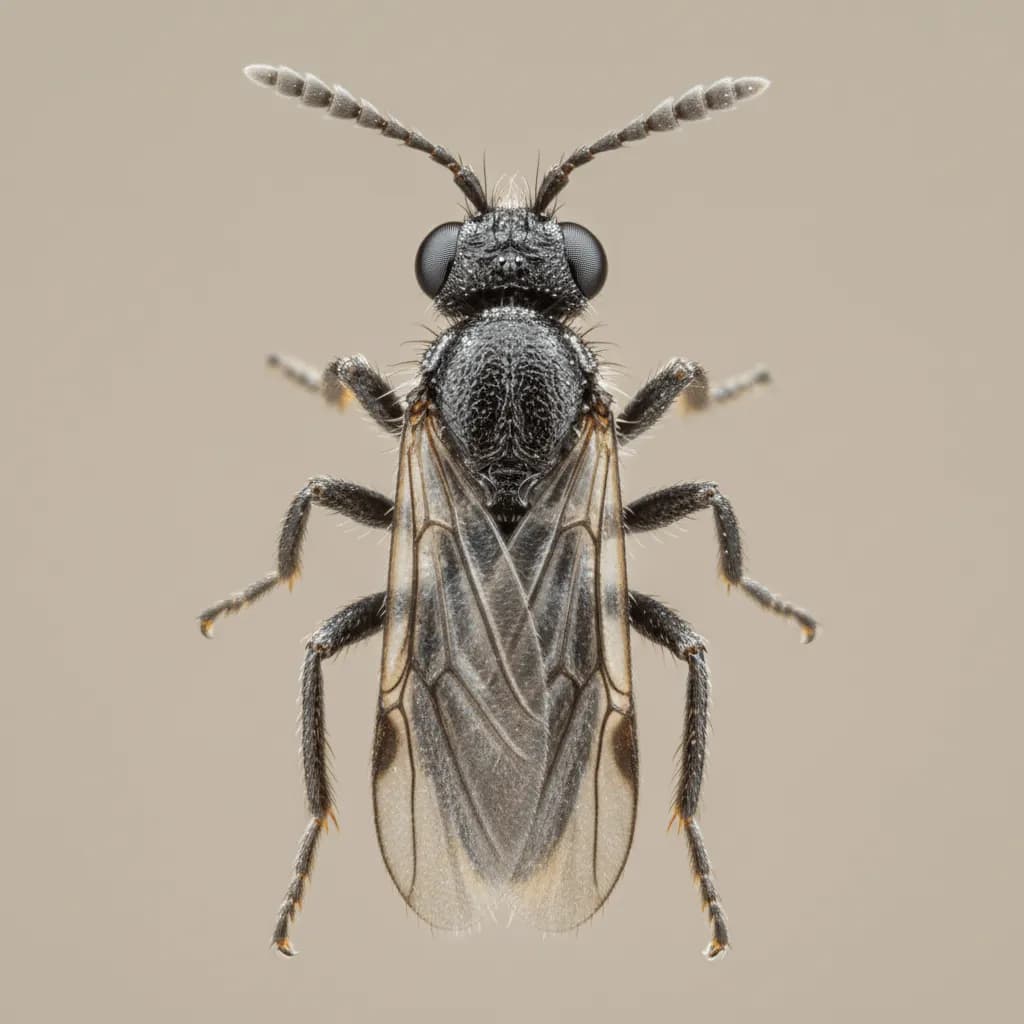
Buffalo Gnat
Simulium spp.
Also known as: Black Fly
Buffalo Gnats (Black Flies) are small biting flies that breed in flowing water. They emerge in massive swarms in spring near rivers and streams, delivering painful bites that cause significant welts and swelling. In some years, swarms are severe enough to cause livestock fatalities.
Identification
Size
2-5 mm
Color
Black to gray with a distinctive humpbacked thorax
Key Trait
Humpbacked profile; breeds in flowing water; bites cause significant skin reactions; swarms in spring near rivers.
Behavior & Habitat
Females bite to obtain blood for egg development. Swarms in spring and early summer near flowing water. Most active during daytime, especially morning and late afternoon. Bites cause disproportionately large, itchy welts.
Habitat: Near rivers, streams, and any flowing water where larvae develop attached to rocks and vegetation. Adults swarm over wide areas.
Diet: Females feed on blood; males feed on nectar. Larvae filter-feed in flowing water.
Signs of Infestation
- Clouds of tiny black flies swarming near rivers in spring
- Painful bites with large welts and significant swelling
Risks & Damage
Bites cause painful welts, significant swelling, and can trigger severe allergic reactions. Massive swarms can fatally stress livestock.
Prevention Tips
- 1.Wear light-colored clothing and head nets during outbreaks
- 2.Use DEET or permethrin-based repellents
- 3.Avoid outdoor activities near flowing water during peak spring emergence
Why DIY Treatment Often Falls Short
Buffalo gnats breed in rivers and streams beyond any homeowner's ability to treat. Personal protection is the only practical individual measure.
Professional Treatment
Control is a community or regional effort using Bti (Bacillus thuringiensis israelensis) applied to flowing water by public health agencies. Residential barrier sprays can provide temporary relief during severe outbreaks.
Frequently Asked Questions
Why are buffalo gnat bites so bad?
When is buffalo gnat season?
Can they kill livestock?
Need Help With Buffalo gnat?
If you're seeing signs of buffalo gnat in or around your home, professional treatment is the fastest way to stop the problem. Lotus Pest Control offers free inspections to identify the issue and recommend the right solution.
At a Glance
- Category
- Flies
- Scientific Name
- Simulium spp.
- Size
- 2-5 mm
- Color
- Black to gray with a distinctive humpbacked thorax
- Key Trait
- Humpbacked profile; breeds in flowing water; bites cause significant skin reactions; swarms in spring near rivers.
- Regions
- Midwest, South Central, Northeast
- Threat Level
- Moderate
- Risk Types
- health
- Seasonal Activity
- MarAprMayJunJulAugSepOctNovDecJanFebnonelowmoderatehighpeak