
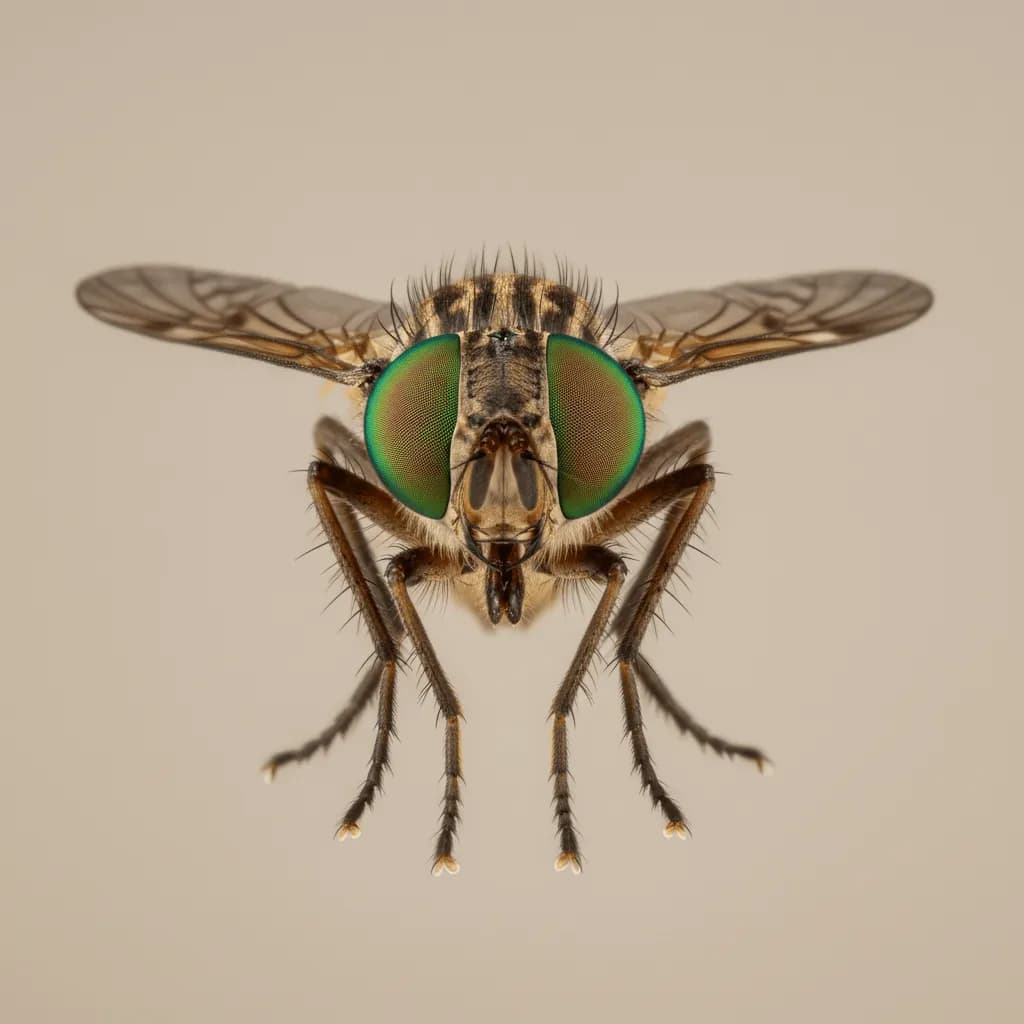
Deer Fly
Chrysops spp.
Deer Flies are smaller relatives of horse flies known for circling a person's head before landing to bite. They are common near wooded streams and marshes throughout the eastern United States. Their persistent behavior and painful bites make them a significant outdoor nuisance.
Identification
Size
8-12 mm
Color
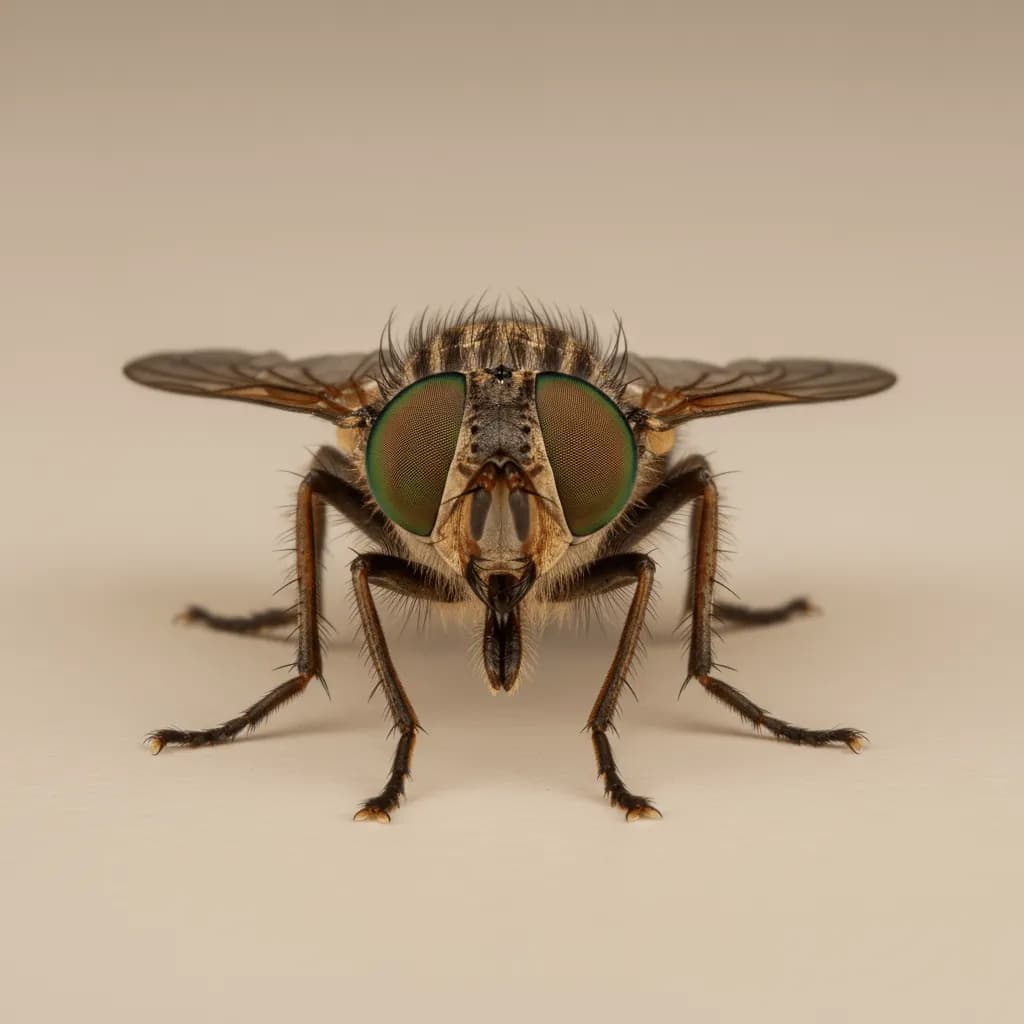
Yellow to brown with patterned wings and bright green or gold banded eyes
Key Trait
Smaller than horse flies; patterned wings; bright banded eyes; circles the head persistently before biting.
Behavior & Habitat
Females circle the head persistently before landing and biting. Attracted to movement, dark colors, and carbon dioxide. Most active on humid, overcast days.
Habitat: Wooded areas near streams, marshes, and wetlands. Common along hiking trails and in rural settings.
Diet: Females feed on blood; males feed on pollen.
Signs of Infestation
- Flies persistently circling the head in wooded areas near water
- Painful bites on the head, neck, and shoulders
Risks & Damage
Painful biting; rare vector of tularemia (deer fly fever).
Prevention Tips
- 1.Wear light-colored hats and apply repellent to the head area
- 2.Commercial sticky patches applied to hats can catch circling deer flies
- 3.Avoid trail activity during peak hours on humid days
Why DIY Treatment Often Falls Short
Like horse flies, deer flies breed in wetlands beyond homeowner control. Personal protection is the primary defense.
Professional Treatment
Deer fly traps and barrier sprays around outdoor living areas provide partial relief. There is no complete control method for deer flies.
Related Pests
Frequently Asked Questions
Why do deer flies circle my head?
Can deer flies transmit disease?
What is a deer fly patch?
Need Help With Deer fly?
If you're seeing signs of deer fly in or around your home, professional treatment is the fastest way to stop the problem. Lotus Pest Control offers free inspections to identify the issue and recommend the right solution.
At a Glance
- Category
- Flies
- Scientific Name
- Chrysops spp.
- Size
- 8-12 mm
- Color
- Yellow to brown with patterned wings and bright green or gold banded eyes
- Key Trait
- Smaller than horse flies; patterned wings; bright banded eyes; circles the head persistently before biting.
- Regions
- Northeast, Southeast, Midwest
- Threat Level
- Low
- Risk Types
- health
- Seasonal Activity
- MarAprMayJunJulAugSepOctNovDecJanFebnonelowmoderatehighpeak