
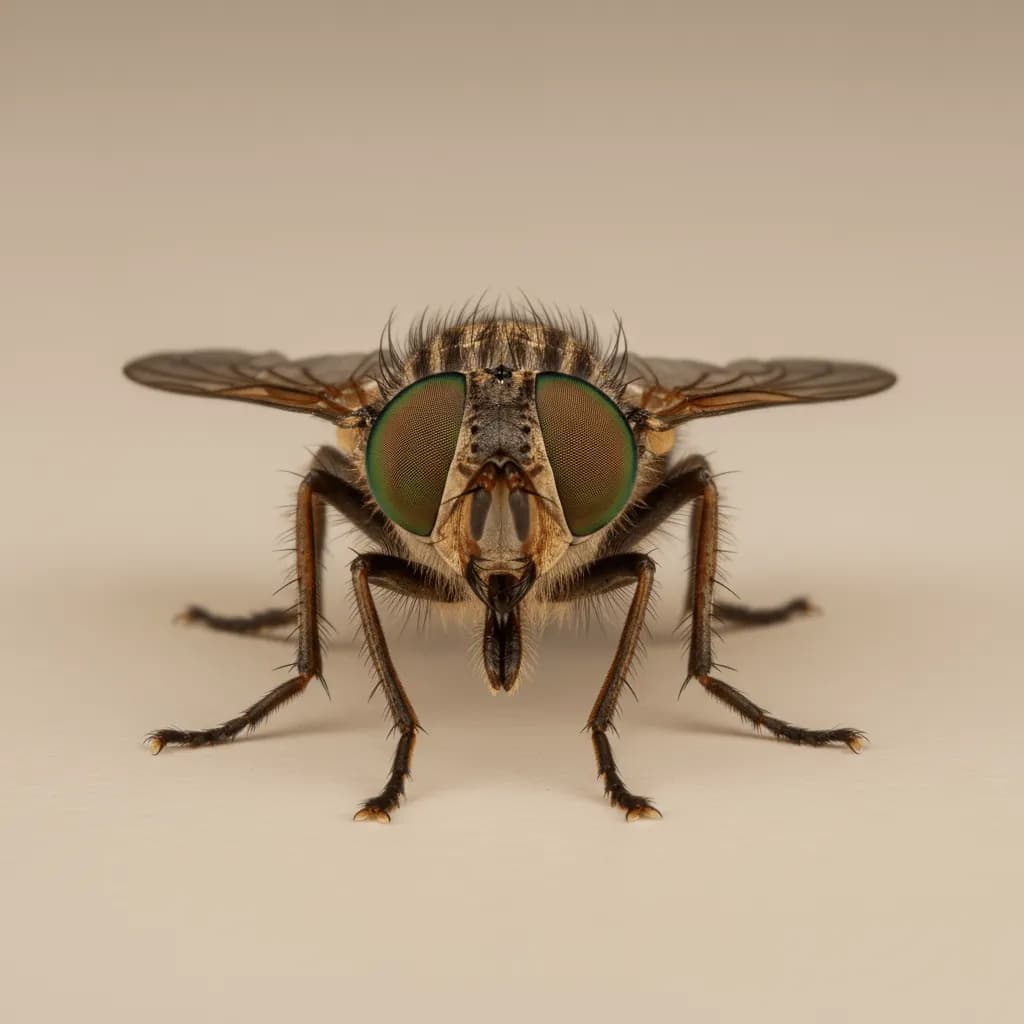
Horse Fly
Tabanus spp.
Horse Flies are large, powerful biting flies found near water and livestock. Females inflict painful bites that draw blood, using blade-like mouthparts to slash the skin. They are persistent and difficult to deter once they target a host.
Identification
Size
10-25 mm
Color
Dark brown to black or gray with large iridescent compound eyes
Key Trait
Large size; powerful, painful bite that draws blood; large iridescent eyes.
Behavior & Habitat
Females are persistent biters that pursue targets over long distances. Most active on sunny, calm days. Attracted to dark colors, movement, and carbon dioxide. Males do not bite.
Habitat: Near marshes, ponds, streams, and livestock areas. Most common in rural and semi-rural settings.
Diet: Females feed on blood from large mammals; males feed on nectar and pollen.
Signs of Infestation
- Painful bites while outdoors near water or livestock
- Large dark flies buzzing persistently around the head and body
Risks & Damage
Painful bites that bleed freely; can transmit anthrax and tularemia in rare cases.
Bites torment horses, cattle, and dogs.
Prevention Tips
- 1.Wear light-colored clothing in horse fly areas
- 2.Use DEET-based repellents
- 3.Commercial horse fly traps can reduce populations around properties
Why DIY Treatment Often Falls Short
Horse flies breed in wetland areas that cannot be treated. Personal protection and trapping are the only individual options.
Professional Treatment
Horse fly traps (Manning-style) around the property perimeter can significantly reduce biting pressure. Barrier sprays provide limited relief since horse flies are strong fliers.
Related Pests
Frequently Asked Questions
Why do horse fly bites hurt so much?
Can horse flies spread disease?
How can I reduce horse flies on my property?
Need Help With Horse fly?
If you're seeing signs of horse fly in or around your home, professional treatment is the fastest way to stop the problem. Lotus Pest Control offers free inspections to identify the issue and recommend the right solution.
At a Glance
- Category
- Flies
- Scientific Name
- Tabanus spp.
- Size
- 10-25 mm
- Color
- Dark brown to black or gray with large iridescent compound eyes
- Key Trait
- Large size; powerful, painful bite that draws blood; large iridescent eyes.
- Regions
- Southeast, Northeast, Midwest, South Central
- Threat Level
- Low
- Risk Types
- healthpets
- Seasonal Activity
- MarAprMayJunJulAugSepOctNovDecJanFebnonelowmoderatehighpeak