
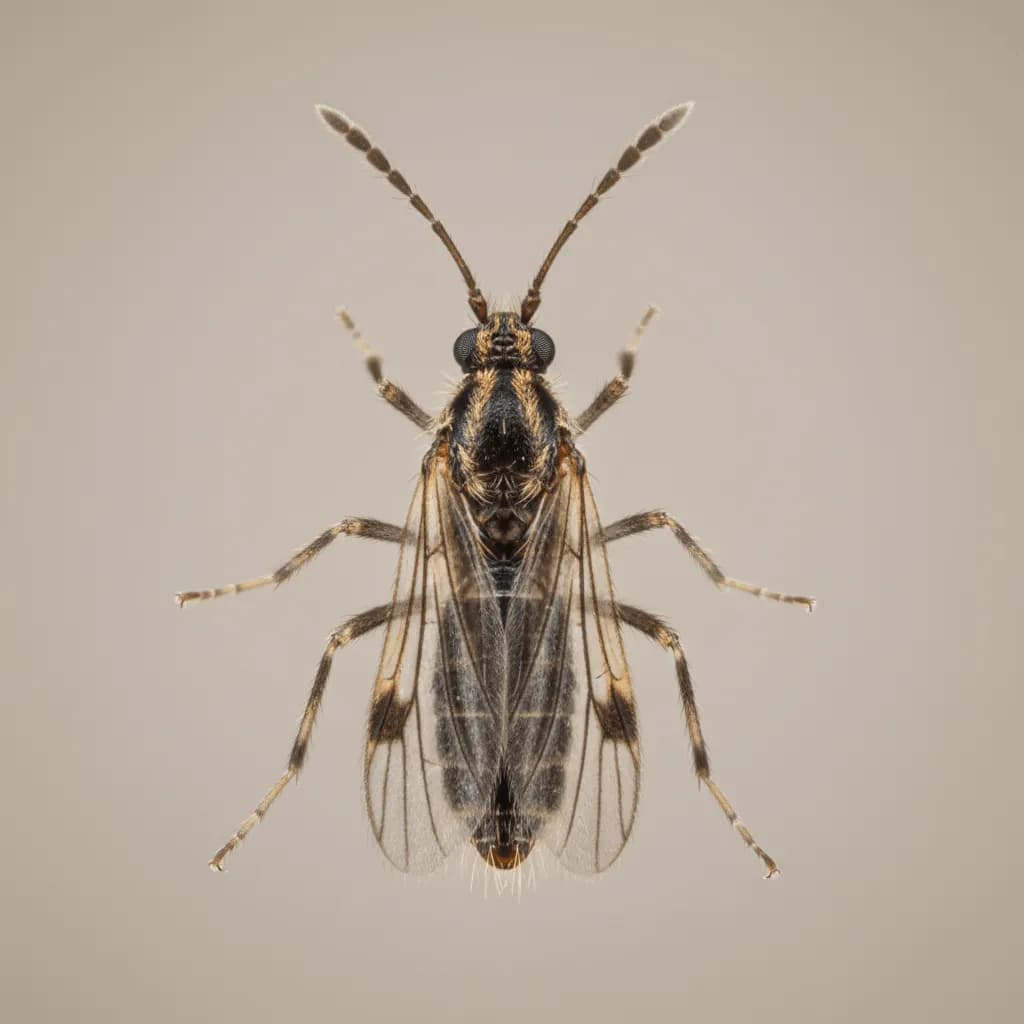
Fungus Gnat
Bradysia spp.
Fungus Gnats are tiny dark flies that breed in the moist soil of potted plants. Adults are a nuisance as they fly around windows and faces, but larvae can damage plant roots, especially in overwatered houseplants and greenhouse seedlings.
Identification
Size
2-5 mm
Color
Dark gray to black with long legs and clear wings
Key Trait
Tiny, delicate dark flies that hover around potted plants; larvae feed on fungi and plant roots in moist soil.
Behavior & Habitat
Adults are weak fliers that hover near soil surfaces and windows. Attracted to light. Larvae feed on soil fungi and plant roots. Populations thrive in overwatered plants.
Habitat: Potting soil of houseplants, greenhouses, and any moist organic growing medium.
Diet: Adults feed on little to nothing; larvae feed on fungi, decaying organic matter, and plant roots in soil.
Signs of Infestation
- Tiny dark flies hovering around potted plants and windows
- Wilting plants due to root damage from larvae
- Visible larvae (clear with dark heads) on the soil surface
Risks & Damage
Adults are annoying; larvae can damage plant roots in houseplants and greenhouses.
Prevention Tips
- 1.Allow soil to dry between waterings
- 2.Use well-draining potting mix
- 3.Place yellow sticky traps near plants to monitor and trap adults
- 4.Avoid using uncomposted organic matter as mulch for indoor plants
Why DIY Treatment Often Falls Short
Killing adults with traps does not address the larvae developing in soil. The soil moisture conditions must be corrected.
Professional Treatment
For greenhouse infestations, professionals apply soil drenches with Bacillus thuringiensis var. israelensis (Bti) and deploy biological control agents like predatory mites. For homeowners, adjusting watering practices is usually sufficient.
Related Pests
Frequently Asked Questions
Are fungus gnats harmful to my plants?
Why are there gnats around my houseplants?
Will sand on top of the soil help?
Need Help With Fungus gnat?
If you're seeing signs of fungus gnat in or around your home, professional treatment is the fastest way to stop the problem. Lotus Pest Control offers free inspections to identify the issue and recommend the right solution.
At a Glance
- Category
- Flies
- Scientific Name
- Bradysia spp.
- Size
- 2-5 mm
- Color
- Dark gray to black with long legs and clear wings
- Key Trait
- Tiny, delicate dark flies that hover around potted plants; larvae feed on fungi and plant roots in moist soil.
- Regions
- Northeast, Southeast, Midwest, Pacific Northwest, Southwest
- Threat Level
- Very Low
- Risk Types
- nuisance
- Seasonal Activity
- MarAprMayJunJulAugSepOctNovDecJanFebnonelowmoderatehighpeak