
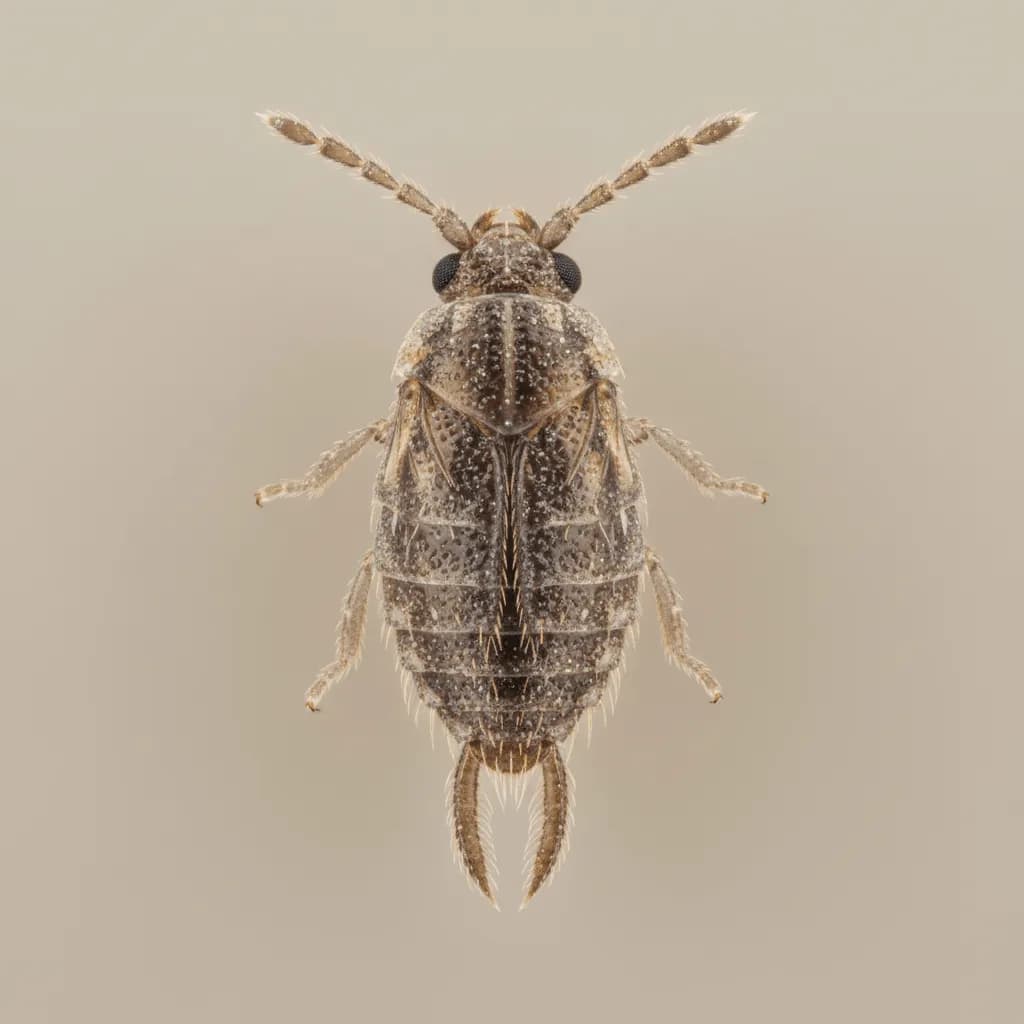
Springtail
Collembola spp.
Also known as: Snow Flea
Springtails are extremely small, primitive arthropods found worldwide in moist environments. They can appear in enormous numbers indoors when conditions are favorable, particularly in bathrooms, kitchens, and basements. Despite alarming numbers, they are completely harmless.
Identification
Size
0.5-3 mm
Color
Varies - white, gray, brown, or dark purple depending on species
Key Trait
Tiny, soft-bodied; possesses a forked tail-like appendage (furcula) tucked under the abdomen that allows it to jump when released.
Behavior & Habitat
Thrive in moisture-rich environments. Can appear in massive numbers seemingly overnight. Jump erratically when disturbed using the furcula. Cannot survive more than a few days in dry conditions.
Habitat: Soil, leaf litter, mulch, and decaying wood outdoors; bathrooms, kitchens, basements, potted plants, and any area with persistent moisture indoors.
Diet: Fungi, algae, decaying plant matter, and organic detritus in soil and moist substrates.
Signs of Infestation
- Tiny jumping insects in bathrooms, sinks, or near floor drains
- Masses of minute insects on the surface of potted plant soil
- Clusters around windows or in damp basements, especially after rain
Risks & Damage
Can appear in enormous numbers in moist indoor areas, causing alarm despite being harmless.
Prevention Tips
- 1.Fix plumbing leaks and eliminate standing water
- 2.Improve ventilation in bathrooms and basements to reduce humidity
- 3.Allow potted plant soil to dry between waterings
Why DIY Treatment Often Falls Short
Springtails reproduce explosively in moist conditions. Killing visible individuals does nothing if the moisture source remains. They can also enter from outdoor soil in nearly invisible numbers.
Professional Treatment
Professionals identify and address moisture sources, apply targeted treatments to breeding areas, and recommend environmental modifications to make conditions unsuitable for springtail reproduction.
Frequently Asked Questions
Are springtails harmful?
Why are there suddenly thousands?
Can springtails infest my body or hair?
Need Help With Springtail?
If you're seeing signs of springtail in or around your home, professional treatment is the fastest way to stop the problem. Lotus Pest Control offers free inspections to identify the issue and recommend the right solution.
At a Glance
- Category
- Occasional Invaders
- Scientific Name
- Collembola spp.
- Size
- 0.5-3 mm
- Color
- Varies - white, gray, brown, or dark purple depending on species
- Key Trait
- Tiny, soft-bodied; possesses a forked tail-like appendage (furcula) tucked under the abdomen that allows it to jump when released.
- Regions
- Southeast, Pacific Northwest, Northeast, Midwest
- Threat Level
- Very Low
- Risk Types
- nuisance
- Seasonal Activity
- MarAprMayJunJulAugSepOctNovDecJanFebnonelowmoderatehighpeak