
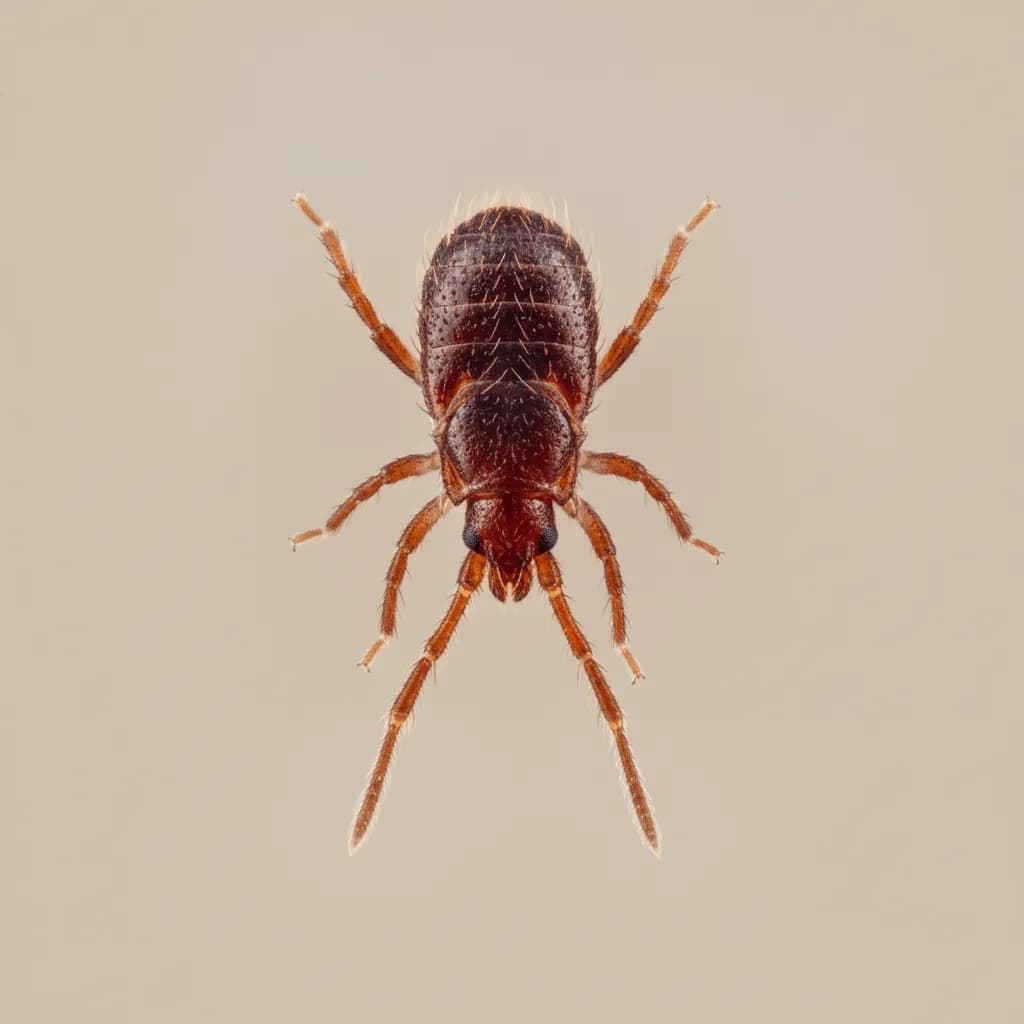
Clover Mite
Bryobia praetiosa
Also known as: Grass Mite
Clover mites are extremely small plant-feeding mites that invade homes in enormous numbers during spring and fall. They are completely harmless but leave bright red-orange stains when crushed on surfaces. Infestations typically occur on sun-warmed sides of buildings.
Identification
Size
0.75-0.85 mm
Color
Reddish-brown to olive-green; leaves a red-orange streak when crushed
Key Trait
Extremely tiny; front pair of legs is much longer than other legs and extends forward like antennae; leaves a characteristic red smear when crushed.
Behavior & Habitat
Migrates toward and up sun-warmed building surfaces in spring and fall. Enters through tiny cracks around windows and foundations. Moves in massive numbers. Does not bite or feed on household materials.
Habitat: Well-fertilized lawns, especially on south- and west-facing sides of buildings; window sills, walls, and curtains indoors.
Diet: Plant sap from clover, grasses, and other lawn plants. Does not feed on anything indoors.
Signs of Infestation
- Tiny reddish-brown mites crawling on window sills and walls in spring or fall
- Red-orange stains on curtains, walls, or surfaces where mites are crushed
- Masses of tiny mites on exterior walls, especially on sun-warmed sides
Risks & Damage
Invades in enormous numbers; stains surfaces bright red-orange when crushed.
Prevention Tips
- 1.Maintain an 18-24 inch bare gravel or mulch-free zone between lawn and foundation
- 2.Seal all cracks around windows, especially on south and west walls
- 3.Avoid over-fertilizing lawn areas adjacent to the foundation
Why DIY Treatment Often Falls Short
Clover mites are so tiny they enter through cracks invisible to the naked eye. Spraying indoors only kills visible mites while thousands more stream in from the lawn outside.
Professional Treatment
Professionals apply targeted miticide treatments to exterior foundation walls and surrounding turf, create vegetation-free zones around the foundation, and seal critical entry points.
Related Pests
Frequently Asked Questions
Do clover mites bite?
Why do they leave red stains?
Why are they only on one side of my house?
Need Help With Clover mite?
If you're seeing signs of clover mite in or around your home, professional treatment is the fastest way to stop the problem. Lotus Pest Control offers free inspections to identify the issue and recommend the right solution.
At a Glance
- Category
- Occasional Invaders
- Scientific Name
- Bryobia praetiosa
- Size
- 0.75-0.85 mm
- Color
- Reddish-brown to olive-green; leaves a red-orange streak when crushed
- Key Trait
- Extremely tiny; front pair of legs is much longer than other legs and extends forward like antennae; leaves a characteristic red smear when crushed.
- Regions
- Northeast, Midwest, Mid Atlantic, Great Plains
- Threat Level
- Very Low
- Risk Types
- nuisance
- Seasonal Activity
- MarAprMayJunJulAugSepOctNovDecJanFebnonelowmoderatehighpeak