
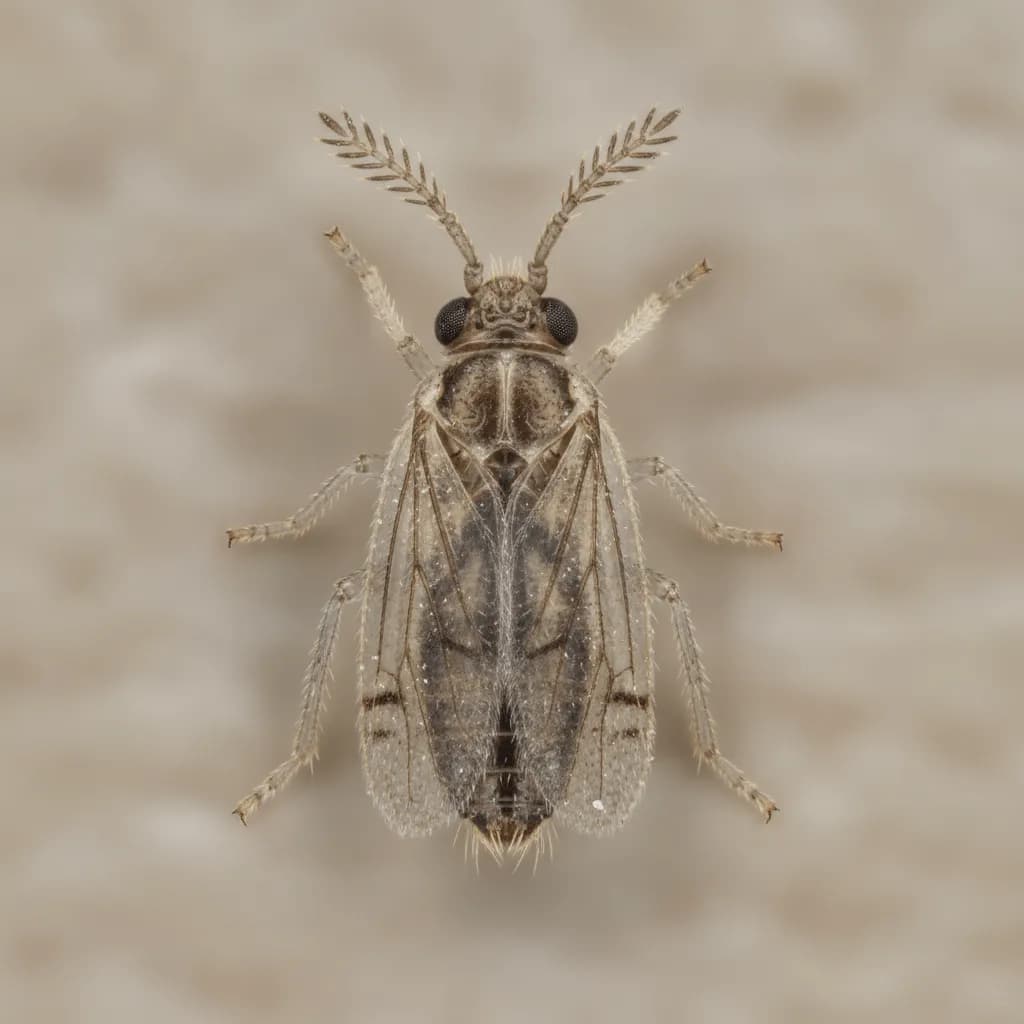
Psocid
Liposcelis spp.
Also known as: Booklouse, Barklouse, Paper Louse
Psocids are extremely small, moisture-dependent insects commonly found in damp indoor environments. They feed on mold, mildew, and starchy materials such as book bindings and wallpaper paste. Their presence is a reliable indicator of excessive indoor humidity.
Identification
Size
1-2 mm
Color
Translucent white to pale gray or light brown
Key Trait
Extremely tiny, soft-bodied, wingless (indoor species); enlarged head relative to body; superficially resembles a louse but does not infest humans.
Behavior & Habitat
Thrives in high-humidity environments. Feeds on microscopic mold growth on surfaces. Can appear in very large numbers in humid conditions. Wingless indoor species cannot survive if humidity drops below about 60%.
Habitat: Damp books and papers, kitchens, bathrooms, basements, new construction with residual moisture, and any area with mold growth.
Diet: Microscopic mold, mildew, fungi, starch paste, book bindings, and cereal products with mold growth.
Signs of Infestation
- Tiny, translucent insects on books, papers, or damp surfaces
- Fine dust or residue on stored books and documents
- Presence concentrated in areas with visible mold or high humidity
Risks & Damage
Appears in large numbers in damp areas; indicates mold and moisture problems.
Can infest and contaminate improperly stored grain products.
Prevention Tips
- 1.Reduce indoor humidity below 50% with dehumidifiers and ventilation
- 2.Ensure adequate air circulation around bookshelves and in storage areas
- 3.Address any mold or mildew issues promptly as these are the primary food source
Why DIY Treatment Often Falls Short
Psocids exist because of moisture and mold. Killing them with sprays does not remove the mold they feed on or the moisture that sustains both the mold and the psocids.
Professional Treatment
Professionals identify and address moisture sources, treat mold conditions, apply targeted residual treatments in severe cases, and recommend environmental changes to permanently eliminate the conditions psocids require.
Frequently Asked Questions
Are booklice actually lice?
Will they damage my books?
How do I get rid of them?
Need Help With Psocid?
If you're seeing signs of psocid in or around your home, professional treatment is the fastest way to stop the problem. Lotus Pest Control offers free inspections to identify the issue and recommend the right solution.
At a Glance
- Category
- Occasional Invaders
- Scientific Name
- Liposcelis spp.
- Size
- 1-2 mm
- Color
- Translucent white to pale gray or light brown
- Key Trait
- Extremely tiny, soft-bodied, wingless (indoor species); enlarged head relative to body; superficially resembles a louse but does not infest humans.
- Regions
- Southeast, Gulf Coast, Pacific Northwest, Northeast
- Threat Level
- Very Low
- Risk Types
- nuisancefood
- Seasonal Activity
- MarAprMayJunJulAugSepOctNovDecJanFebnonelowmoderatehighpeak