
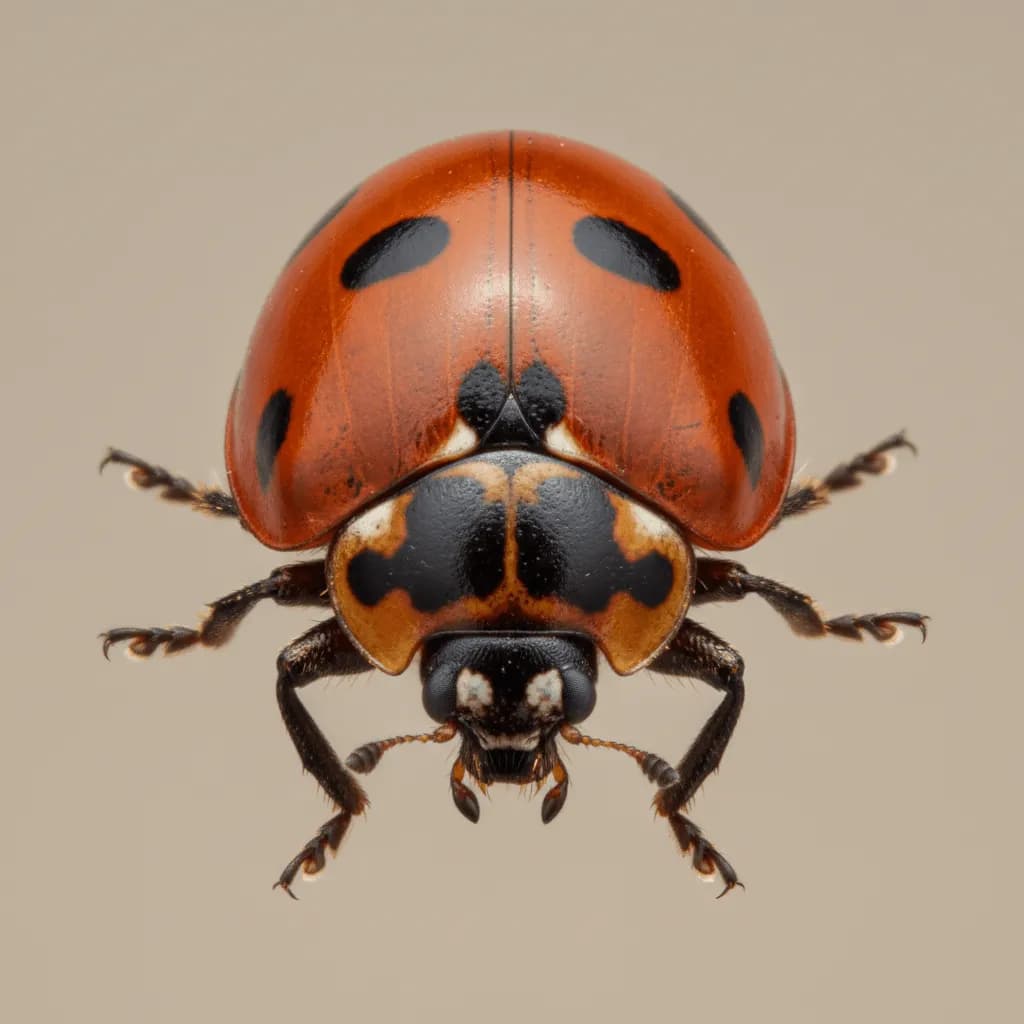
Asian Lady Beetle
Harmonia axyridis
Also known as: Multicolored Asian Lady Beetle, Halloween Beetle, Japanese Ladybug
The Asian Lady Beetle was introduced to North America for biological pest control but has become a major nuisance invader. In fall, they aggregate in massive numbers on sun-warmed building surfaces and enter homes to overwinter. They can bite and release a foul-smelling yellow fluid.
Identification
Size
5-8 mm
Color
Highly variable - orange, yellow, or red with 0 to 19 black spots; black M-shaped marking on the pronotum
Key Trait
Highly variable color and spot pattern; M- or W-shaped dark marking on the white pronotum behind the head; aggregates on buildings in fall.
Behavior & Habitat
Aggregates in enormous numbers on south- and west-facing building surfaces in fall seeking overwintering sites. Releases foul-smelling reflex blood (hemolymph) when disturbed. Can bite mildly. Swarms reactivate on warm winter days indoors.
Habitat: Exterior walls, attics, wall voids, and window frames during fall and winter. Gardens and agricultural fields in summer.
Diet: Aphids and other soft-bodied insects (beneficial in gardens); does not feed on household materials.
Signs of Infestation
- Massive aggregations on sunny exterior walls in autumn
- Beetles accumulating around windows, light fixtures, and in attics indoors
- Yellow staining and foul odor from crushed beetles on walls and curtains
Risks & Damage
Massive fall invasions into homes; foul odor and staining from defensive secretions; can trigger allergies.
Defensive secretions and shed skins can trigger allergic reactions and asthma in sensitive individuals.
Prevention Tips
- 1.Seal all cracks and gaps on south- and west-facing walls before September
- 2.Install or repair screens on attic vents, soffit openings, and weep holes
- 3.Avoid crushing them - vacuum them up gently to prevent staining and odor
Why DIY Treatment Often Falls Short
By the time beetles are visible indoors, thousands are already sealed inside wall voids and attics. Surface sprays only kill the few that emerge and do not reach the hidden masses.
Professional Treatment
Professionals apply preventive perimeter treatments in late summer before aggregation begins, seal entry points, and treat wall voids and attics where beetles overwinter in large numbers.
Related Pests
Frequently Asked Questions
How are they different from native ladybugs?
Can they bite?
Why do they stain my walls?
Need Help With Asian lady beetle?
If you're seeing signs of asian lady beetle in or around your home, professional treatment is the fastest way to stop the problem. Lotus Pest Control offers free inspections to identify the issue and recommend the right solution.
At a Glance
- Category
- Occasional Invaders
- Scientific Name
- Harmonia axyridis
- Size
- 5-8 mm
- Color
- Highly variable - orange, yellow, or red with 0 to 19 black spots; black M-shaped marking on the pronotum
- Key Trait
- Highly variable color and spot pattern; M- or W-shaped dark marking on the white pronotum behind the head; aggregates on buildings in fall.
- Regions
- Northeast, Midwest, Mid Atlantic, Southeast
- Threat Level
- Low
- Risk Types
- nuisancehealth
- Seasonal Activity
- MarAprMayJunJulAugSepOctNovDecJanFebnonelowmoderatehighpeak