
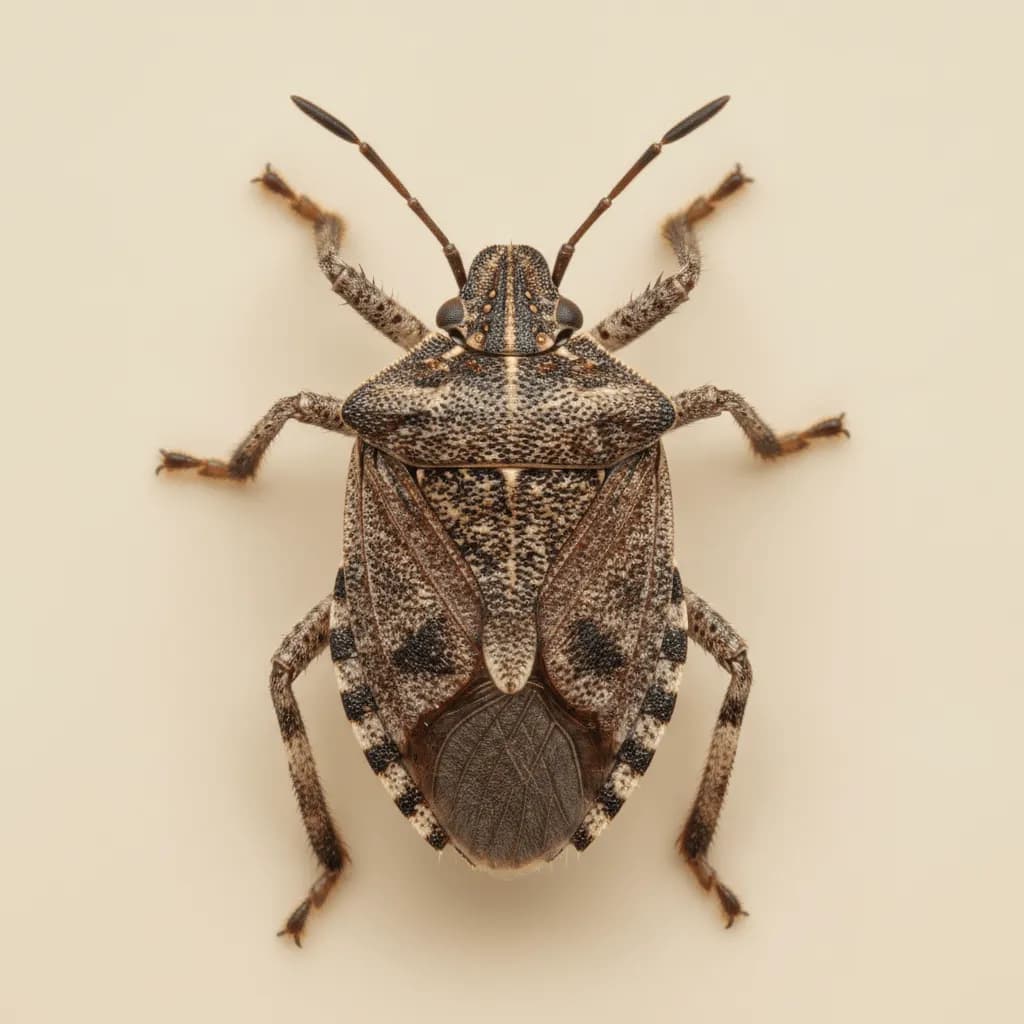
Stink Bug
Halyomorpha halys
Also known as: Shield Bug
Stink bugs, particularly the Brown Marmorated Stink Bug, are major agricultural pests and fall home invaders across much of North America. They release a powerfully unpleasant defensive odor when threatened. They aggregate on buildings in fall and overwinter in structures.
Identification
Size
14-17 mm
Color
Mottled grayish-brown with lighter bands on antennae and darker bands on wing edges
Key Trait
Shield-shaped body; mottled brown coloring; releases a strong, pungent, cilantro-like odor when disturbed or crushed.
Behavior & Habitat
Aggregates on sun-warmed building surfaces in autumn seeking overwintering sites. Releases an intensely pungent defensive odor from thoracic glands when disturbed. Buzzes loudly when flying. Does not feed or reproduce indoors.
Habitat: Orchards, gardens, and agricultural fields in summer; exterior walls, attics, wall voids, and behind siding in fall and winter.
Diet: Wide variety of fruit, vegetables, and ornamental plants including apples, peaches, tomatoes, peppers, soybeans, and corn.
Signs of Infestation
- Shield-shaped brown bugs aggregating on exterior walls in fall
- Pungent odor when bugs are disturbed or accidentally crushed indoors
- Buzzing bugs around lights and windows on warm days during winter
Risks & Damage
Massive fall invasions and extremely unpleasant defensive odor that lingers.
Major agricultural pest causing billions in crop damage to fruit, vegetable, and row crops.
Prevention Tips
- 1.Seal all exterior cracks, gaps, and utility penetrations before September
- 2.Install fine mesh screens on attic vents and weep holes
- 3.Use a vacuum rather than crushing to avoid triggering the defensive odor
Why DIY Treatment Often Falls Short
Stink bugs hide in wall voids and attics in enormous numbers. Crushing or disturbing them releases a foul odor that attracts more stink bugs. Indoor sprays cannot reach overwintering populations.
Professional Treatment
Professionals apply preventive exterior treatments in late summer, perform comprehensive exclusion work, and use specialized approaches that avoid triggering the defensive odor response.
Related Pests
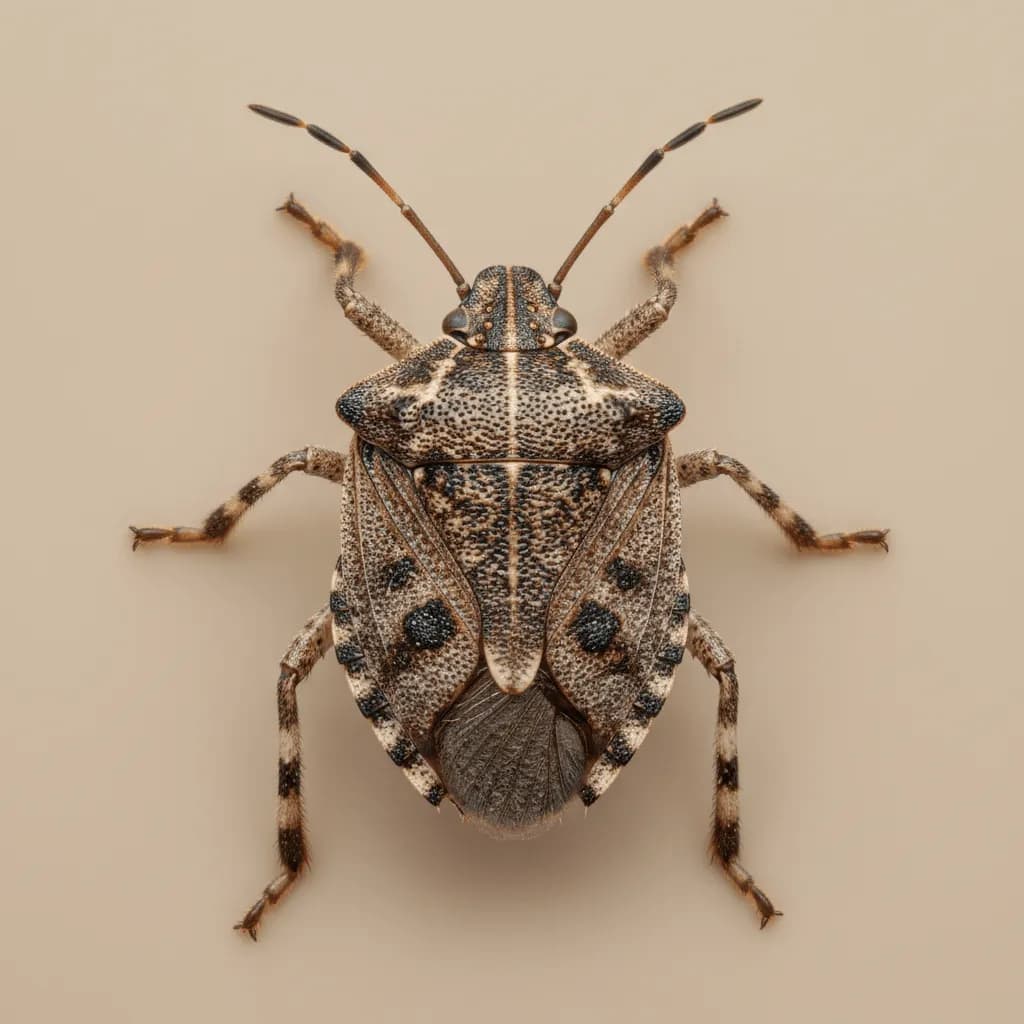
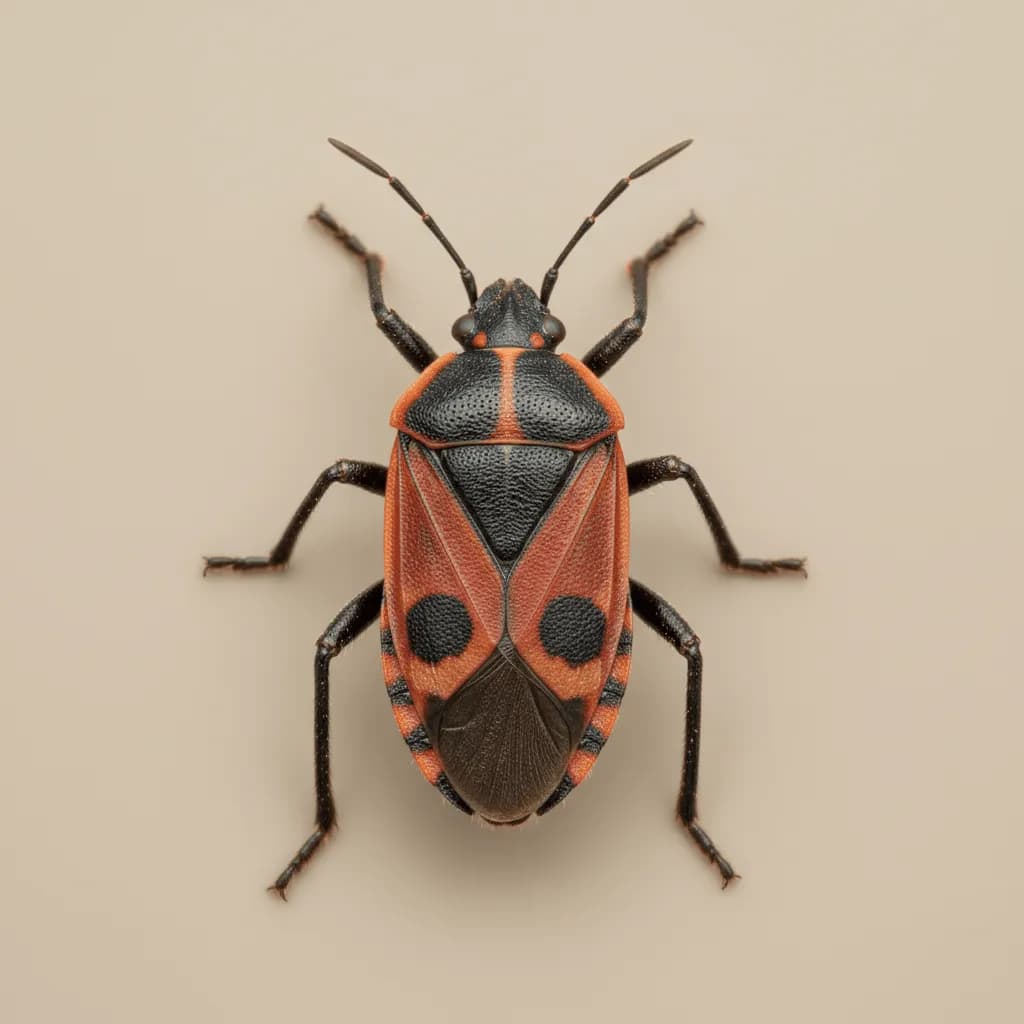
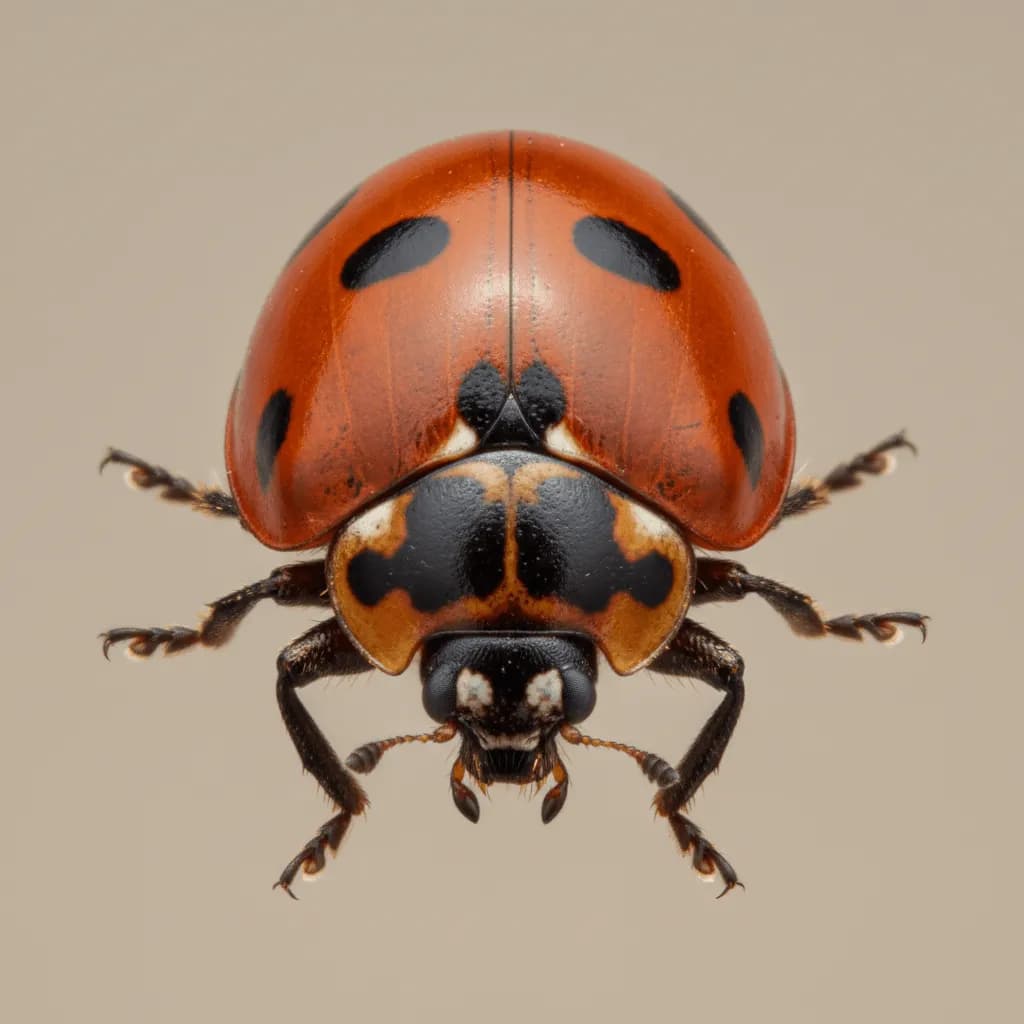
Frequently Asked Questions
Why do they smell so bad?
Will they damage my house?
How did they get to North America?
Need Help With Stink bug?
If you're seeing signs of stink bug in or around your home, professional treatment is the fastest way to stop the problem. Lotus Pest Control offers free inspections to identify the issue and recommend the right solution.
At a Glance
- Category
- Occasional Invaders
- Scientific Name
- Halyomorpha halys
- Size
- 14-17 mm
- Color
- Mottled grayish-brown with lighter bands on antennae and darker bands on wing edges
- Key Trait
- Shield-shaped body; mottled brown coloring; releases a strong, pungent, cilantro-like odor when disturbed or crushed.
- Regions
- Mid Atlantic, Northeast, Southeast, Midwest
- Threat Level
- Low
- Risk Types
- nuisanceagricultural
- Seasonal Activity
- MarAprMayJunJulAugSepOctNovDecJanFebnonelowmoderatehighpeak