
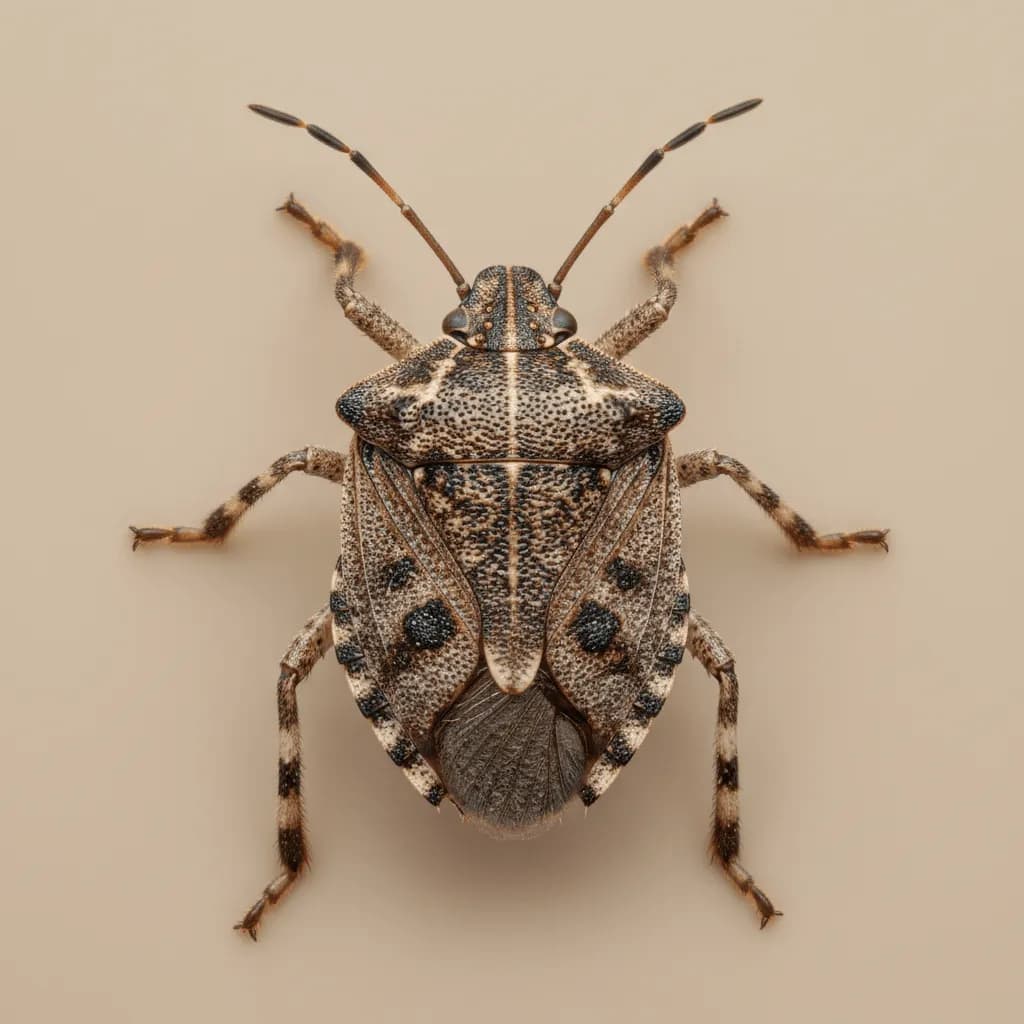
Brown Marmorated Stink Bug
Halyomorpha halys
Also known as: BMSB, Marmorated Stink Bug
The Brown Marmorated Stink Bug is an invasive species from Asia that has become one of the most damaging agricultural pests and prolific fall home invaders in North America. It feeds on over 100 plant species and causes billions of dollars in crop damage annually.
Identification
Size
14-17 mm
Color
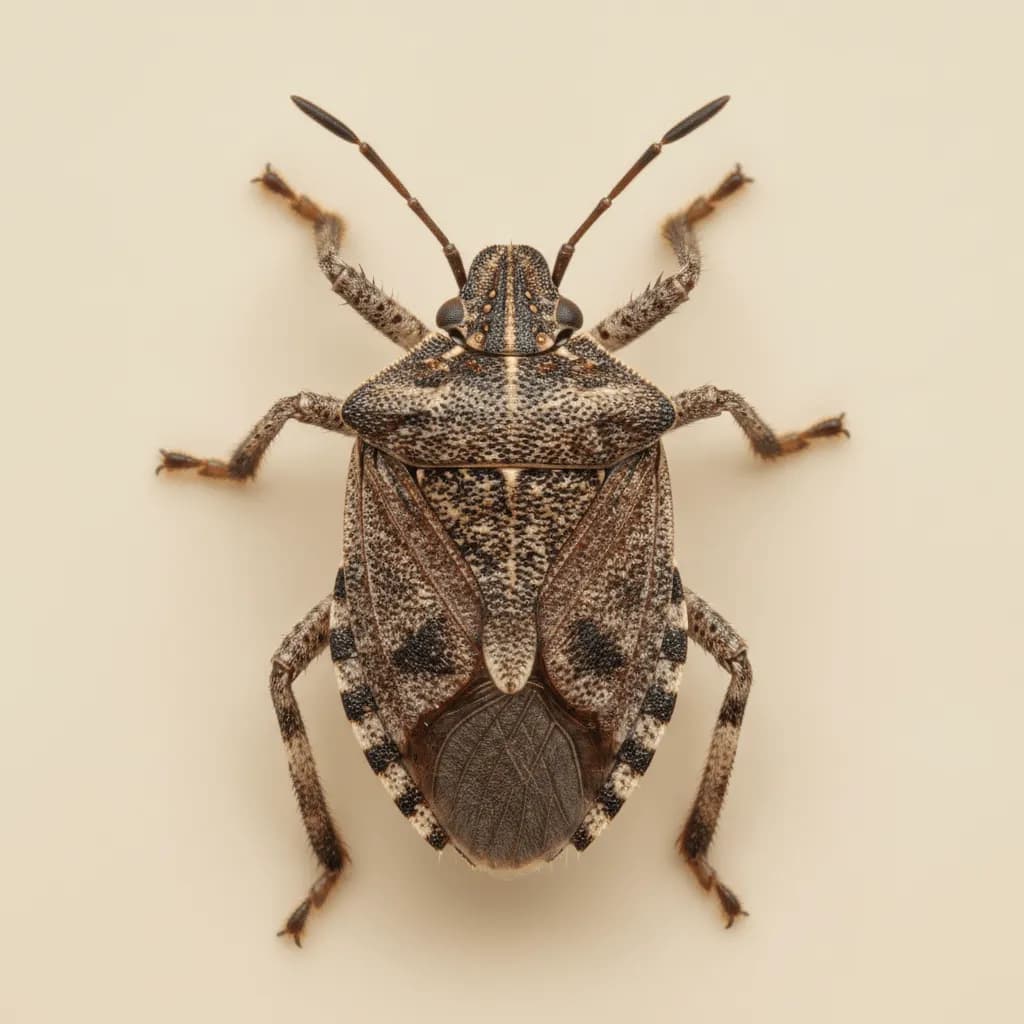
Mottled grayish-brown marbled pattern; alternating light and dark bands on antennae and abdomen edge
Key Trait
Marbled (marmorated) brown pattern; smooth shoulders (lacking spines of some native stink bugs); white bands on antennae; rounded shoulder shape.
Behavior & Habitat
Identical overwintering behavior to other stink bugs but in especially large numbers. An extremely prolific agricultural pest during the growing season. Uses aggregation pheromones that amplify fall invasions once a few individuals find an entry point.
Habitat: Fruit orchards, vegetable gardens, soybean fields, and ornamental plantings in summer; buildings in massive numbers in fall and winter.
Diet: Over 100 host plants including apples, peaches, tomatoes, peppers, green beans, soybeans, corn, grapes, and ornamentals.
Signs of Infestation
- Massive aggregations on sun-warmed walls, often numbering in the thousands
- Characteristic pungent odor throughout the home during warm spells
- Dimpled, cat-facing damage on fruit and vegetables in the garden
Risks & Damage
Among the worst fall home invaders; thousands can enter a single structure.
Causes billions in annual crop losses to fruit, vegetable, and field crops across North America.
Prevention Tips
- 1.Perform comprehensive exterior exclusion before September - every crack and gap matters
- 2.Use pheromone traps to monitor and reduce aggregating populations
- 3.Coordinate with neighbors as populations are area-wide problems
Why DIY Treatment Often Falls Short
BMSB aggregation pheromones create a positive feedback loop - the more that arrive, the more that are attracted. By the time you notice them, wall voids may contain thousands that no surface spray can reach.
Professional Treatment
Professionals combine early-season perimeter treatments, comprehensive exclusion, pheromone monitoring, and wall-void treatments. Area-wide management coordination with neighbors and agricultural programs provides the best results.
Related Pests
Frequently Asked Questions
Where did they come from?
Why are there so many?
What is being done about them?
Need Help With Brown marmorated stink bug?
If you're seeing signs of brown marmorated stink bug in or around your home, professional treatment is the fastest way to stop the problem. Lotus Pest Control offers free inspections to identify the issue and recommend the right solution.
At a Glance
- Category
- Occasional Invaders
- Scientific Name
- Halyomorpha halys
- Size
- 14-17 mm
- Color
- Mottled grayish-brown marbled pattern; alternating light and dark bands on antennae and abdomen edge
- Key Trait
- Marbled (marmorated) brown pattern; smooth shoulders (lacking spines of some native stink bugs); white bands on antennae; rounded shoulder shape.
- Regions
- Mid Atlantic, Northeast, Southeast, Midwest
- Threat Level
- Moderate
- Risk Types
- nuisanceagricultural
- Seasonal Activity
- MarAprMayJunJulAugSepOctNovDecJanFebnonelowmoderatehighpeak