
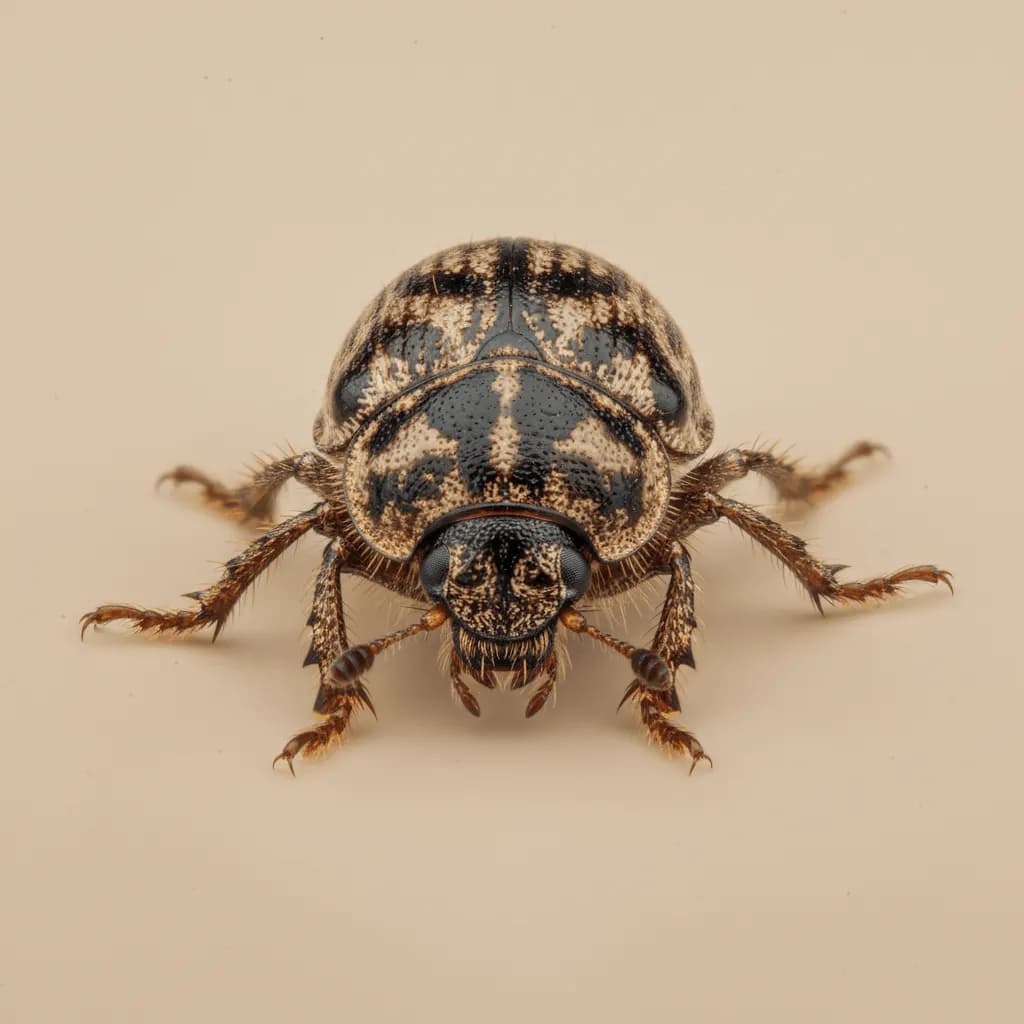
Cabinet Beetle
Trogoderma inclusum
Also known as: Larger Cabinet Beetle
The Cabinet Beetle is a common stored product pest closely related to the warehouse beetle. It infests a wide range of dried food products as well as non-food items including museum specimens and insect collections. Like its relatives, its larvae shed barbed hairs that contaminate products and can cause allergic reactions.
Identification
Size
2.5-4 mm
Color
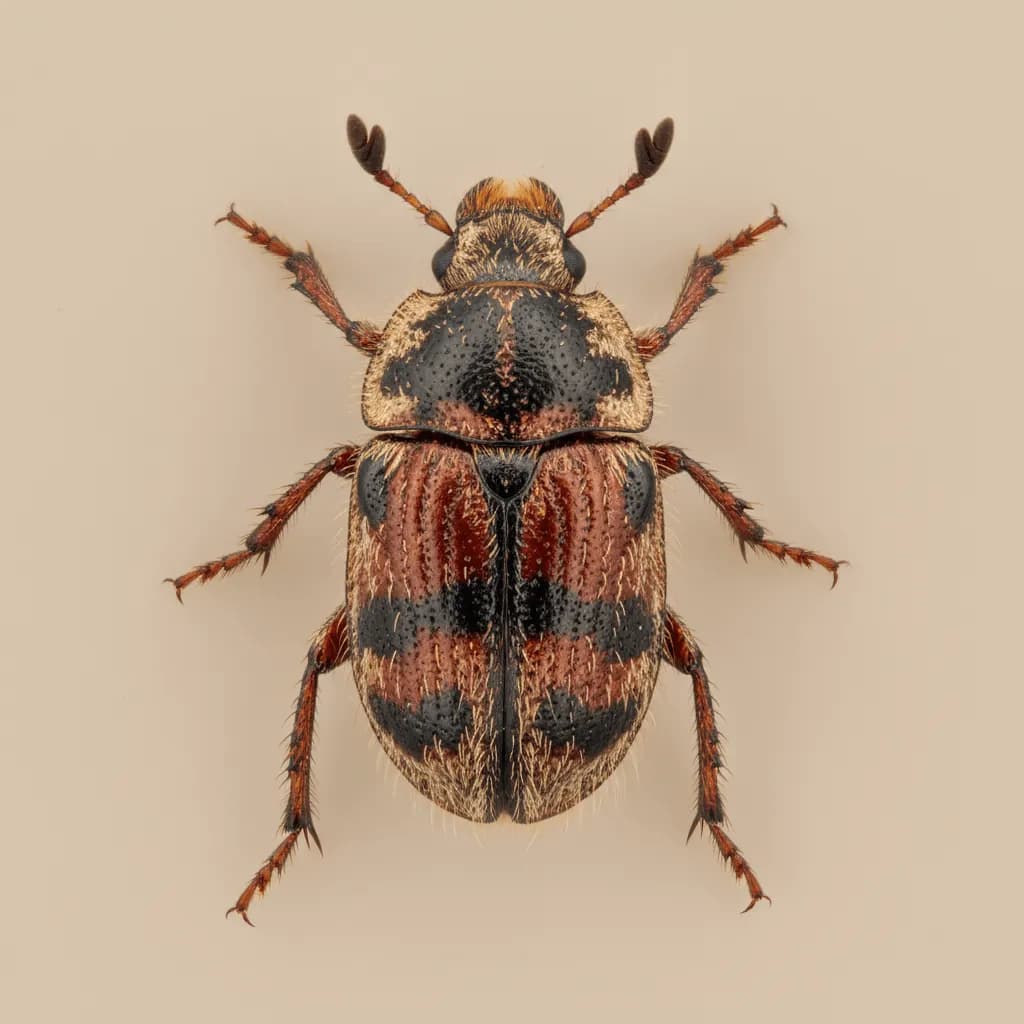
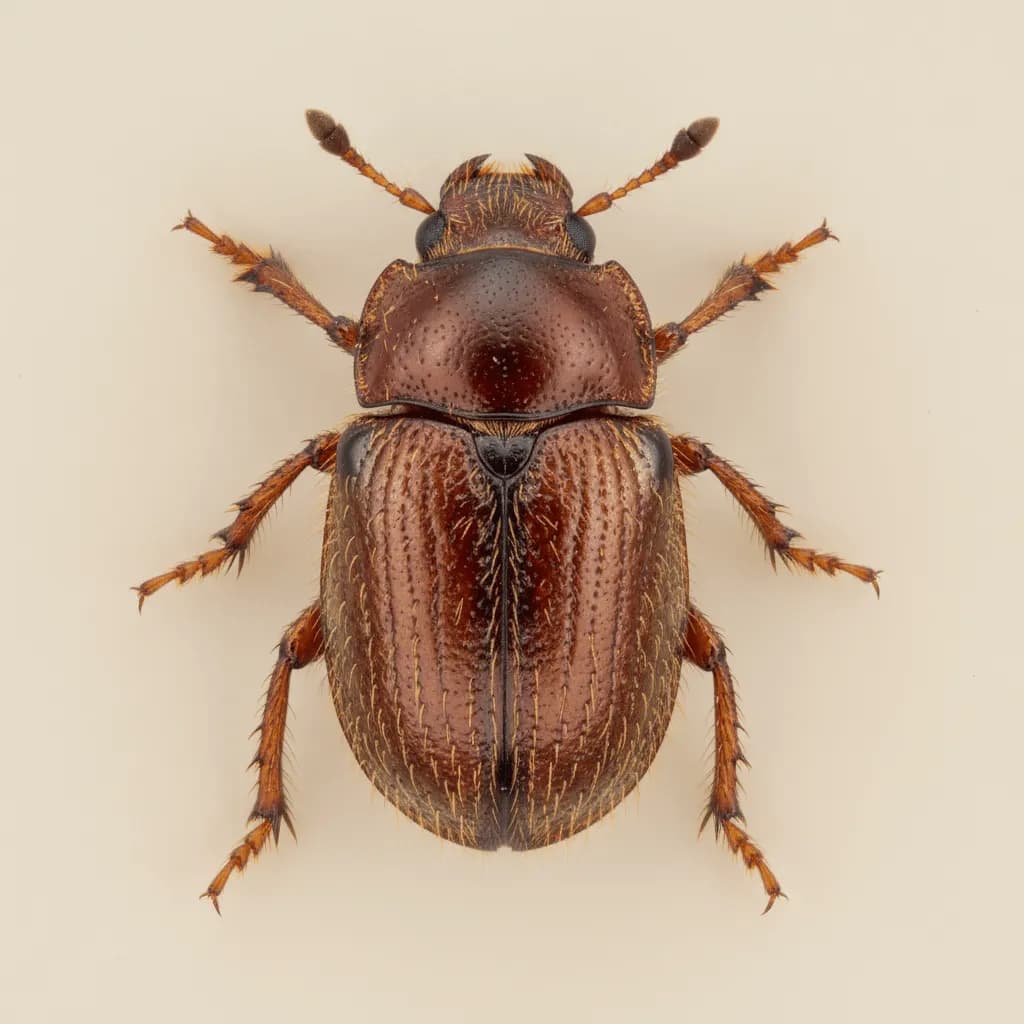
Dark brown to black with irregular bands of reddish-brown and yellowish scales on wing covers
Key Trait
Slightly larger than the warehouse beetle; similar larval contamination issues with irritating hairs; commonly found in museum collections and stored food products.
Behavior & Habitat
Larvae feed on dried food products and organic materials, shedding irritating hairs as they grow. Can survive extended periods without food. Adults are occasionally attracted to lights. Larvae may wander considerable distances from the food source when ready to pupate.
Habitat: Pantries, cabinets, food storage areas, museums, and insect collections. Found anywhere dried animal or plant products are stored.
Diet: Grain products, cereal, dried meat, pet food, dried insects, museum specimens, dead insects in light fixtures and wall voids, and other dried organic materials.
Signs of Infestation
- Dark beetles and bristly larvae in dried food products or cabinets
- Wandering hairy larvae found on walls and ceilings away from food sources
- Damage to museum specimens, dried insect collections, or taxidermy
Risks & Damage
Infests and contaminates a variety of stored food products with shed larval hairs.
Larval hairs can cause skin irritation and allergic reactions when contacted or ingested.
Prevention Tips
- 1.Store all dried food products in sealed glass or rigid plastic containers
- 2.Vacuum dead insects from window sills, light fixtures, and wall voids regularly
- 3.Inspect and quarantine any dried biological specimens before adding to collections
Why DIY Treatment Often Falls Short
The food source may be a non-obvious item such as dead insects accumulated in a wall void, attic, or light fixture. Without finding and eliminating the source, the infestation persists.
Professional Treatment
Professionals identify the infested source, which may include non-food items such as dead insect accumulations. Crack-and-crevice treatments, pheromone monitoring traps, and source elimination are used in combination.
Frequently Asked Questions
Why are hairy larvae crawling on my walls?
Is it the same as a warehouse beetle?
Can they damage my insect collection?
Need Help With Cabinet beetle?
If you're seeing signs of cabinet beetle in or around your home, professional treatment is the fastest way to stop the problem. Lotus Pest Control offers free inspections to identify the issue and recommend the right solution.
At a Glance
- Category
- Pantry Pests
- Scientific Name
- Trogoderma inclusum
- Size
- 2.5-4 mm
- Color
- Dark brown to black with irregular bands of reddish-brown and yellowish scales on wing covers
- Key Trait
- Slightly larger than the warehouse beetle; similar larval contamination issues with irritating hairs; commonly found in museum collections and stored food products.
- Regions
- Midwest, Northeast, Southeast, Southwest, West Coast
- Threat Level
- Low
- Risk Types
- foodhealth
- Seasonal Activity
- MarAprMayJunJulAugSepOctNovDecJanFebnonelowmoderatehighpeak