
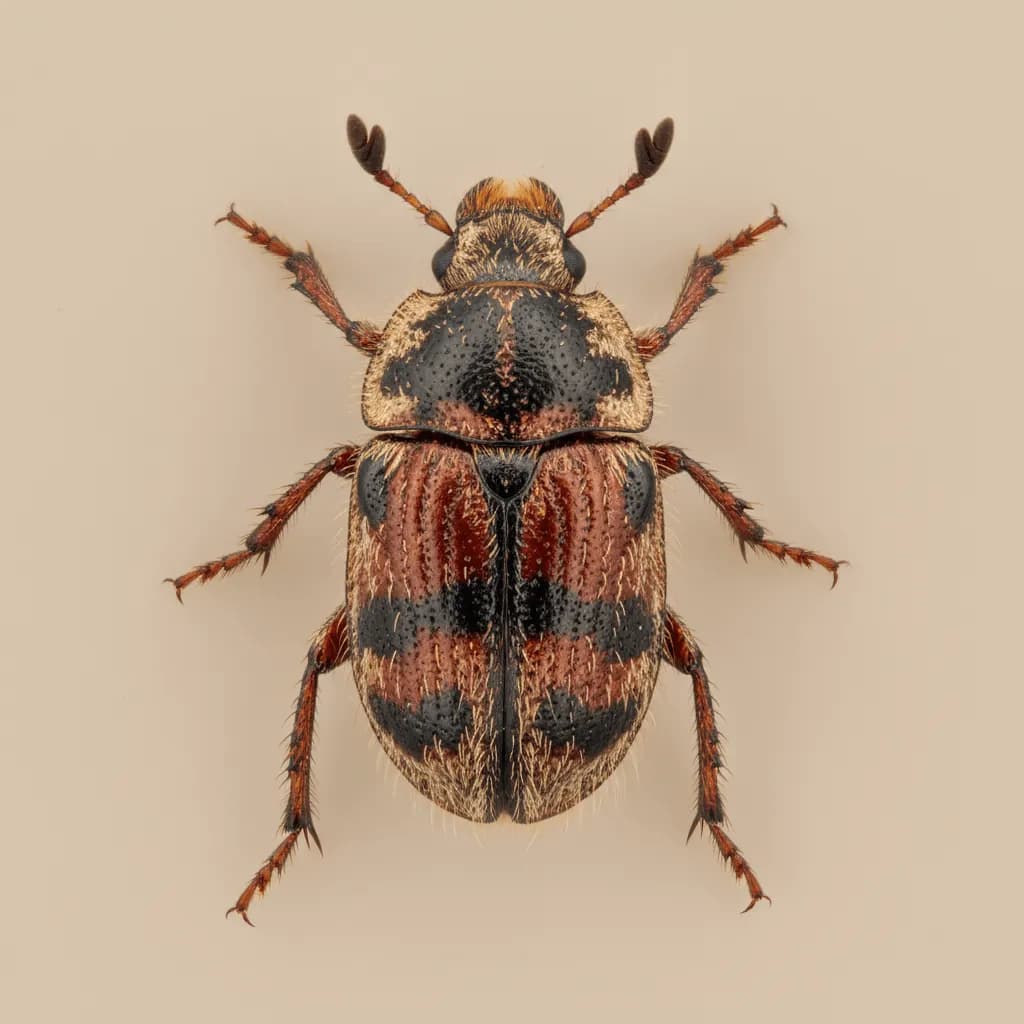
Warehouse Beetle
Trogoderma variabile
The Warehouse Beetle is one of the most common and economically important stored product pests in the United States. Its larvae infest a wide variety of dried food products and can survive on materials with very low moisture content. Larval body hairs shed into food products can cause intestinal irritation and allergic reactions if consumed.
Identification
Size
2-3.5 mm
Color
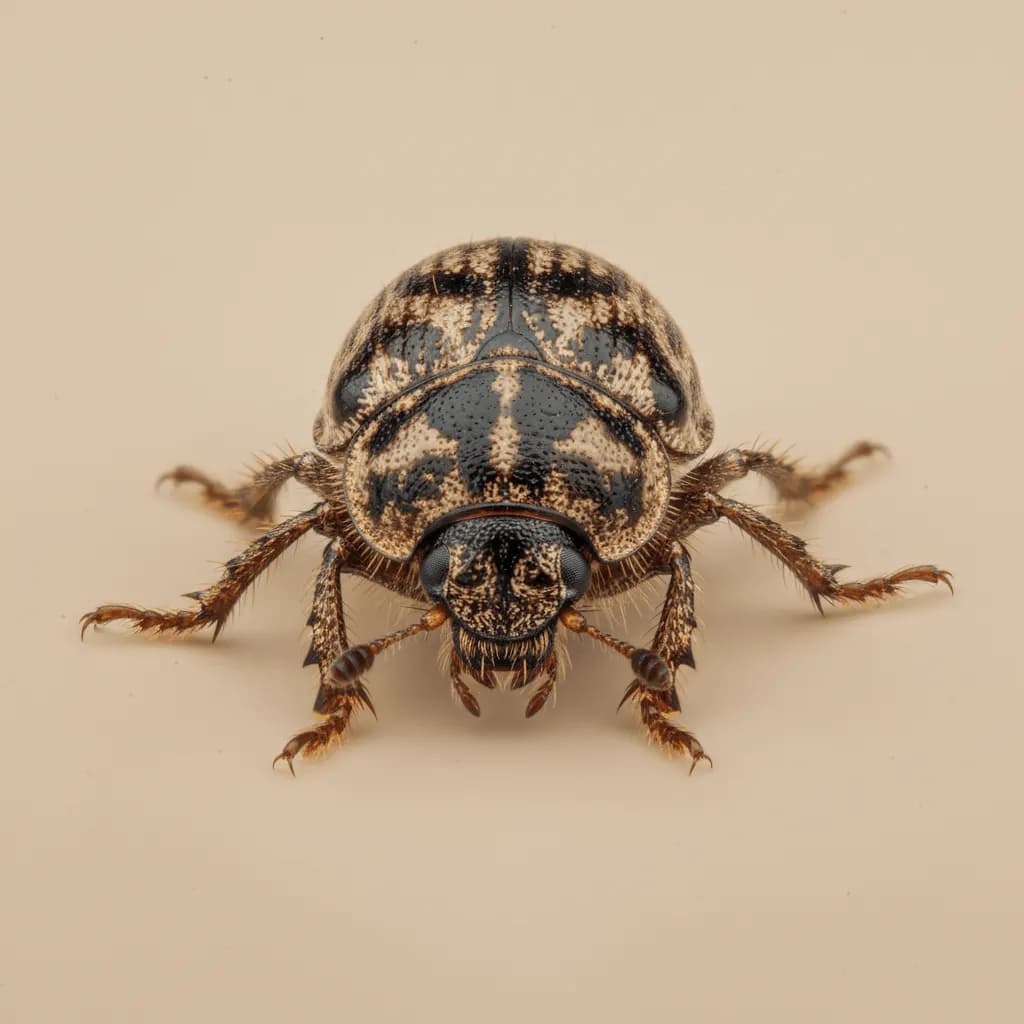
Dark brown to black with variable patterns of lighter brown or yellowish mottled scales on wing covers
Key Trait
Variable mottled coloring; larval hairs (setae) can contaminate food products and cause allergic reactions and intestinal irritation; closely related to the highly destructive khapra beetle.
Behavior & Habitat
Larvae are the damaging stage, feeding on a wide variety of dried stored products. Larvae can enter a dormant state (diapause) and survive for extended periods without food. Cast larval skins with barbed hairs contaminate food products even after the insects are gone.
Habitat: Warehouses, food processing facilities, grain storage, retail stores, and home pantries. Infests dried pet food, cereal, grain products, dried fruit, spices, and many other stored goods.
Diet: Grain products, cereal, flour, pasta, dried fruit, nuts, seeds, pet food, dried milk, fish meal, and many other dried animal and plant products.
Signs of Infestation
- Small dark beetles and hairy larvae in dried food packages
- Cast larval skins with fine bristly hairs in stored products
- Holes in food packaging with fine powdery debris
Risks & Damage
Contaminates stored food products; larval hairs can cause allergic reactions and intestinal irritation if consumed.
Larval setae (hairs) shed into food can cause gastrointestinal irritation, skin rashes, and allergic reactions.
Prevention Tips
- 1.Store dried food products in sealed glass or rigid plastic containers
- 2.Rotate stored food on a first-in-first-out basis and discard old products
- 3.Clean pantry shelves regularly, removing spilled food from cracks and crevices
Why DIY Treatment Often Falls Short
Larvae can enter diapause and survive for months without food, making starvation ineffective. Cast skins and hairs persist in cracks and contaminate new food products even after living insects are removed.
Professional Treatment
Professionals conduct thorough inspection to identify all infested products, treat cracks and crevices in storage areas with residual insecticides, and may deploy pheromone traps for monitoring. Commercial facilities may require fumigation.
Frequently Asked Questions
Can warehouse beetle hairs make me sick?
How did they get in my food?
Is it related to the khapra beetle?
Need Help With Warehouse beetle?
If you're seeing signs of warehouse beetle in or around your home, professional treatment is the fastest way to stop the problem. Lotus Pest Control offers free inspections to identify the issue and recommend the right solution.
At a Glance
- Category
- Pantry Pests
- Scientific Name
- Trogoderma variabile
- Size
- 2-3.5 mm
- Color
- Dark brown to black with variable patterns of lighter brown or yellowish mottled scales on wing covers
- Key Trait
- Variable mottled coloring; larval hairs (setae) can contaminate food products and cause allergic reactions and intestinal irritation; closely related to the highly destructive khapra beetle.
- Regions
- Midwest, Great Plains, Southeast, Southwest, Northeast
- Threat Level
- Low
- Risk Types
- foodhealth
- Seasonal Activity
- MarAprMayJunJulAugSepOctNovDecJanFebnonelowmoderatehighpeak