
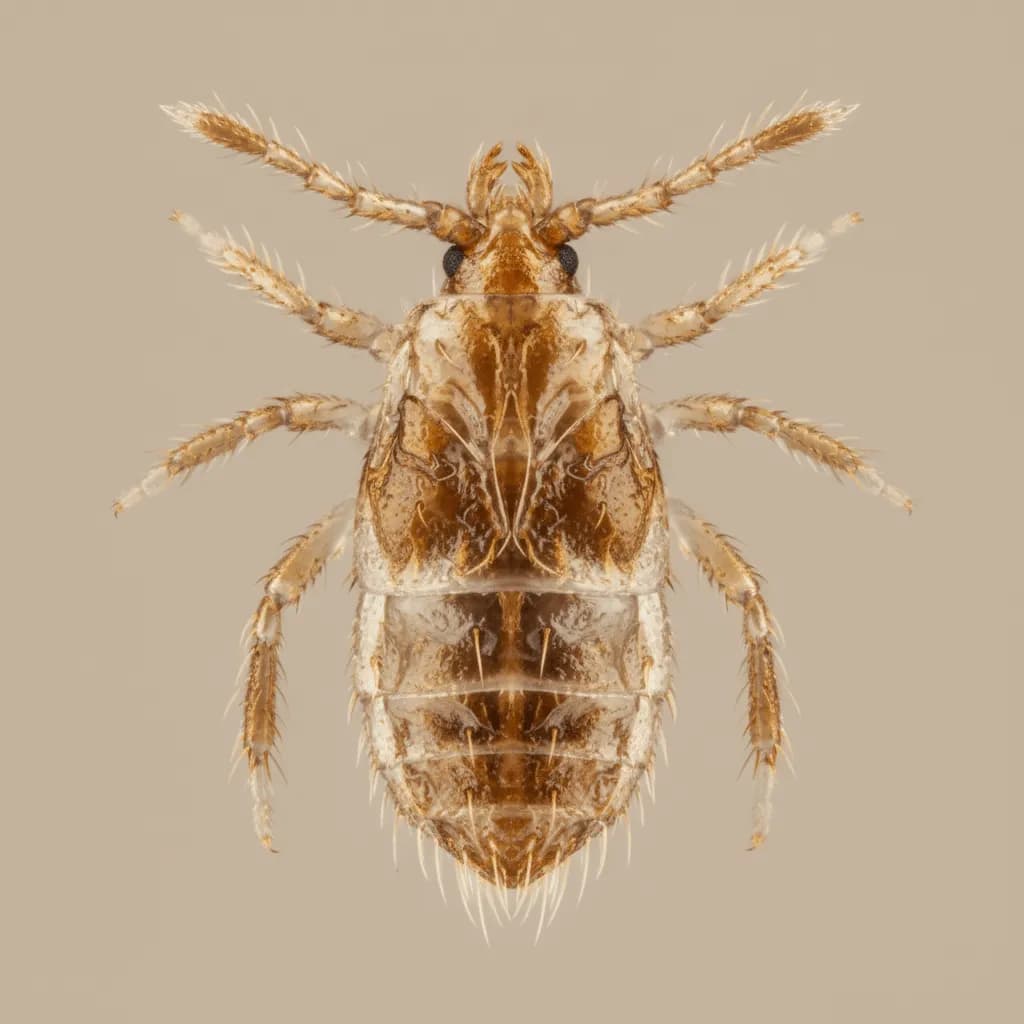
Grain Mite
Acarus siro
Also known as: Flour Mite, Cheese Mite, Storage Mite
The Grain Mite is a microscopic stored product pest that thrives in high-humidity conditions. It infests a wide range of stored grain products, cheese, dried fruit, and other high-moisture stored foods. Large populations produce a characteristic sweet or minty odor and leave behind brownish dust composed of shed skins and fecal matter that contaminates food.
Identification
Size
0.3-0.5 mm
Color
White to translucent with pale tan legs; barely visible to the naked eye
Key Trait
Extremely tiny, nearly invisible without magnification; populations produce a distinctive sweet or minty odor; infested products develop a brownish 'mite dust' of shed skins and excrement.
Behavior & Habitat
Populations explode in warm, humid conditions and can build to enormous numbers very quickly. Mites produce a distinctive sweet or musty odor in heavy infestations. A resting stage (hypopus) allows survival during unfavorable conditions and is resistant to many pesticides.
Habitat: Stored grain, flour, cereal, cheese, dried fruit, pet food, and other stored products in kitchens, pantries, barns, grain bins, and food processing facilities. Requires high humidity (above 65% relative humidity) to thrive.
Diet: Grain products, flour, cereal, cheese, dried fruit, dried meat, yeast, mold, and the germ of stored grain. Preferentially attacks the nutritious germ portion of grain kernels.
Signs of Infestation
- Brownish dust or 'mite dust' on and around stored grain products
- Sweet or minty odor emanating from stored food products
- Grain or flour that appears to be moving when examined closely under good light
Risks & Damage
Contaminates stored food with mite bodies, shed skins, and fecal matter, causing off-flavors and reduced nutritional value.
Shed skins and fecal particles can trigger allergic reactions including respiratory symptoms and dermatitis ('grocer's itch') in sensitized individuals.
Prevention Tips
- 1.Maintain low humidity in food storage areas by using dehumidifiers or proper ventilation
- 2.Store grain products in sealed containers and use them before they age
- 3.Clean pantry shelves regularly and remove spilled grain and flour from cracks
Why DIY Treatment Often Falls Short
The mites are nearly invisible, so infestations are often advanced before detection. Their resistant hypopus stage survives unfavorable conditions and standard cleaning, allowing populations to rebound after treatment.
Professional Treatment
Professionals identify infested products and address the underlying humidity problem. Commercial facilities may require fumigation. Improved ventilation and dehumidification of storage areas are essential for long-term prevention.
Related Pests
Frequently Asked Questions
Why does my flour smell sweet or minty?
Can grain mites make me sick?
How do I prevent grain mites?
Need Help With Grain mite?
If you're seeing signs of grain mite in or around your home, professional treatment is the fastest way to stop the problem. Lotus Pest Control offers free inspections to identify the issue and recommend the right solution.
At a Glance
- Category
- Pantry Pests
- Scientific Name
- Acarus siro
- Size
- 0.3-0.5 mm
- Color
- White to translucent with pale tan legs; barely visible to the naked eye
- Key Trait
- Extremely tiny, nearly invisible without magnification; populations produce a distinctive sweet or minty odor; infested products develop a brownish 'mite dust' of shed skins and excrement.
- Regions
- Midwest, Great Plains, Southeast, Northeast, Gulf Coast
- Threat Level
- Low
- Risk Types
- foodhealth
- Seasonal Activity
- MarAprMayJunJulAugSepOctNovDecJanFebnonelowmoderatehighpeak