
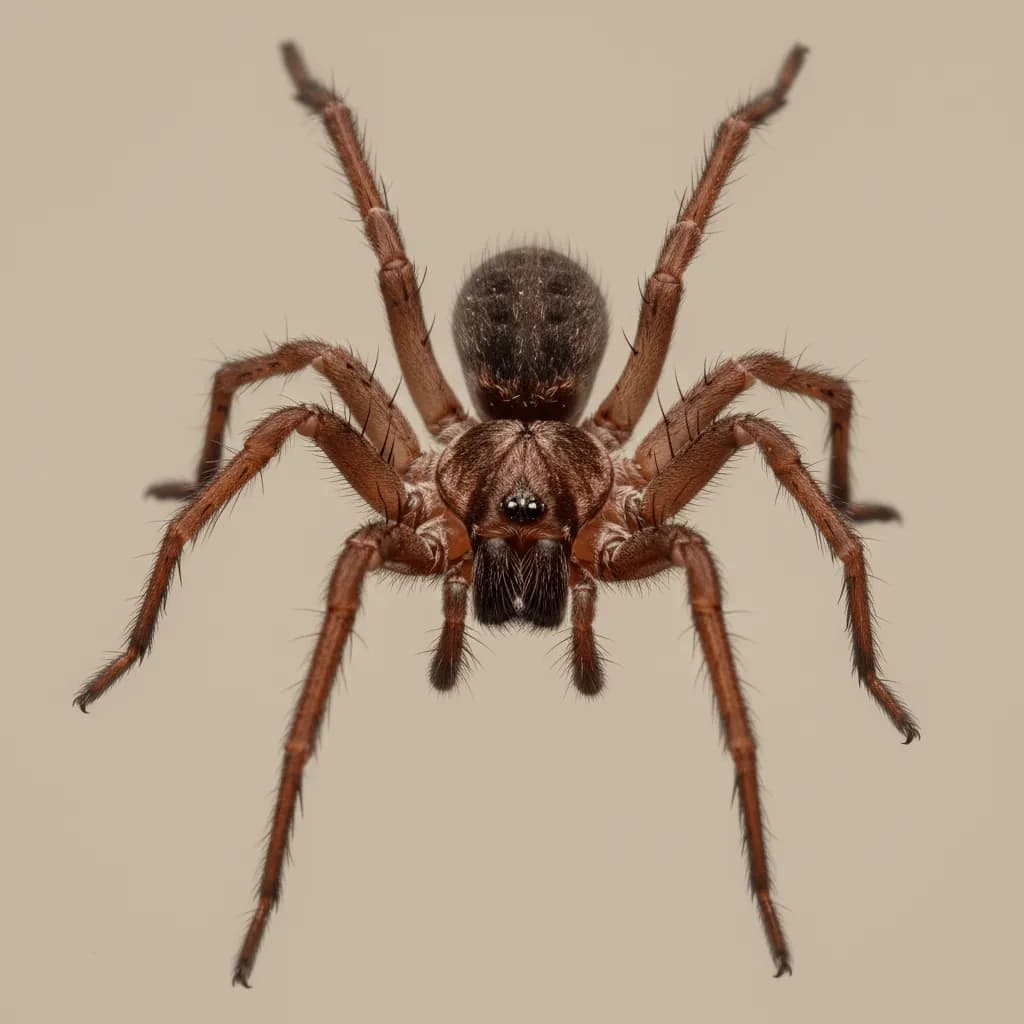
Southern House Spider
Kukulcania hibernalis
Also known as: Southern Crevice Spider
The Southern House Spider is one of the most commonly misidentified spiders in the southeastern United States, with males regularly mistaken for brown recluse spiders. Females build flat, tangled webs radiating from crevices in walls, shutters, and other structures. Despite their alarming appearance, they are harmless to humans.
Identification
Size
13-19 mm (body length); females larger and bulkier than males
Color
Females are dark brown to charcoal gray; males are khaki to amber brown with longer legs
Key Trait
Males are frequently mistaken for brown recluse spiders due to similar size and color, but lack the violin marking; females build distinctive radial crevice webs.
Behavior & Habitat
Females are sedentary, remaining in or near their crevice webs. Males are active wanderers, especially during mating season, and often enter homes. Males run quickly when disturbed, adding to their confusion with brown recluses. Not aggressive and rarely bite.
Habitat: Crevices in exterior walls, behind shutters, under eaves, in barns and sheds, around window frames, and under bark. Common on the exterior of buildings throughout the Southeast.
Diet: Insects trapped in their crevice webs, including moths, beetles, flies, and other small arthropods.
Signs of Infestation
- Flat, tangled webs radiating from crevices in exterior walls, shutters, and window frames
- Large brown wandering males found inside the home, especially in late summer and fall
- Accumulation of webbing around exterior light fixtures and entry points
Risks & Damage
Males are frequently mistaken for brown recluse spiders, causing unnecessary alarm; heavy webbing on building exteriors is unsightly.
Prevention Tips
- 1.Remove webs regularly from exterior walls, shutters, and eaves
- 2.Reduce exterior lighting that attracts prey insects near the structure
- 3.Seal cracks and gaps around windows, doors, and utility penetrations
Why DIY Treatment Often Falls Short
Their webs are rebuilt quickly after removal, and the spiders occupy deep crevices that sprays cannot easily reach. Misidentification as brown recluses leads to unnecessary and misdirected treatments.
Professional Treatment
Professionals apply residual treatments to exterior crevices and web attachment points. Proper identification is provided to distinguish them from brown recluse spiders. Habitat modification and web removal are part of a comprehensive plan.
Related Pests
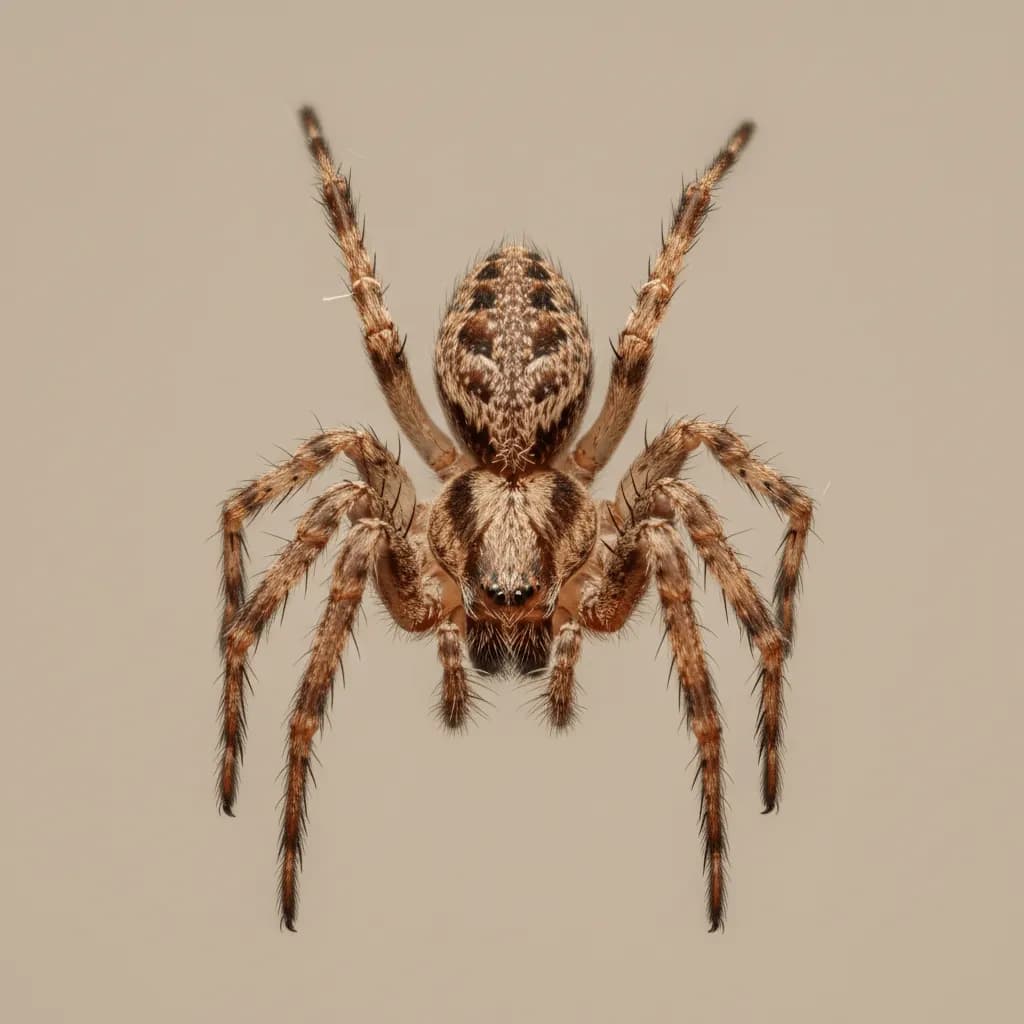
Frequently Asked Questions
Is this a brown recluse?
Are southern house spiders dangerous?
Why are there so many webs on my house?
Need Help With Southern house spider?
If you're seeing signs of southern house spider in or around your home, professional treatment is the fastest way to stop the problem. Lotus Pest Control offers free inspections to identify the issue and recommend the right solution.
At a Glance
- Category
- Spiders
- Scientific Name
- Kukulcania hibernalis
- Size
- 13-19 mm (body length); females larger and bulkier than males
- Color
- Females are dark brown to charcoal gray; males are khaki to amber brown with longer legs
- Key Trait
- Males are frequently mistaken for brown recluse spiders due to similar size and color, but lack the violin marking; females build distinctive radial crevice webs.
- Regions
- Southeast, Gulf Coast, Mid Atlantic, Southwest
- Threat Level
- Very Low
- Risk Types
- nuisance
- Seasonal Activity
- MarAprMayJunJulAugSepOctNovDecJanFebnonelowmoderatehighpeak