
Jumping Spiders
Jumping spiders are compact, alert, and visually-oriented spiders known for their excellent eyesight and precise jumping ability. They are the largest family of spiders globally, with hundreds of species in North America. They are often brightly colored or iridescent with prominent front-facing eyes that give them a curious, charismatic appearance. They are active daytime hunters commonly found on walls, windows, fences, and exterior siding. Their tendency to turn and track movement makes them more noticeable to homeowners than other spiders.
Species in This Group (2)
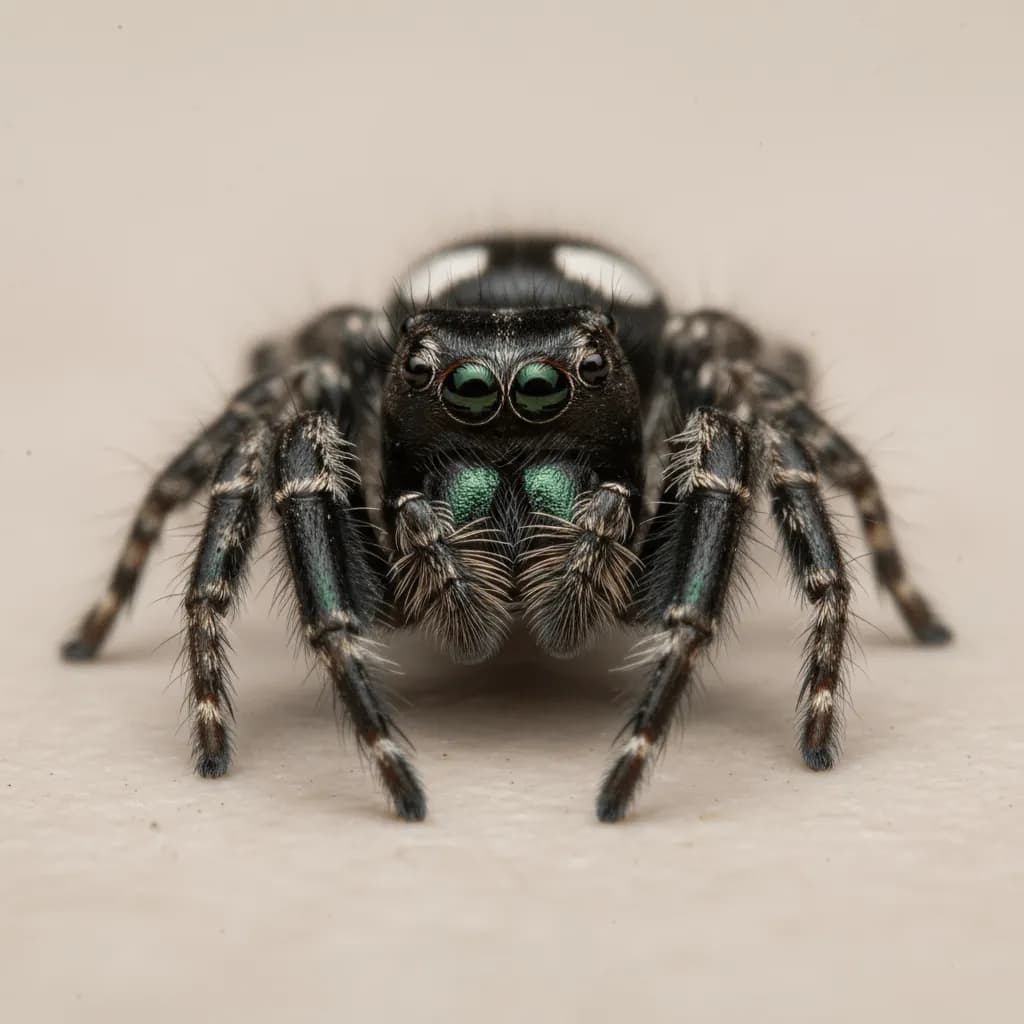
Bold Jumping Spider
Phidippus audax
The Bold Jumping Spider is a charismatic, active hunter recognized by its large forward-facing eyes and distinctive jumping behavior.
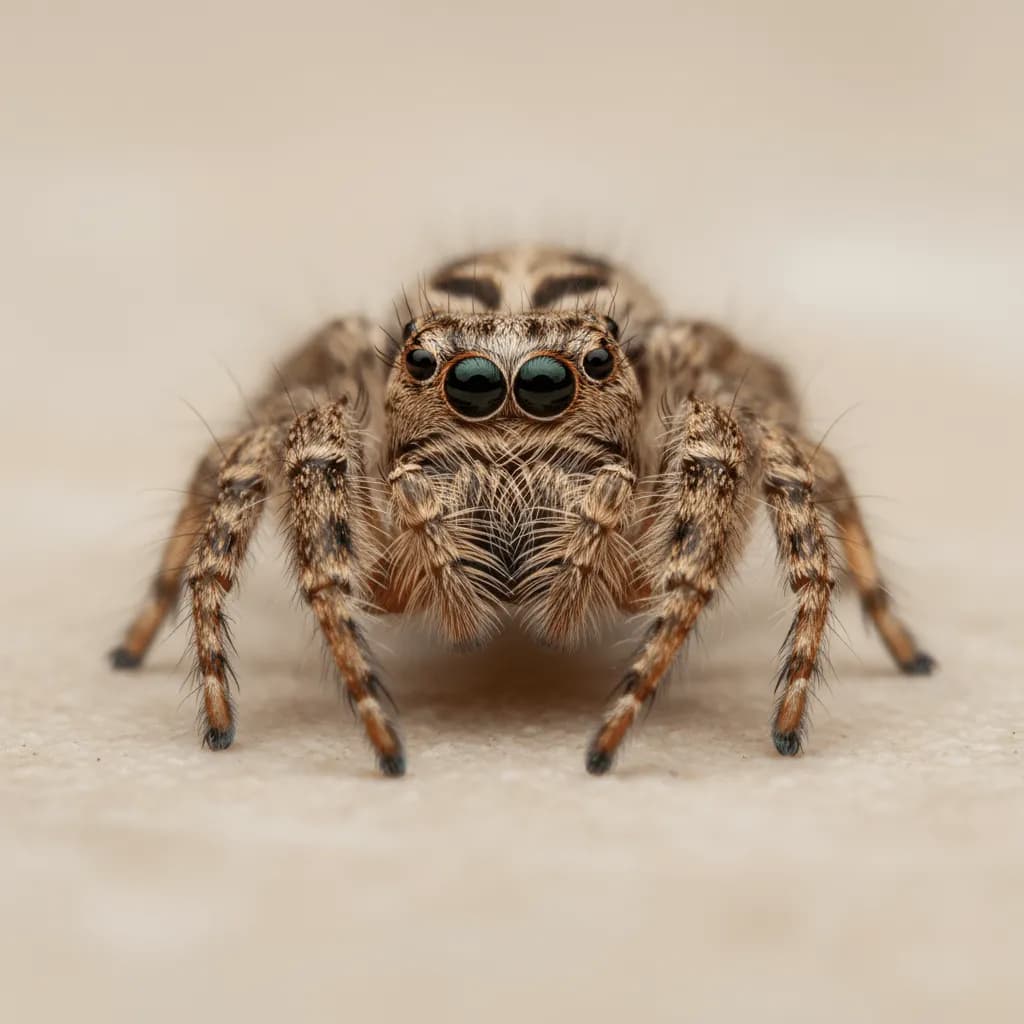
Tan Jumping Spider
Platycryptus undatus
The Tan Jumping Spider is commonly found on the exterior of buildings and tree trunks throughout the eastern United States.
Key Behaviors
Jumping spiders stalk and pounce on prey with remarkable accuracy, jumping up to 50 times their body length. They do not build prey-catching webs but spin small silk retreats for resting and egg protection. They are diurnal and frequently seen on sun-warmed walls and windows. Their large, forward-facing eyes provide excellent binocular vision for prey detection and distance judgment.
Risks & Concerns
Jumping spiders are completely harmless to humans and are among the most beneficial spiders in residential landscapes. Bites are extremely rare and produce only minor irritation. Their presence indoors is incidental, and they do not establish indoor populations. Many homeowners find them charming once they understand they are harmless pest predators.
Quick Comparison
| Species | Size | Color | Key Trait |
|---|---|---|---|
| Bold Jumping Spider | 8-15 mm | Black with white or orange spots and iridescent blue-green chelicerae (fangs) | Compact body with large forward-facing eyes; jumps to pounce on prey; iridescent blue-green mouthparts. |
| Tan Jumping Spider | 8-13 mm | Tan to grayish-brown with wavy darker markings | Flattened body well-camouflaged against tree bark and building walls; large forward-facing eyes. |
Need Help With Jumping spiders?
If you're seeing signs of jumping spiders in or around your home, professional treatment is the fastest way to stop the problem. Lotus Pest Control offers free inspections to identify the issue and recommend the right solution.