

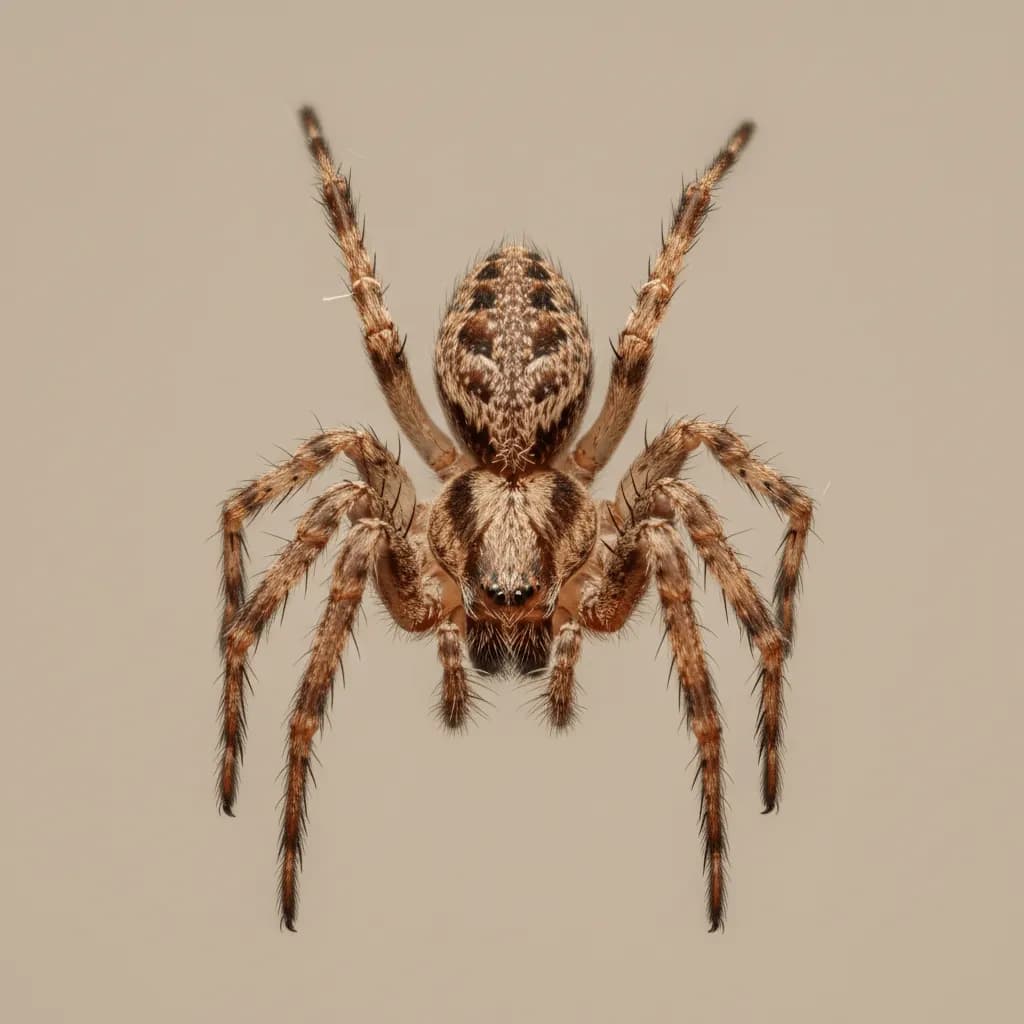
Tan Jumping Spider
Platycryptus undatus
The Tan Jumping Spider is commonly found on the exterior of buildings and tree trunks throughout the eastern United States. Its flattened body and bark-like coloration provide excellent camouflage. Like all jumping spiders, it hunts by sight and is harmless to humans.
Identification
Size
8-13 mm
Color
Tan to grayish-brown with wavy darker markings
Key Trait
Flattened body well-camouflaged against tree bark and building walls; large forward-facing eyes.
Behavior & Habitat
Active daytime hunter found on vertical surfaces. Flattened body allows it to squeeze into narrow crevices in bark and siding. Hunts by stalking and pouncing on small insects.
Habitat: Exterior walls of buildings, fence posts, tree trunks, and under siding. Occasionally enters homes through cracks around windows.
Diet: Small flies, gnats, and other insects found on walls and bark.
Signs of Infestation
- Flattened tan spiders on exterior walls and around windows
- Small silken retreat tubes in cracks of siding
Risks & Damage
Occasionally enters homes but is harmless and beneficial.
Prevention Tips
- 1.Seal cracks in siding and around window frames
- 2.No treatment is typically needed
Why DIY Treatment Often Falls Short
Treatment is unnecessary. These beneficial spiders control small pest insects on exterior walls.
Professional Treatment
Professional treatment is not recommended. If interior entry is a concern, exclusion work around windows and siding is the appropriate response.
Related Pests

Frequently Asked Questions
Is the tan jumping spider harmful?
Why is it so flat?
Should I worry about them on my house?
Need Help With Tan jumping spider?
If you're seeing signs of tan jumping spider in or around your home, professional treatment is the fastest way to stop the problem. Lotus Pest Control offers free inspections to identify the issue and recommend the right solution.
At a Glance
- Category
- Spiders
- Scientific Name
- Platycryptus undatus
- Size
- 8-13 mm
- Color
- Tan to grayish-brown with wavy darker markings
- Key Trait
- Flattened body well-camouflaged against tree bark and building walls; large forward-facing eyes.
- Regions
- Northeast, Southeast, Midwest
- Threat Level
- Very Low
- Risk Types
- nuisance
- Seasonal Activity
- MarAprMayJunJulAugSepOctNovDecJanFebnonelowmoderatehighpeak