
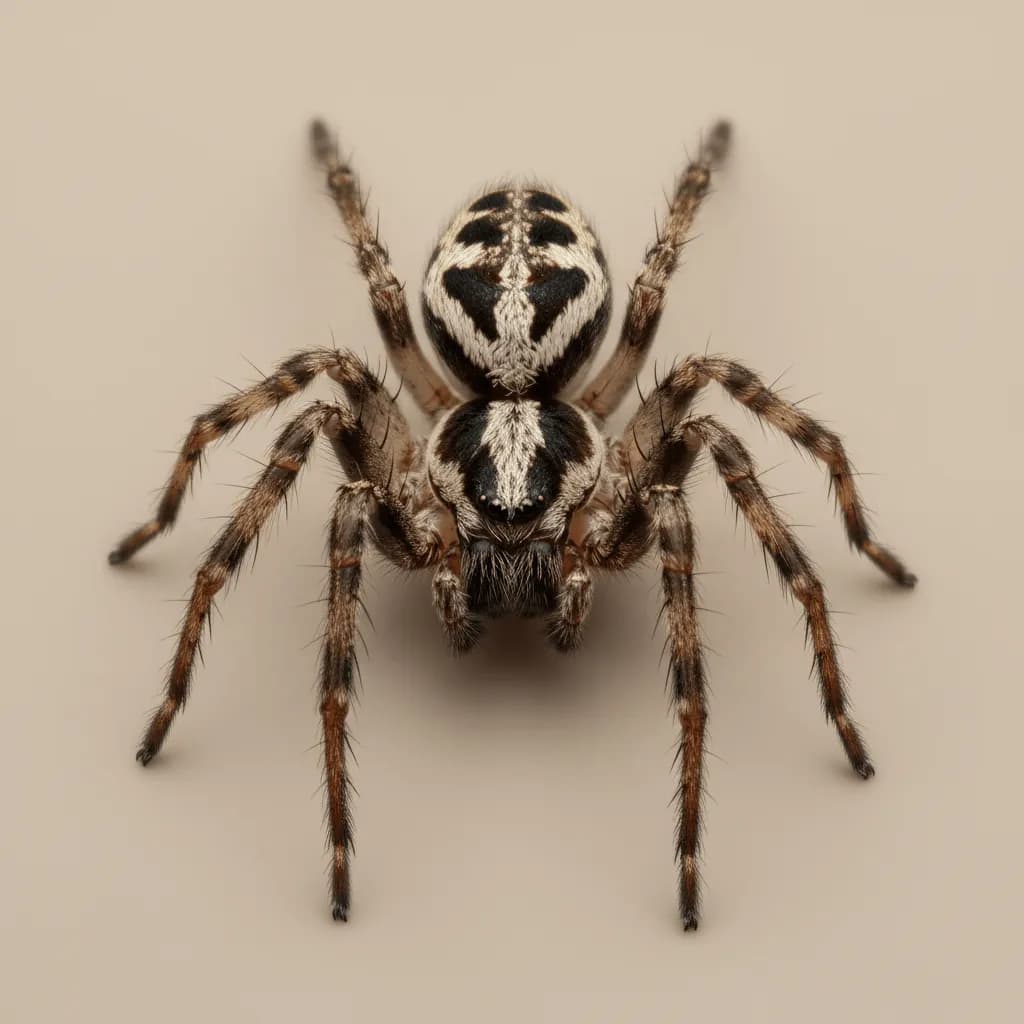
Parson Spider
Herpyllus ecclesiasticus
Also known as: Eastern Parson Spider
The Parson Spider is named for the distinctive white marking on its abdomen that resembles the cravat worn by clergy in the 18th century. It is a fast-moving ground hunter found throughout the eastern and central United States. It does not build a web but instead actively pursues prey at night, often startling homeowners when encountered indoors.
Identification
Size
8-13 mm (body length)
Color
Dark brown to black with a distinctive white or gray dorsal stripe on the abdomen resembling a clerical cravat
Key Trait
White or gray abdominal marking shaped like an old-fashioned clerical collar (cravat); fast runner that does not build webs; active nocturnal ground hunter.
Behavior & Habitat
Active nocturnal hunter that pursues prey on the ground rather than building a web. Extremely fast runner. Hides during the day under rocks, boards, and in leaf litter, or indoors under furniture, in clothing, and in bedding. Can be defensive when trapped.
Habitat: Under rocks, bark, logs, and leaf litter outdoors. Indoors in cluttered areas, under furniture, in clothing left on the floor, and in bedding. Common in homes during fall and winter when seeking shelter.
Diet: Small insects and other arthropods captured through active pursuit. Hunts on the ground at night.
Signs of Infestation
- Fast-moving dark spiders seen running across floors at night
- Spiders found in clothing, shoes, or bedding
- Spiders encountered when moving stored items in basements and garages
Risks & Damage
Bites can cause localized pain, swelling, and allergic reactions in sensitive individuals. Bites typically occur when the spider is trapped in clothing or bedding.
Prevention Tips
- 1.Shake out clothing and shoes before wearing, especially if left on the floor
- 2.Keep bedding off the floor and move beds away from walls
- 3.Reduce clutter and seal gaps around doors and windows to limit entry
Why DIY Treatment Often Falls Short
As a wandering hunter without a web, parson spiders are difficult to target with residual treatments. They move unpredictably and hide in protected locations that sprays cannot reach.
Professional Treatment
Professionals apply residual perimeter treatments and crack-and-crevice applications to harborage areas. Sticky traps help monitor populations and reduce numbers. Habitat modification and exclusion are emphasized.
Related Pests
Frequently Asked Questions
Why is it called a parson spider?
Are parson spiders dangerous?
Why do they come inside?
Need Help With Parson spider?
If you're seeing signs of parson spider in or around your home, professional treatment is the fastest way to stop the problem. Lotus Pest Control offers free inspections to identify the issue and recommend the right solution.
At a Glance
- Category
- Spiders
- Scientific Name
- Herpyllus ecclesiasticus
- Size
- 8-13 mm (body length)
- Color
- Dark brown to black with a distinctive white or gray dorsal stripe on the abdomen resembling a clerical cravat
- Key Trait
- White or gray abdominal marking shaped like an old-fashioned clerical collar (cravat); fast runner that does not build webs; active nocturnal ground hunter.
- Regions
- Northeast, Midwest, Mid Atlantic, Southeast, Great Plains
- Threat Level
- Low
- Risk Types
- healthnuisance
- Seasonal Activity
- MarAprMayJunJulAugSepOctNovDecJanFebnonelowmoderatehighpeak