
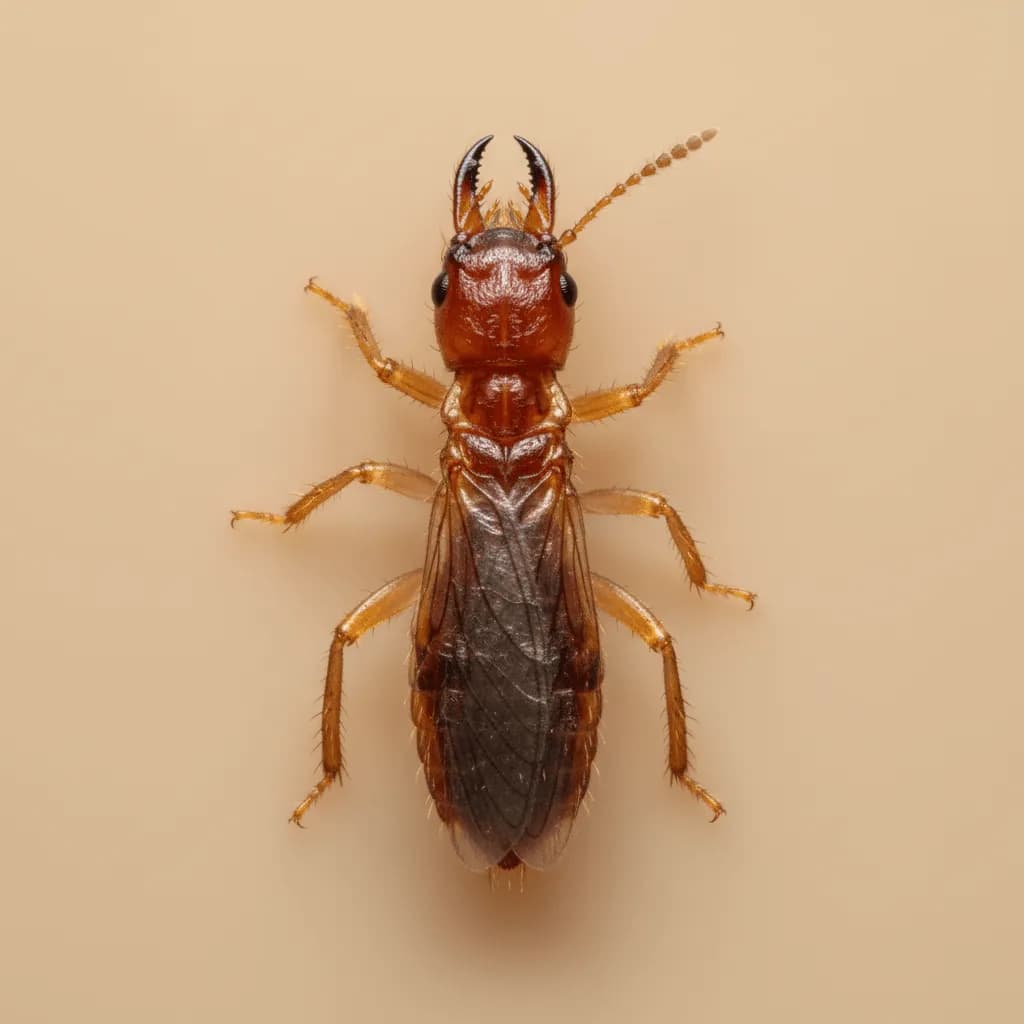
Pacific Dampwood Termite
Zootermopsis angusticollis
The Pacific Dampwood Termite is one of the largest termite species in North America. It infests wood with high moisture content, such as logs in contact with soil, leaking rooflines, and plumbing-damaged framing. Unlike subterranean termites, it does not build mud tubes and lives entirely within the damp wood it consumes.
Identification
Size
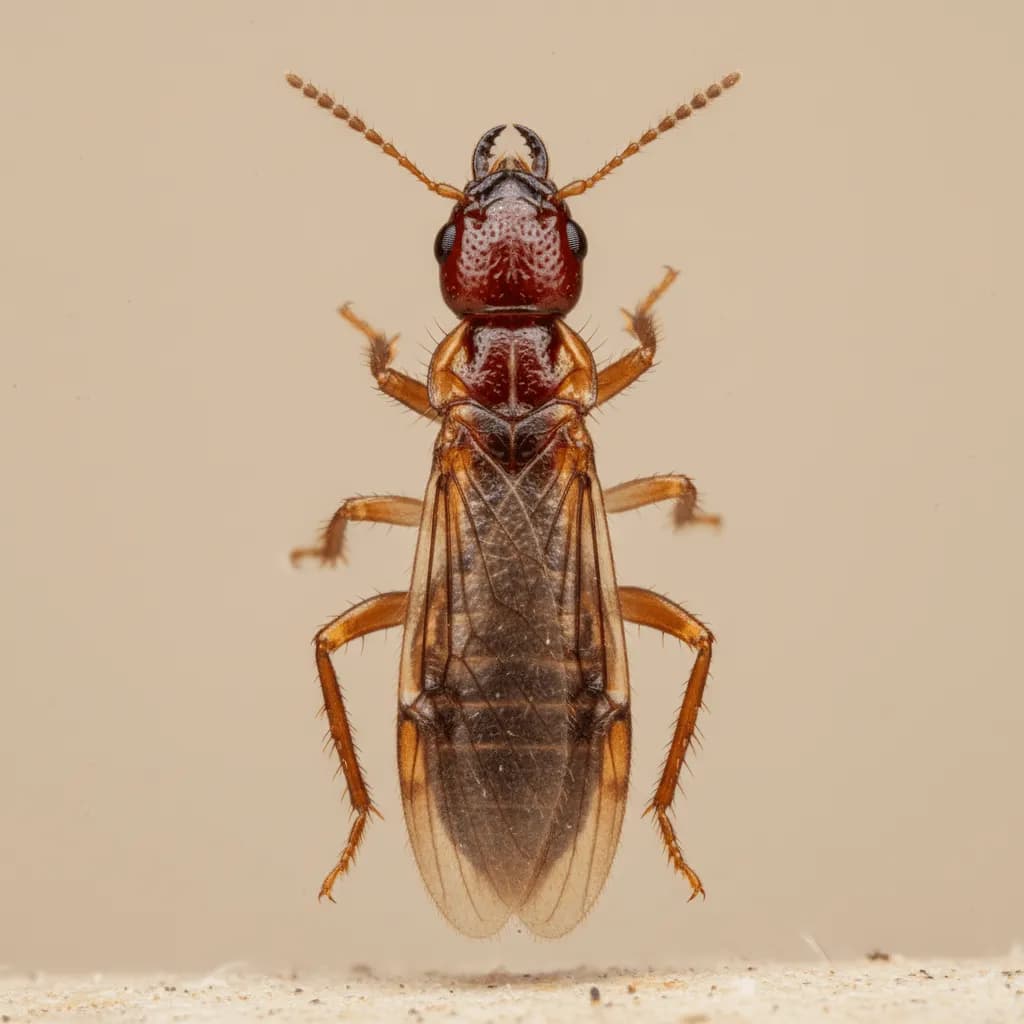
15-20 mm (swarmers - among the largest US termites)
Color
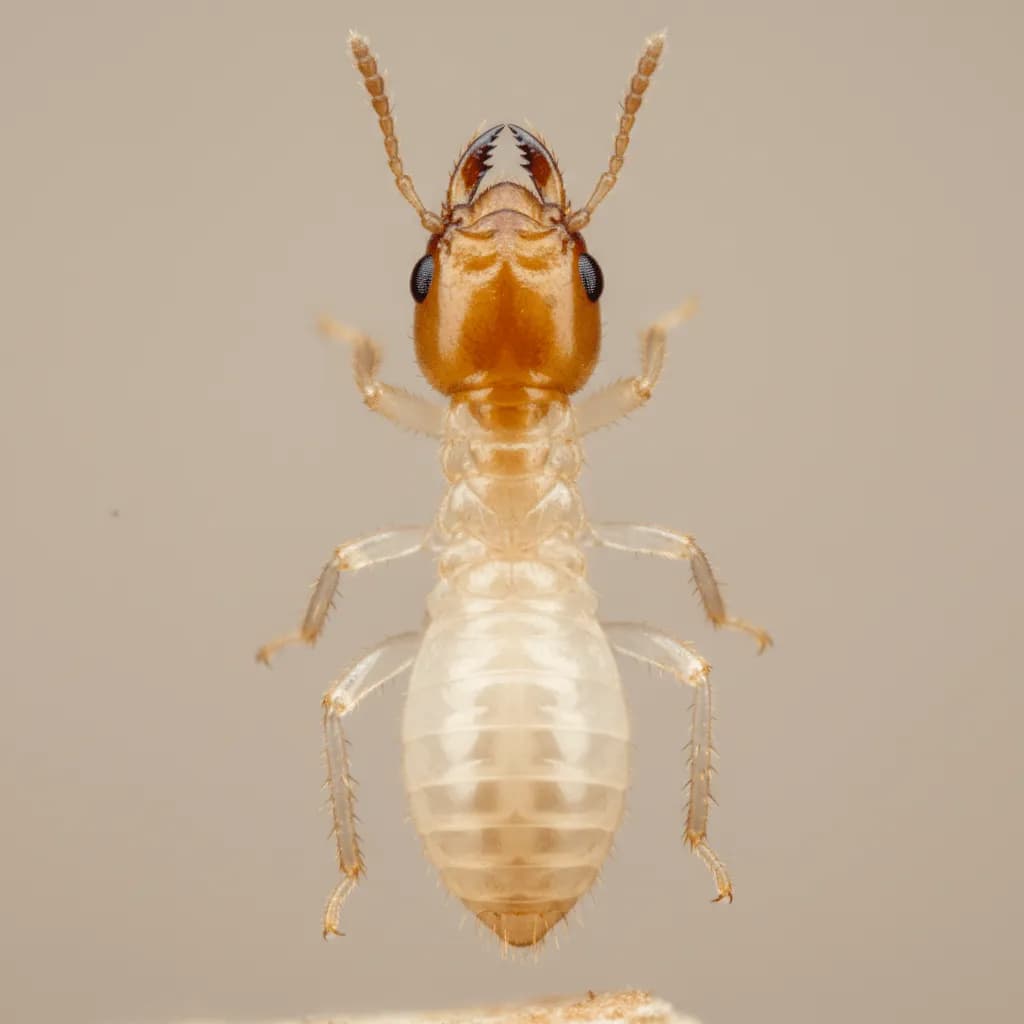
Swarmers are large and brown; workers are cream with large heads
Key Trait
Very large body size; infests wet, decaying wood; does not build mud tubes or require soil contact.
Behavior & Habitat
Colonies are relatively small (a few thousand workers) and confined to the moist wood they inhabit. Swarmers are very large and emerge in late summer and fall. They require a consistent moisture source.
Habitat: Dead logs, stumps, utility poles, and structural wood damaged by water intrusion. Common in Pacific Coast states. Presence in a structure always indicates a moisture problem.
Diet: Moist, decaying wood.
Signs of Infestation
- Very large termites in or near wet wood
- Soft, water-damaged wood with internal galleries
- Fecal pellets that may be oval and compact or softer than drywood pellets
- Evidence of chronic water intrusion near infested wood
Risks & Damage
Accelerates deterioration of already moisture-damaged structural wood.
Prevention Tips
- 1.Repair all roof, plumbing, and gutter leaks promptly
- 2.Replace water-damaged wood immediately
- 3.Improve ventilation in crawl spaces and attics
- 4.Eliminate wood-to-soil contact
Why DIY Treatment Often Falls Short
Treating the termites without fixing the underlying moisture problem guarantees reinfestation. Dampwood termites signal a larger water-intrusion issue that requires professional assessment.
Professional Treatment
The primary treatment is eliminating the moisture source. Once the wood dries out, dampwood termites cannot survive. Professionals identify and repair the water intrusion, replace damaged wood, and may apply localized termiticide to infested members.
Frequently Asked Questions
Do dampwood termites mean I have a moisture problem?
Are dampwood termites as destructive as subterranean?
Can I just replace the wet wood?
Need Help With Pacific dampwood termite?
If you're seeing signs of pacific dampwood termite in or around your home, professional treatment is the fastest way to stop the problem. Lotus Pest Control offers free inspections to identify the issue and recommend the right solution.
At a Glance
- Category
- Termites
- Scientific Name
- Zootermopsis angusticollis
- Size
- 15-20 mm (swarmers - among the largest US termites)
- Color
- Swarmers are large and brown; workers are cream with large heads
- Key Trait
- Very large body size; infests wet, decaying wood; does not build mud tubes or require soil contact.
- Regions
- Pacific Northwest, Southwest
- Threat Level
- Moderate
- Risk Types
- structural
- Seasonal Activity
- MarAprMayJunJulAugSepOctNovDecJanFebnonelowmoderatehighpeak