
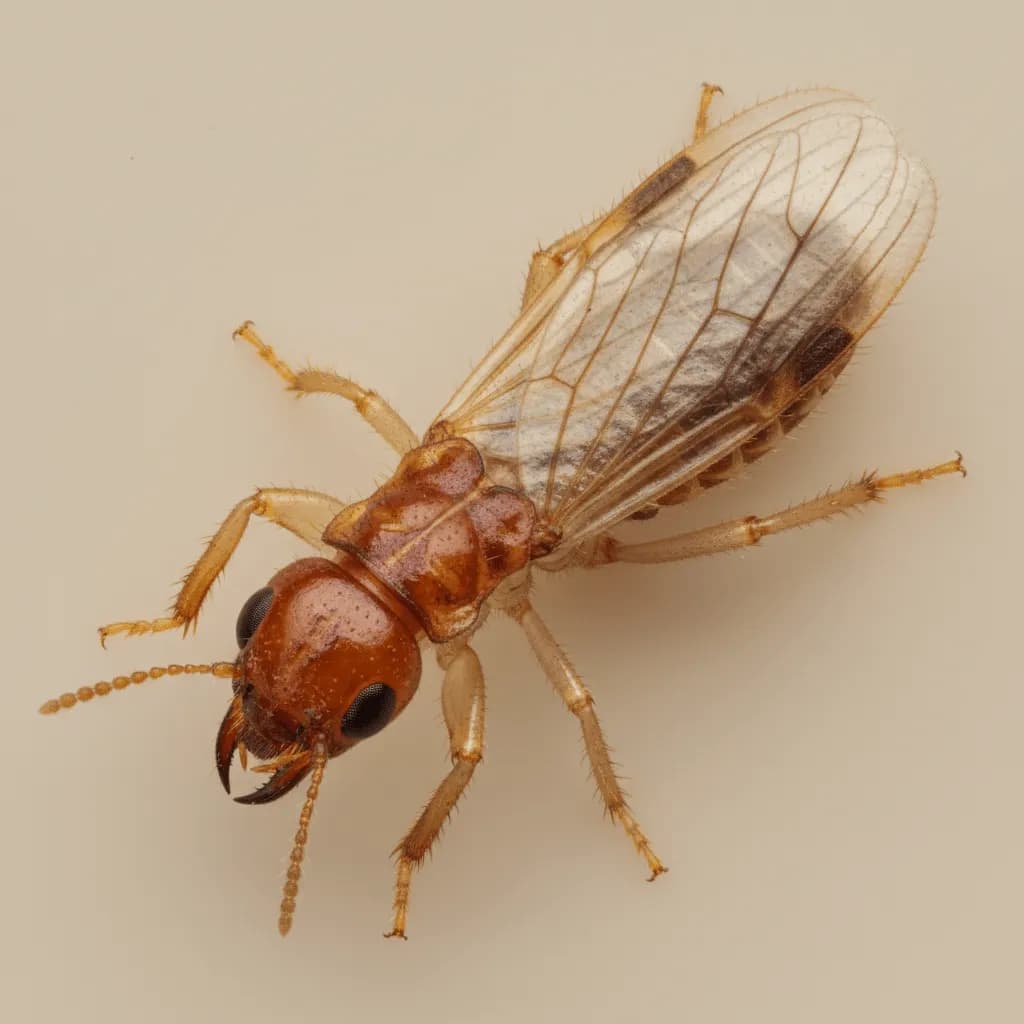
Southeastern Drywood Termite
Incisitermes snyderi
The Southeastern Drywood Termite is the primary drywood termite species in the southeastern United States. It infests structural wood in homes, especially in attics and wall framing along the Atlantic and Gulf coasts. Like all drywood termites, it lives entirely within the wood it consumes.
Identification
Size
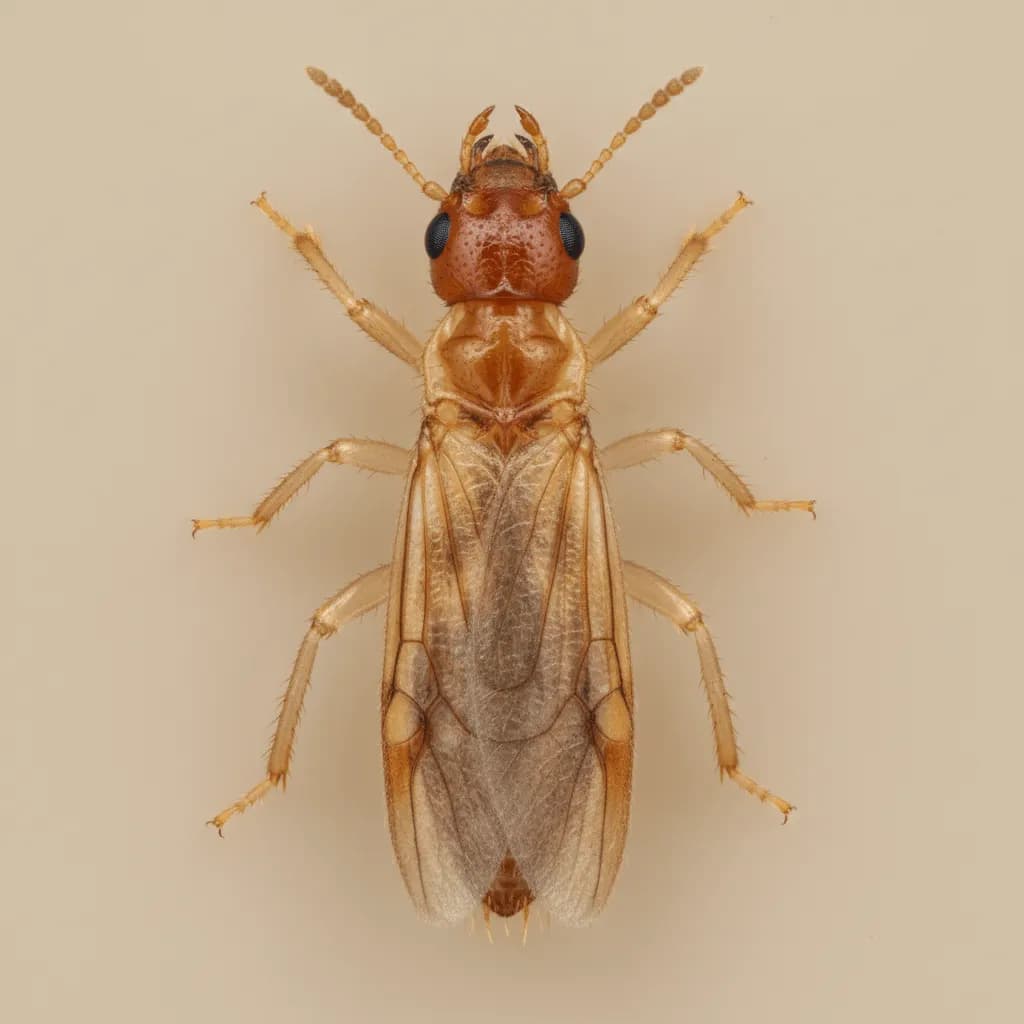
6-8 mm (swarmers)
Color
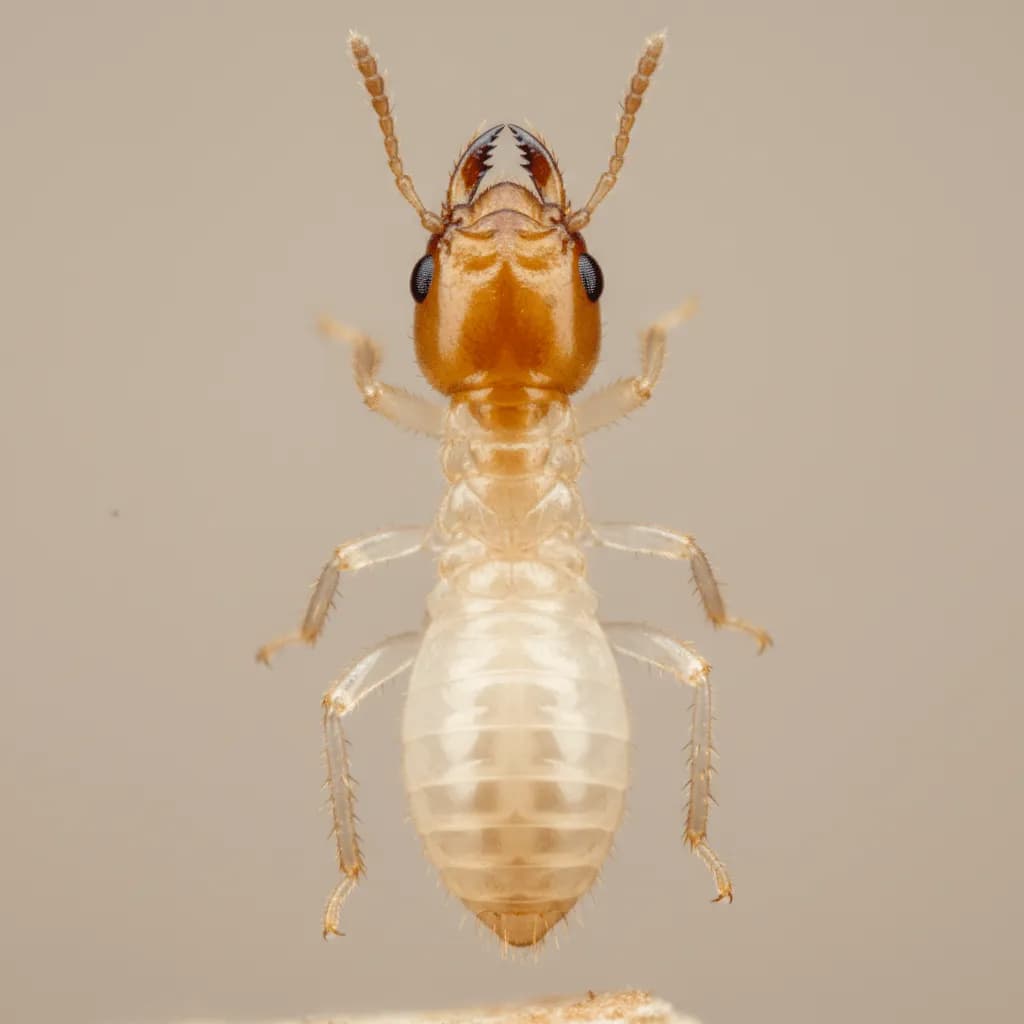
Swarmers are pale yellowish-brown; workers are cream
Key Trait
Smaller than the Western species; infests structural wood in the southeastern coastal states without soil contact.
Behavior & Habitat
Swarmers enter wood through small openings to start new colonies. Colonies are slow-growing and push fecal pellets out of kick-out holes. Nighttime swarms to lights occur in spring and early summer.
Habitat: Structural timbers, attic framing, window and door frames, and trim boards in coastal southeastern states. Does not require soil contact.
Diet: Dry structural and decorative wood.
Signs of Infestation
- Small piles of fecal pellets below infested trim or framing
- Kick-out holes in wood surfaces
- Swarmers at lights during spring evenings
Risks & Damage
Weakens attic framing, trim boards, and structural members over many years.
Prevention Tips
- 1.Apply paint or sealant to all exposed wood surfaces
- 2.Screen attic and soffit vents
- 3.Inspect and treat during construction with borate products
- 4.Schedule annual professional inspections
Why DIY Treatment Often Falls Short
Colonies are sealed inside wood galleries, completely protected from surface-applied products. Professional injection or fumigation is required to reach them.
Professional Treatment
Localized drill-and-inject treatments with termiticide address isolated colonies. Widespread infestations require whole-structure fumigation. Borate wood treatments during construction provide long-lasting preventive protection.
Frequently Asked Questions
How do Southeastern drywood termites differ from subterranean?
Can drywood termites damage furniture?
How fast do drywood termite colonies grow?
Need Help With Southeastern drywood termite?
If you're seeing signs of southeastern drywood termite in or around your home, professional treatment is the fastest way to stop the problem. Lotus Pest Control offers free inspections to identify the issue and recommend the right solution.
At a Glance
- Category
- Termites
- Scientific Name
- Incisitermes snyderi
- Size
- 6-8 mm (swarmers)
- Color
- Swarmers are pale yellowish-brown; workers are cream
- Key Trait
- Smaller than the Western species; infests structural wood in the southeastern coastal states without soil contact.
- Regions
- Southeast, South Central, Mid Atlantic
- Threat Level
- High
- Risk Types
- structural
- Seasonal Activity
- MarAprMayJunJulAugSepOctNovDecJanFebnonelowmoderatehighpeak