
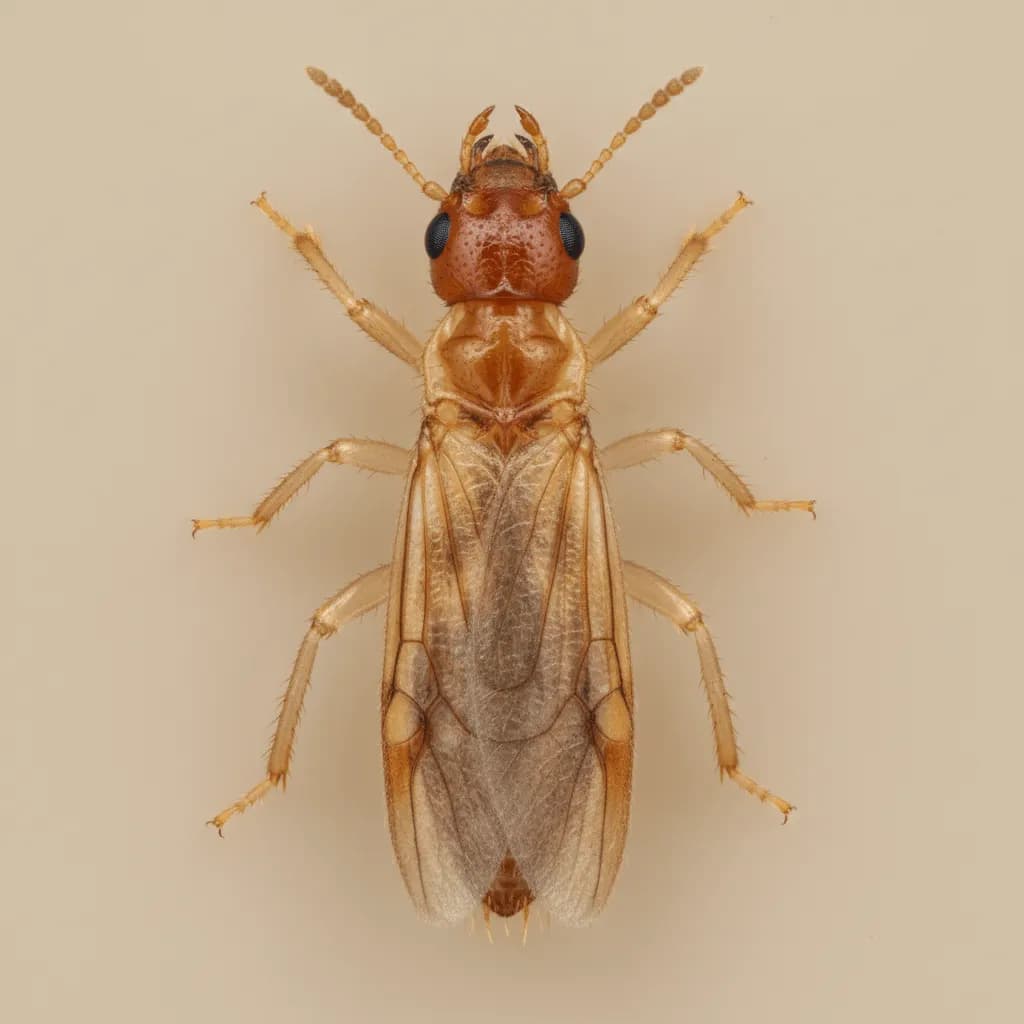
Western Drywood Termite
Incisitermes minor
The Western Drywood Termite infests dry, structural wood without needing soil contact or external moisture. It is the most important drywood termite in the western United States, damaging everything from framing lumber to furniture. Colonies are smaller than subterranean species but multiple colonies can occupy a single structure.
Identification
Size
7-10 mm (swarmers)
Color
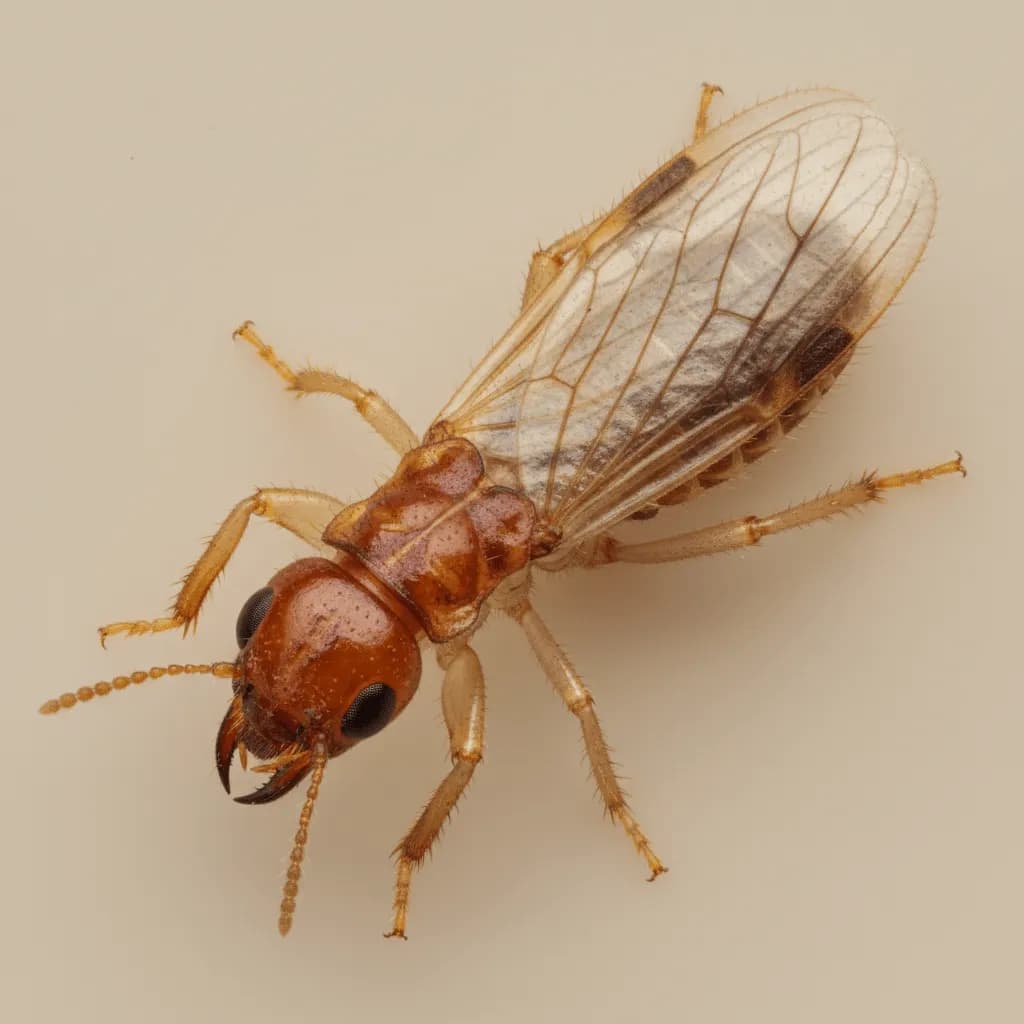
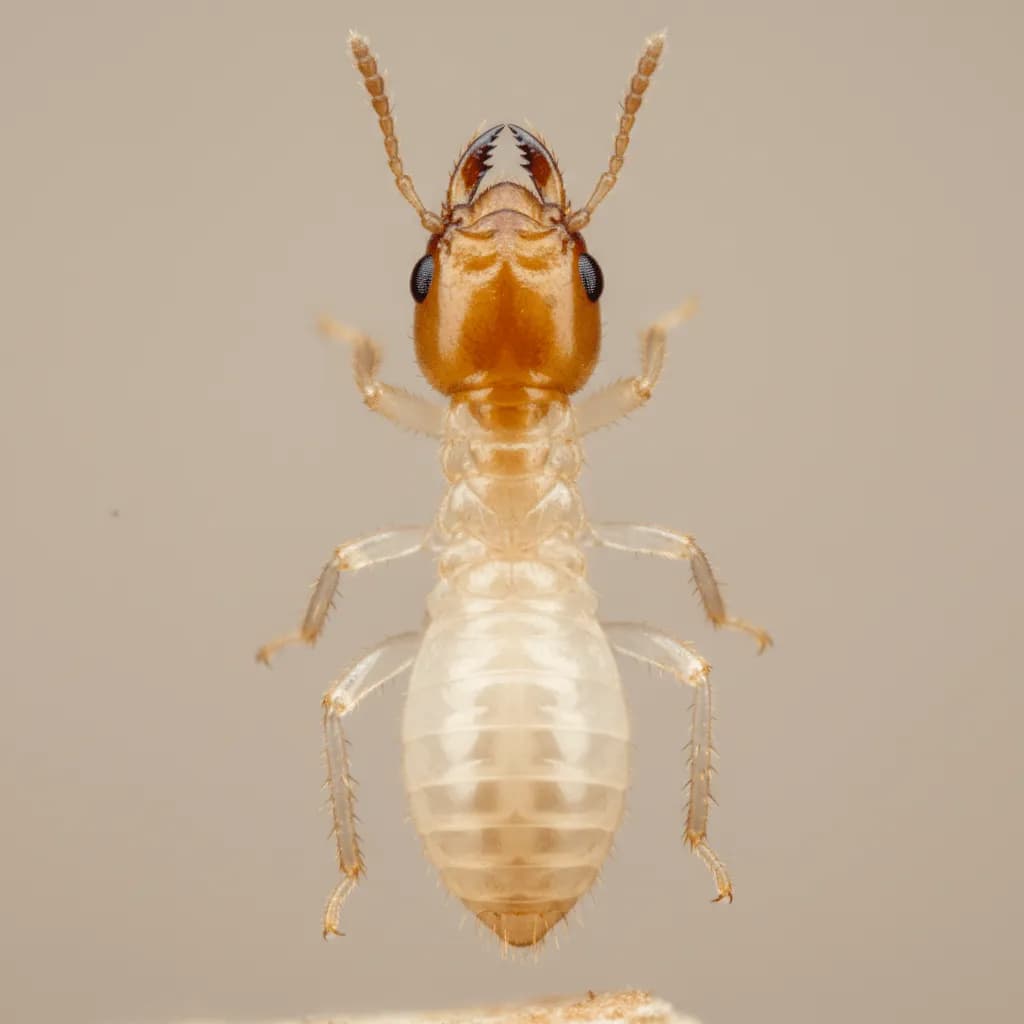
Swarmers are dark brown with smoky wings; workers are cream-white
Key Trait
Infests dry, sound wood without any soil contact; produces distinctive hexagonal fecal pellets.
Behavior & Habitat
Swarmers enter wood through small cracks and natural openings. Colonies develop entirely within the wood, pushing dry, hexagonal fecal pellets out through tiny kick-out holes. Colonies grow slowly but can persist for decades.
Habitat: Structural wood in attics, wall framing, eaves, and furniture. Does not require soil contact. Common in coastal and southern California, Arizona, and other warm, arid regions.
Diet: Dry, sound wood including structural lumber, furniture, and picture frames.
Signs of Infestation
- Tiny piles of hexagonal fecal pellets (like sand or coffee grounds) below infested wood
- Small round kick-out holes (1-2 mm) in wood surfaces
- Swarmers emerging indoors during warm weather
- Damaged wood that appears clean-cut with chambers visible when broken open
Risks & Damage
Multiple colonies in a single structure can cause significant cumulative damage to framing, trim, and furniture.
Prevention Tips
- 1.Seal all wood surfaces with paint or varnish to prevent swarmer entry
- 2.Screen attic vents with fine mesh
- 3.Inspect all secondhand furniture for fecal pellets and kick-out holes
- 4.Have annual termite inspections that include drywood assessment
Why DIY Treatment Often Falls Short
Drywood termites live entirely within the wood, out of reach of surface sprays. Localized treatments require specialized injection equipment, and widespread infestations may require whole-structure fumigation, which only licensed professionals can perform.
Professional Treatment
For localized infestations, professionals drill and inject termiticide directly into gallery systems. For widespread infestations, whole-structure fumigation with sulfuryl fluoride is the standard of care. Preventive treatments include borate-based wood treatments during construction.
Frequently Asked Questions
What are the small pellets falling from my ceiling?
Do drywood termites need moisture?
Is fumigation the only option?
Need Help With Western drywood termite?
If you're seeing signs of western drywood termite in or around your home, professional treatment is the fastest way to stop the problem. Lotus Pest Control offers free inspections to identify the issue and recommend the right solution.
At a Glance
- Category
- Termites
- Scientific Name
- Incisitermes minor
- Size
- 7-10 mm (swarmers)
- Color
- Swarmers are dark brown with smoky wings; workers are cream-white
- Key Trait
- Infests dry, sound wood without any soil contact; produces distinctive hexagonal fecal pellets.
- Regions
- Southwest, Southeast, South Central
- Threat Level
- High
- Risk Types
- structural
- Seasonal Activity
- MarAprMayJunJulAugSepOctNovDecJanFebnonelowmoderatehighpeak