
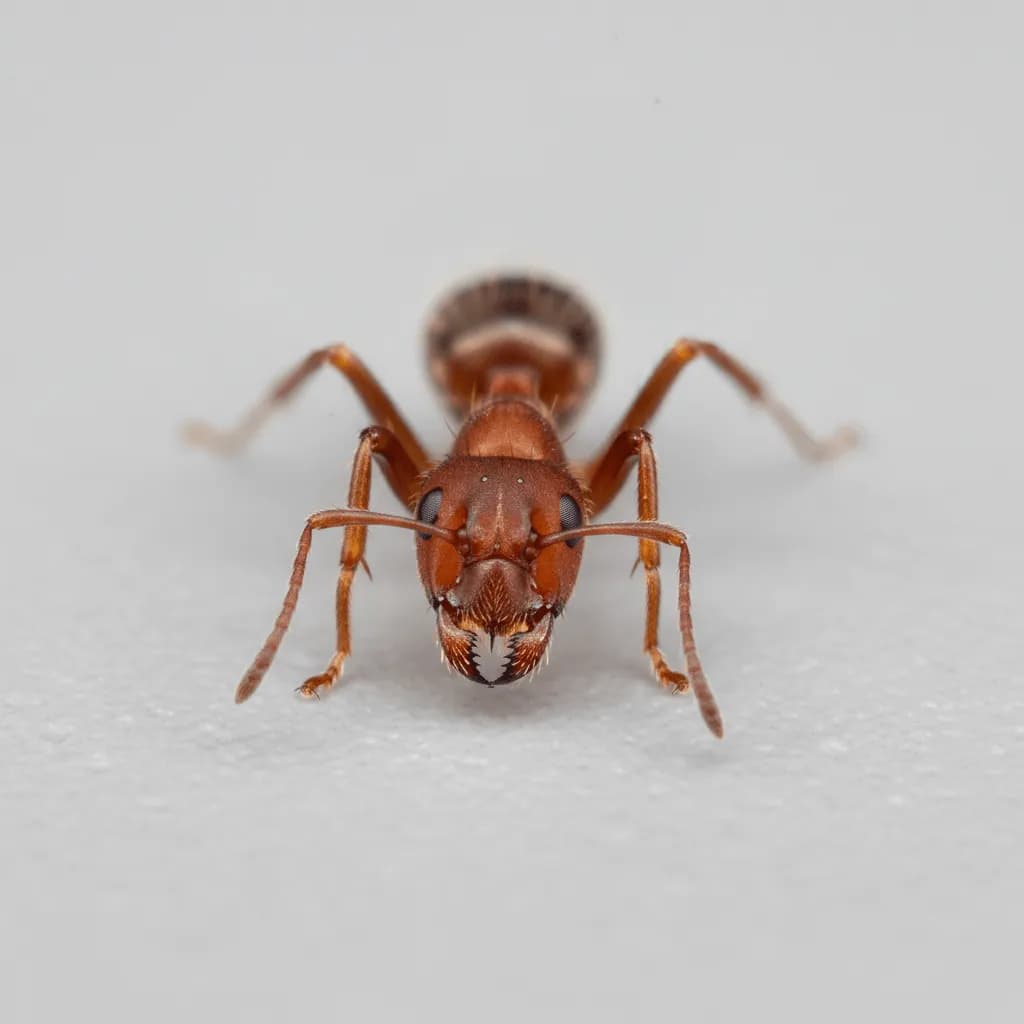
Argentine Ant
Linepithema humile
The Argentine Ant is an invasive species that forms enormous supercolonies stretching hundreds of miles. A single supercolony along the California coast is one of the largest known animal societies on Earth. Their sheer numbers displace native ant species and disrupt ecosystems while invading structures in overwhelming force.
Identification
Size
2.2-2.8 mm
Color
Light to dark brown
Key Trait
Uniform light brown color with no sting; forms massive supercolonies with cooperative, non-aggressive behavior between nests.
Behavior & Habitat
Workers from different nests cooperate rather than fight, allowing supercolonies to expand without internal conflict. Trails are wide, conspicuous, and can contain thousands of ants. They tend aphids and scale insects for honeydew.
Habitat: Moist soil near foundations, under mulch, potted plants, and leaf litter. Indoors they exploit any moisture source. They are especially problematic in irrigated landscapes in Mediterranean and subtropical climates.
Diet: Honeydew from aphids and scale insects, sweets, fruit juices, and occasionally proteins.
Signs of Infestation
- Wide, densely packed ant trails along foundations and sidewalks
- Massive numbers of small brown ants invading kitchens during dry weather
- Increased aphid populations on garden plants
- Ants nesting in potted plants or under landscape fabric
Risks & Damage
Supercolony-scale invasions can overwhelm kitchens and bathrooms with sheer numbers.
By tending aphids and scale, Argentine ants increase crop pest populations and reduce yields.
Prevention Tips
- 1.Reduce irrigation near the foundation to eliminate moist nesting habitat
- 2.Remove mulch within 12 inches of the foundation wall
- 3.Trim vegetation away from the structure so branches do not bridge the gap
- 4.Treat aphid infestations on landscape plants to reduce honeydew food sources
- 5.Seal all cracks and gaps at ground level
Why DIY Treatment Often Falls Short
The supercolony structure means millions of workers and thousands of queens span vast areas. Killing ants at one point does nothing to the colony overall. Repellent barriers simply redirect trails to new entry points rather than reducing population.
Professional Treatment
Professionals combine non-repellent perimeter treatments with strategically placed liquid bait stations that exploit the ants' cooperative foraging. Landscape modifications to reduce moisture and aphid management are part of an integrated program. Ongoing quarterly service is typically needed in heavily infested areas.
Frequently Asked Questions
Why are there so many Argentine ants?
Do Argentine ants sting or bite?
Will Argentine ants go away on their own?
Need Help With Argentine ant?
If you're seeing signs of argentine ant in or around your home, professional treatment is the fastest way to stop the problem. Lotus Pest Control offers free inspections to identify the issue and recommend the right solution.
At a Glance
- Category
- Ants
- Scientific Name
- Linepithema humile
- Size
- 2.2-2.8 mm
- Color
- Light to dark brown
- Key Trait
- Uniform light brown color with no sting; forms massive supercolonies with cooperative, non-aggressive behavior between nests.
- Regions
- Southwest, Southeast, Pacific Northwest, South Central
- Threat Level
- Moderate
- Risk Types
- nuisanceagricultural
- Seasonal Activity
- MarAprMayJunJulAugSepOctNovDecJanFebnonelowmoderatehighpeak