
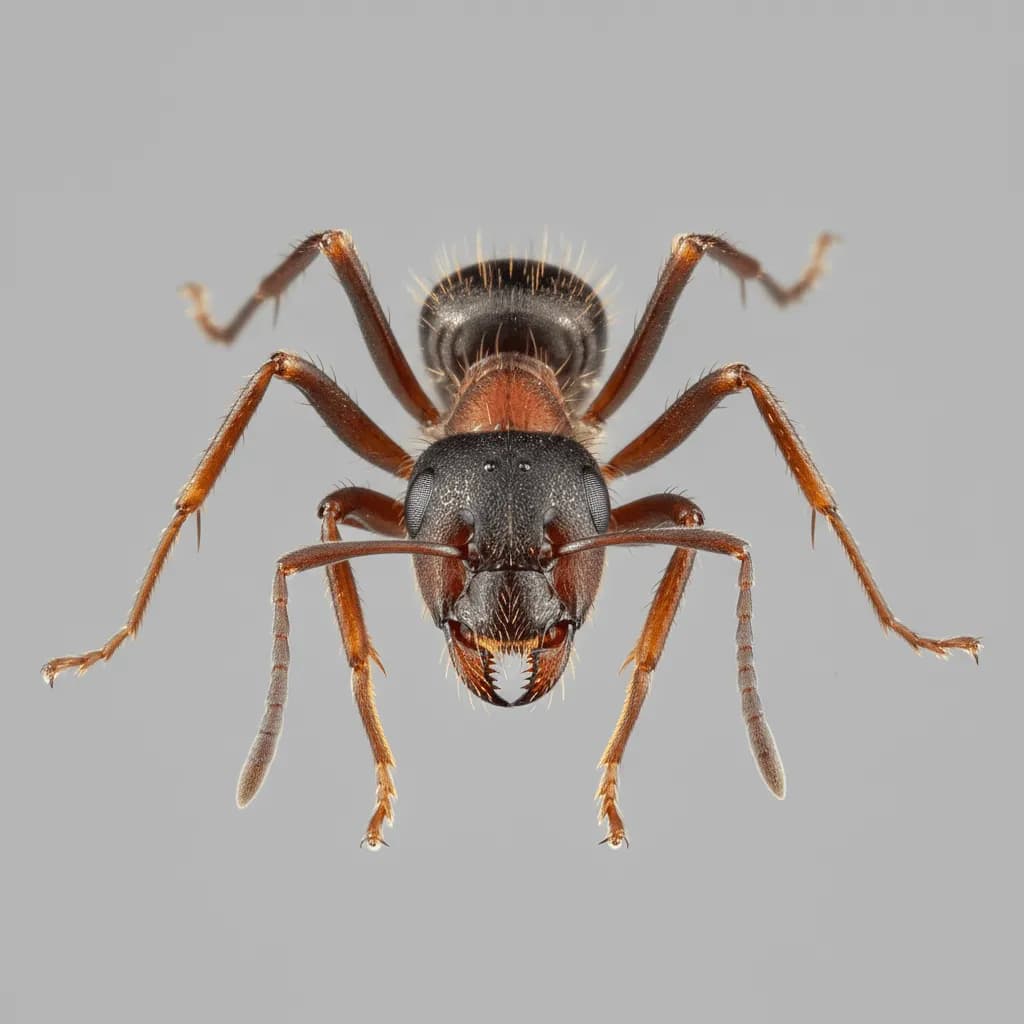
Field Ant
Formica spp.
Also known as: Thatching Ant, Mound Ant
Field Ants are a large genus with many species across North America. They build conspicuous soil or thatch mounds in lawns, meadows, and along fence lines. While primarily outdoor ants, their large mounds damage turf and mowing equipment. Workers defend nests vigorously by biting and spraying formic acid.
Identification
Size
4-8 mm
Color
Variable - black, brown, red, or bicolored depending on species
Key Trait
Large mound nests in open fields and yards; workers can spray formic acid in defense.
Behavior & Habitat
Workers forage on the ground and in low vegetation for insects and honeydew. Some species construct large thatch mounds from plant debris that can persist for decades. Territorial battles between colonies are common.
Habitat: Open sunny areas in lawns, pastures, forest edges, and along driveways. Mounds range from small soil domes to large thatch structures over a foot tall.
Diet: Dead insects, honeydew, nectar, and seeds.
Signs of Infestation
- Dome-shaped earth or thatch mounds in lawns and along driveways
- Biting ants when mounds are disturbed by mowing
- Damaged turf around mound perimeters
Risks & Damage
Mounds damage turf grass, interfere with mowing, and create tripping hazards.
Bites accompanied by formic acid spray cause temporary pain and skin irritation.
Prevention Tips
- 1.Treat individual mounds with granular ant bait in early spring
- 2.Maintain dense, vigorous turf to discourage mound building
- 3.Mow regularly and flag mound locations to avoid equipment damage
- 4.Address honeydew-producing insect populations on nearby trees
Why DIY Treatment Often Falls Short
Mounds are deep with extensive tunnel systems. Flooding or surface-spraying individual mounds provides only temporary relief because the queen and brood chambers are far below the surface.
Professional Treatment
Professionals apply targeted mound treatments with registered granular or liquid products and a preventive perimeter treatment to discourage new colony establishment. Large-scale infestations in turf may require broadcast application.
Related Pests
Frequently Asked Questions
Are field ants the same as fire ants?
Should I remove field ant mounds from my yard?
Do field ants come indoors?
Need Help With Field ant?
If you're seeing signs of field ant in or around your home, professional treatment is the fastest way to stop the problem. Lotus Pest Control offers free inspections to identify the issue and recommend the right solution.
At a Glance
- Category
- Ants
- Scientific Name
- Formica spp.
- Size
- 4-8 mm
- Color
- Variable - black, brown, red, or bicolored depending on species
- Key Trait
- Large mound nests in open fields and yards; workers can spray formic acid in defense.
- Regions
- Northeast, Midwest, Pacific Northwest, Mid Atlantic
- Threat Level
- Low
- Risk Types
- lawnnuisance
- Seasonal Activity
- MarAprMayJunJulAugSepOctNovDecJanFebnonelowmoderatehighpeak