
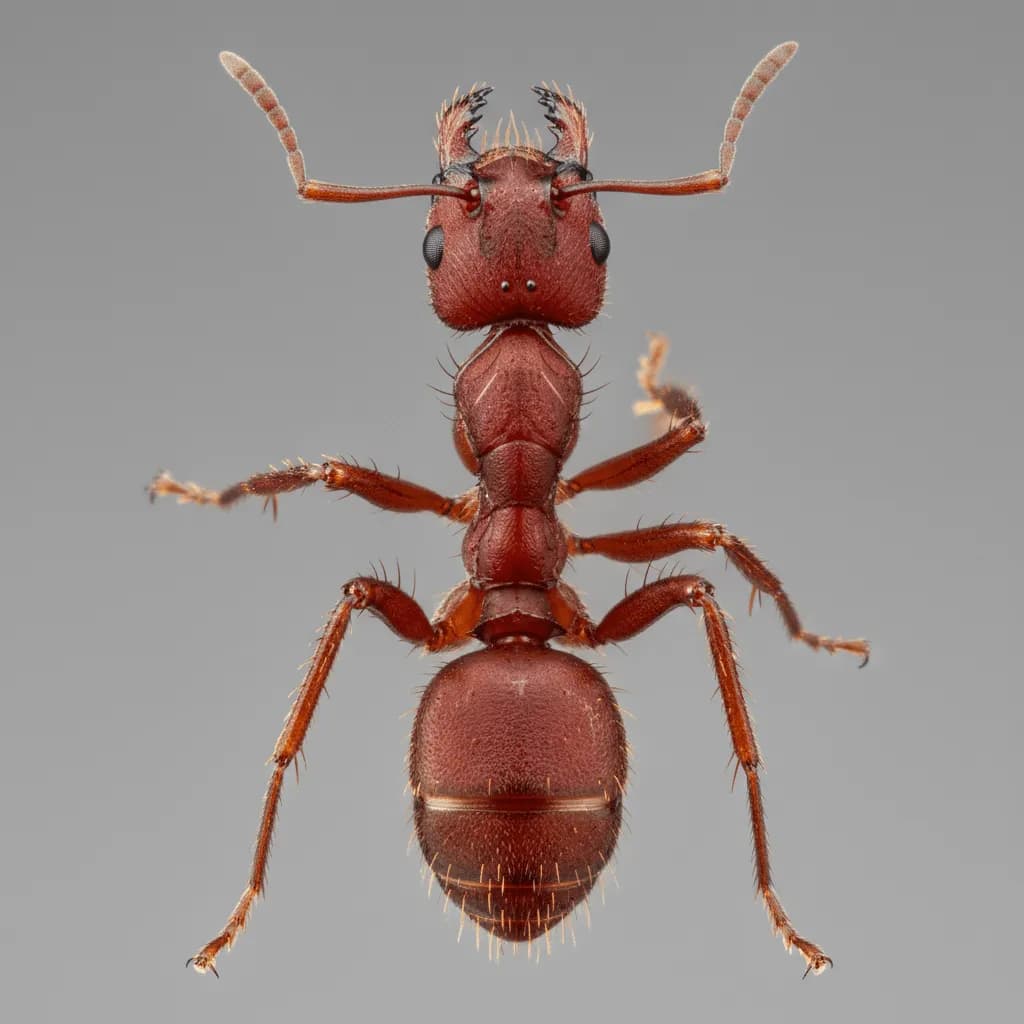
Red Harvester Ant
Pogonomyrmex barbatus
Also known as: Harvester Ant
The Red Harvester Ant is a large, conspicuous species of the arid Southwest and Southern Plains. Colonies maintain a clear zone around the nest entrance, stripped of all vegetation, which can reach several feet in diameter. Their powerful sting is among the most painful of any North American ant.
Identification
Size
6-7 mm
Color
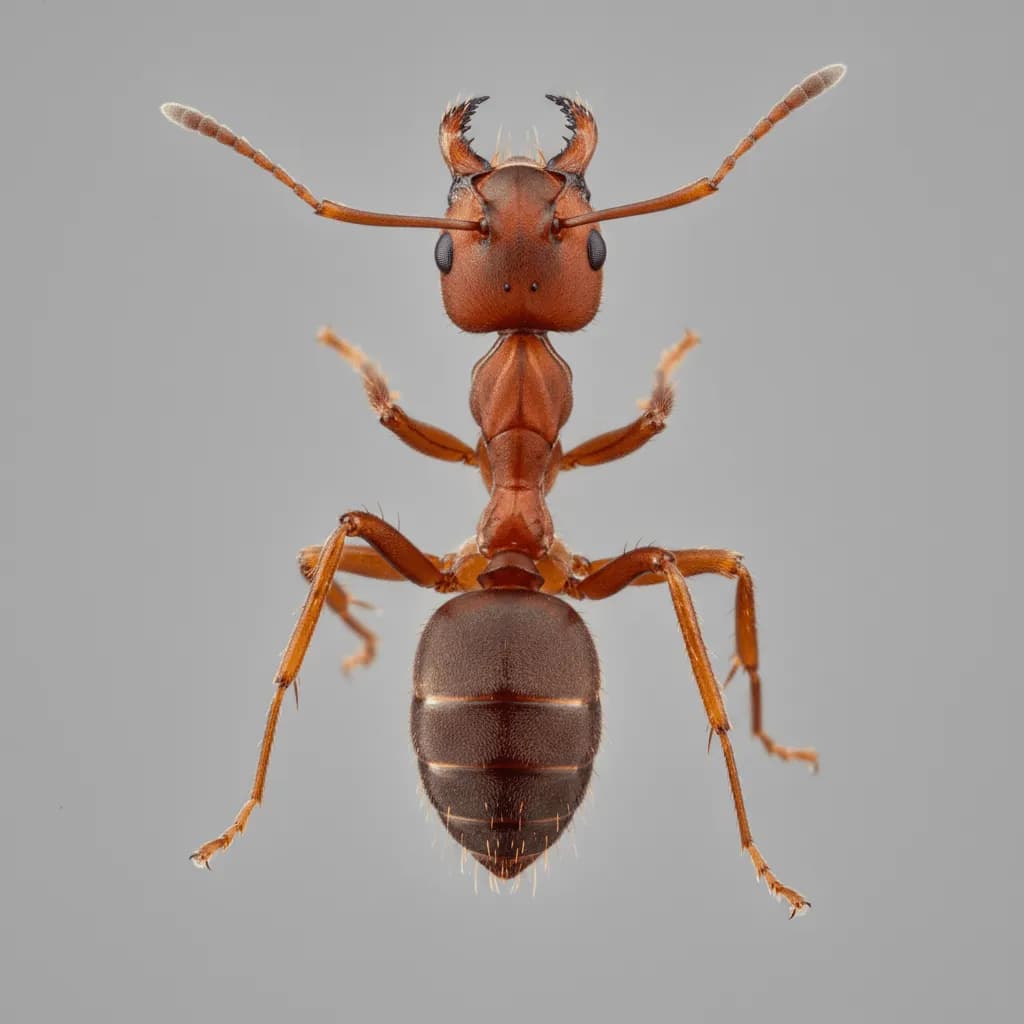
Reddish-brown
Key Trait
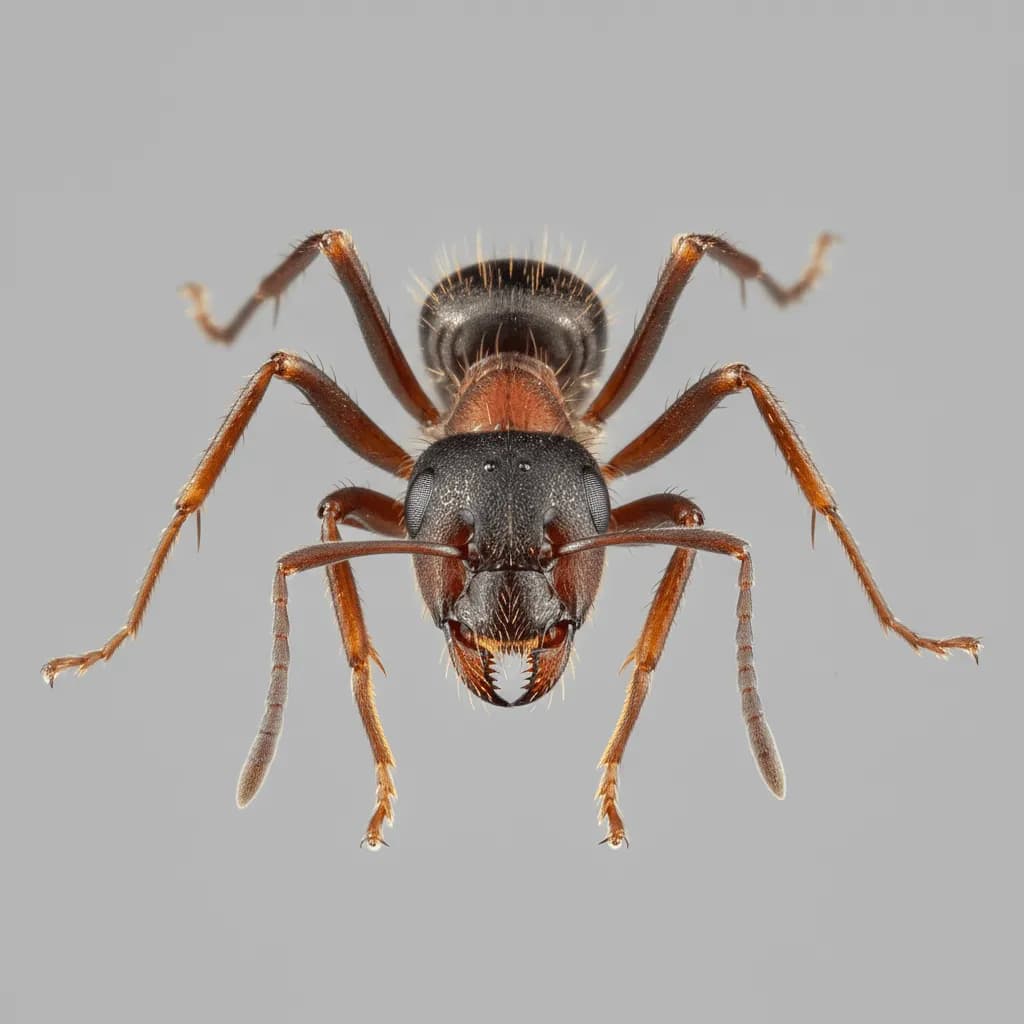
Large bare clearing around the nest entrance; workers have a powerful sting and a distinctive beard of long hairs under the head.
Behavior & Habitat
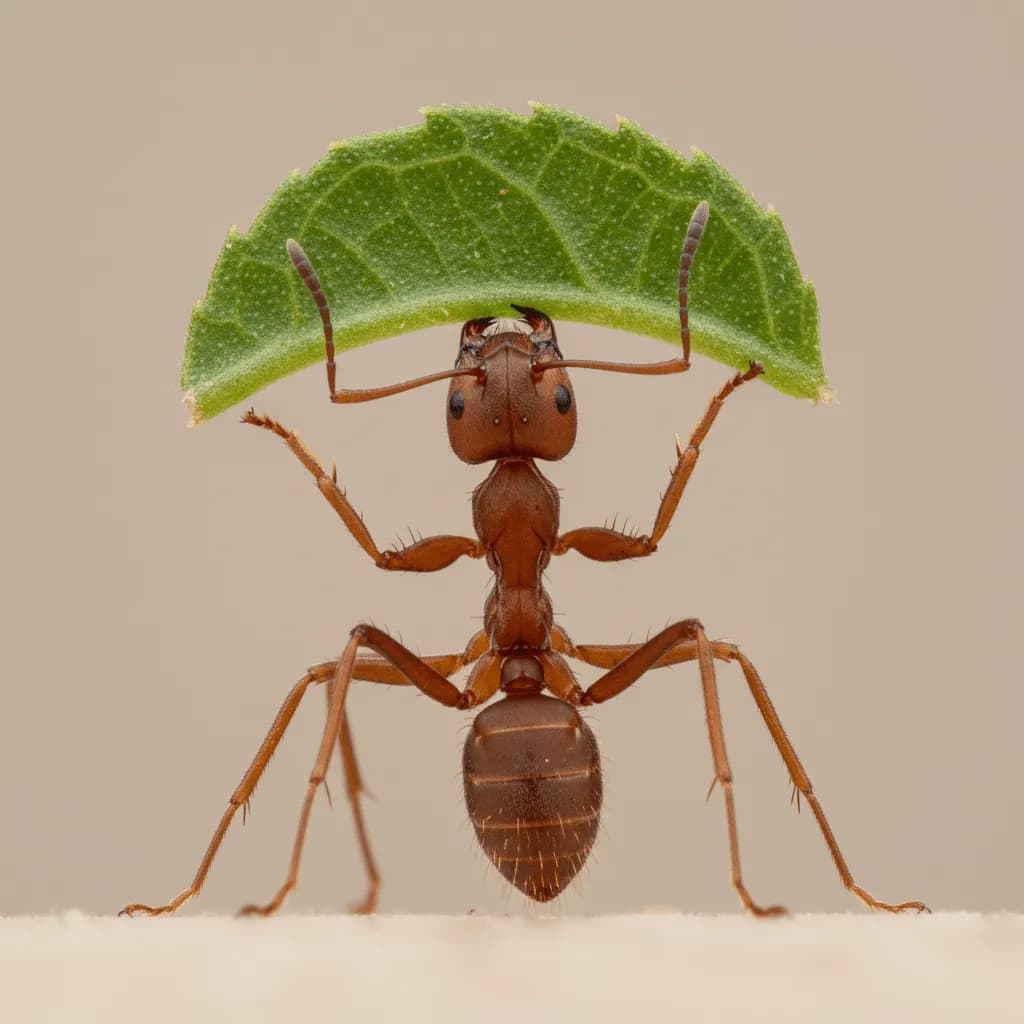
Workers venture out on long foraging columns to collect seeds, their primary food. They clear vegetation in a wide circle around the nest entrance to improve visibility and airflow. Stinging is vigorous when the nest is disturbed.
Habitat: Dry, open ground with sparse vegetation - prairies, desert scrub, roadsides, and rural yards. Nests are deep in the soil with a single large entrance crater.
Diet: Primarily seeds; supplements with dead insects and other plant material.
Signs of Infestation
- Large bare circle of cleared ground around a central nest hole in the yard
- Organized columns of large reddish ants carrying seeds
- Painful stings when the cleared area is accidentally disturbed
Risks & Damage
Stings are intensely painful and can cause severe allergic reactions in sensitive individuals.
Vegetation-clearing activity creates unsightly bare spots in lawns and landscapes.
Prevention Tips
- 1.Treat individual mounds with registered ant bait products in late spring
- 2.Wear protective footwear when walking in known harvester ant habitat
- 3.Maintain irrigated turf to discourage nesting in manicured lawns
- 4.Keep play areas clear of nests
Why DIY Treatment Often Falls Short
Nests extend several feet deep into the soil, well beyond the reach of boiling water or surface-applied granules. The single queen is deep underground and will not be reached by products that only penetrate the top few inches.
Professional Treatment
Professionals apply slow-acting granular bait around active nest entrances. Workers carry the bait down to the queen, eliminating the colony from within. Deep soil injection may be used for persistent nests near high-traffic areas.
Frequently Asked Questions
How deep do harvester ant nests go?
Are harvester ants beneficial?
How painful is a harvester ant sting?
Need Help With Red harvester ant?
If you're seeing signs of red harvester ant in or around your home, professional treatment is the fastest way to stop the problem. Lotus Pest Control offers free inspections to identify the issue and recommend the right solution.
At a Glance
- Category
- Ants
- Scientific Name
- Pogonomyrmex barbatus
- Size
- 6-7 mm
- Color
- Reddish-brown
- Key Trait
- Large bare clearing around the nest entrance; workers have a powerful sting and a distinctive beard of long hairs under the head.
- Regions
- Southwest, South Central
- Threat Level
- Moderate
- Risk Types
- healthlawn
- Seasonal Activity
- MarAprMayJunJulAugSepOctNovDecJanFebnonelowmoderatehighpeak