
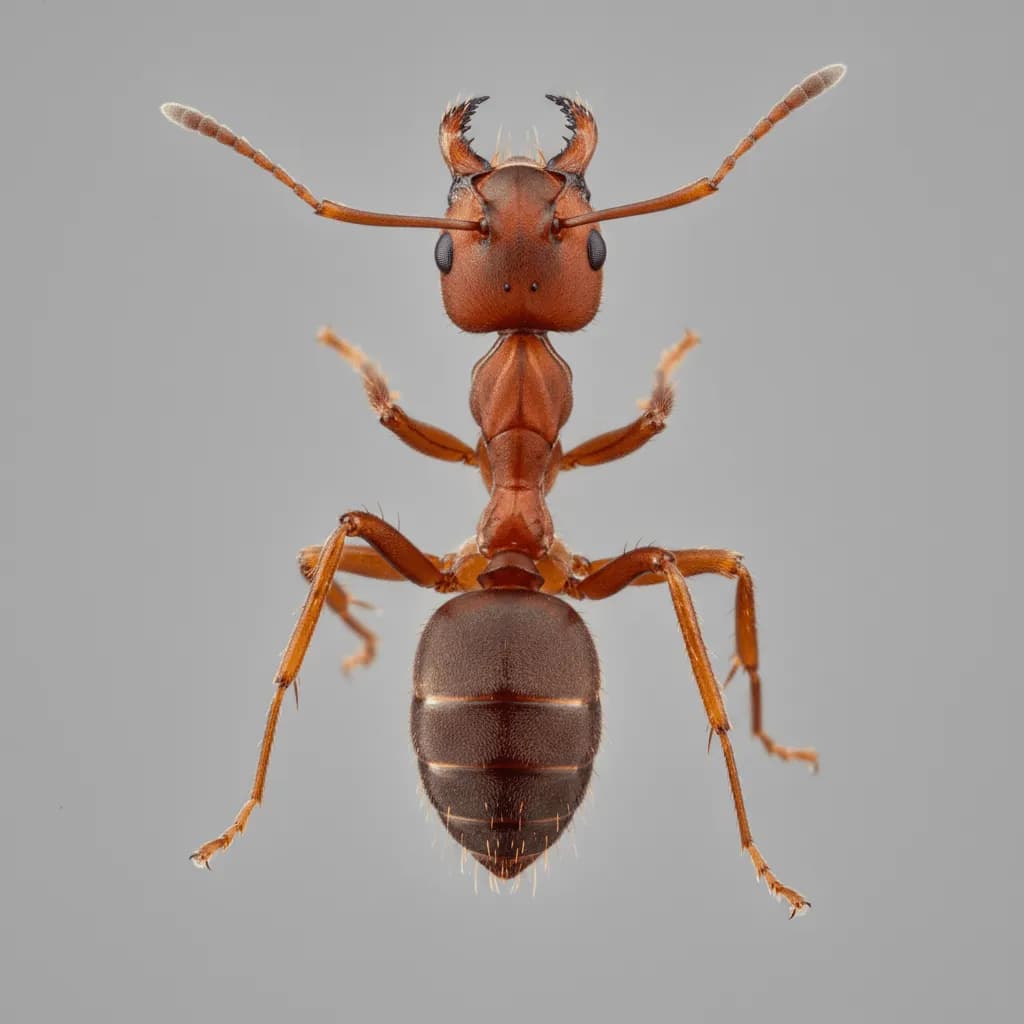
Red Imported Fire Ant
Solenopsis invicta
Also known as: RIFA, Fire Ant
Originally from South America, the Red Imported Fire Ant is one of the most economically damaging invasive pests in the southern United States. Colonies can contain over 200,000 workers and multiple queens. Their large earthen mounds dot lawns, pastures, and right-of-ways, and disturbed colonies attack en masse with venomous stings.
Identification
Size
2-6 mm
Color
Dark reddish-brown with a darker abdomen
Key Trait
Aggressive behavior, distinctive dome-shaped mounds, and a painful sting that produces white pustules.
Behavior & Habitat
Workers aggressively defend the mound by climbing onto an intruder and stinging simultaneously on chemical cue. They forage in wide fan-shaped trails and can raft together on floodwater to colonize new areas. Mating flights occur after warm rains from spring through fall.
Habitat: Open, sunny areas such as lawns, pastures, playgrounds, highway medians, and around electrical equipment housings. They build conspicuous dome-shaped mounds that can reach 18 inches high. Fire ants are also found nesting inside electrical junction boxes and HVAC units.
Diet: Omnivorous; feeds on insects, earthworms, seeds, young plants, small vertebrates, and sugary liquids.
Signs of Infestation
- Dome-shaped earthen mounds in sunny areas of the yard
- Aggressive ant swarming when a mound is disturbed
- White pustules on skin after stings
- Dead patches of grass around mound perimeters
- Ants clustering around electrical boxes or HVAC units
Risks & Damage
Stings cause painful pustules and can trigger life-threatening anaphylaxis in sensitized individuals.
Pets and livestock can suffer severe sting reactions, especially young or tethered animals unable to flee.
Fire ants are attracted to electrical current and can short-circuit HVAC units, traffic signal boxes, and well pumps.
Mounds damage turf, irrigation heads, and mowing equipment.
Prevention Tips
- 1.Apply broadcast fire ant bait across the entire yard in early spring and again in fall
- 2.Treat individual mounds with approved mound drench products
- 3.Inspect and seal electrical junction boxes and HVAC pads
- 4.Keep grass mowed and remove yard debris that shelters new colonies
- 5.Wear closed-toe shoes and long pants when working in known fire ant areas
Why DIY Treatment Often Falls Short
Home remedies like boiling water or gasoline kill surface workers but rarely reach the queen deep in the mound. Over-the-counter granules treat individual mounds but new colonies re-infest from neighboring properties within weeks without a comprehensive broadcast and mound program.
Professional Treatment
Professionals use a two-step method: a broadcast application of slow-acting bait over the entire property followed by targeted mound treatments with fast-acting liquid or granular products. Regular quarterly treatments maintain long-term suppression in heavily infested regions.
Frequently Asked Questions
Can fire ant stings be dangerous?
Why do fire ants invade electrical equipment?
Will cold winters eventually kill fire ants in my area?
Need Help With Red imported fire ant?
If you're seeing signs of red imported fire ant in or around your home, professional treatment is the fastest way to stop the problem. Lotus Pest Control offers free inspections to identify the issue and recommend the right solution.
At a Glance
- Category
- Ants
- Scientific Name
- Solenopsis invicta
- Size
- 2-6 mm
- Color
- Dark reddish-brown with a darker abdomen
- Key Trait
- Aggressive behavior, distinctive dome-shaped mounds, and a painful sting that produces white pustules.
- Regions
- Southeast, South Central, Southwest, Mid Atlantic
- Threat Level
- Very High
- Risk Types
- healthpetselectricallawn
- Seasonal Activity
- MarAprMayJunJulAugSepOctNovDecJanFebnonelowmoderatehighpeak