
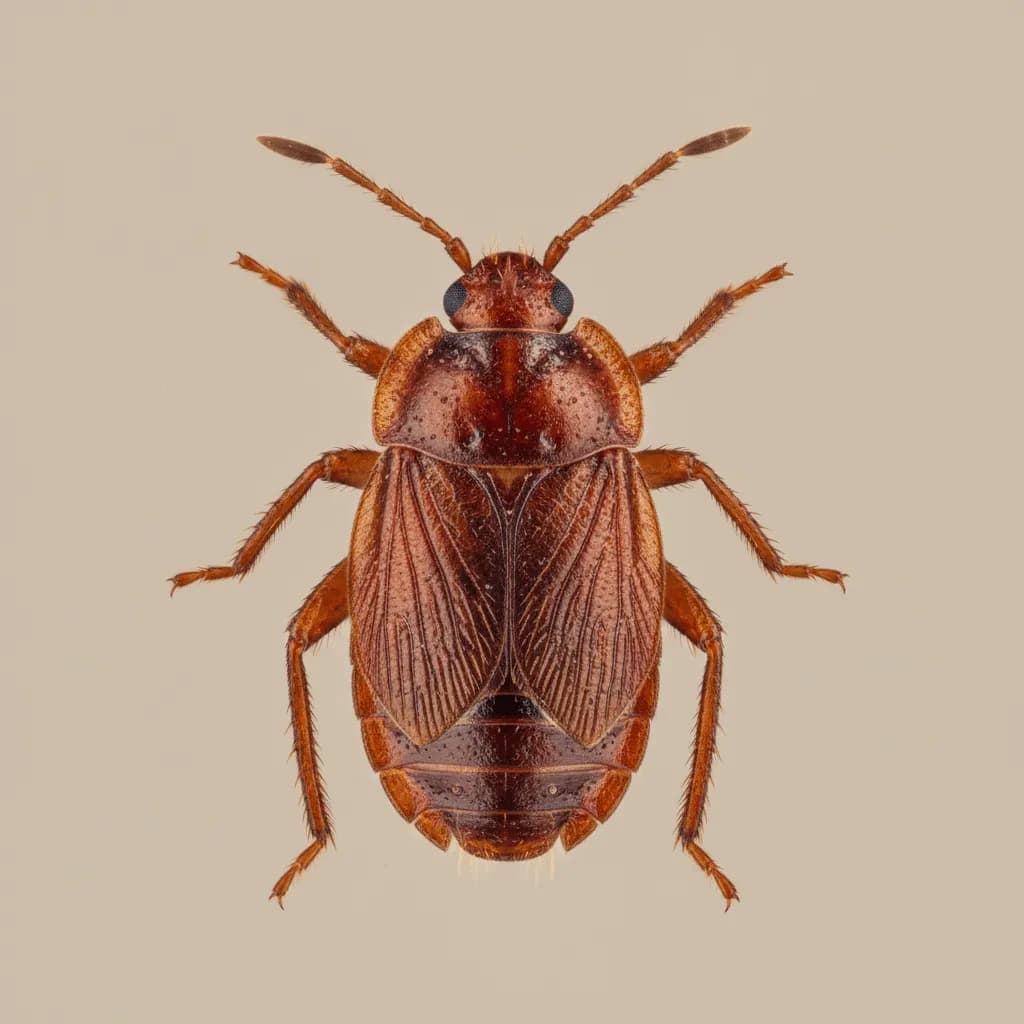
Common Bed Bug
Cimex lectularius
Also known as: Bed Bug, Wall Louse, Mahogany Flat
The Common Bed Bug is the most widespread species of bed bug globally, infesting homes, hotels, dormitories, and public transportation. It feeds exclusively on human blood, typically at night while the host sleeps. Infestations have surged worldwide since the late 1990s due to increased travel and pesticide resistance.
Identification
Size
4-7 mm (unfed); up to 10 mm (engorged)
Color
Reddish-brown when unfed; dark purplish-red when engorged with blood
Key Trait
Flat, oval, wingless body that swells and elongates after feeding; visible with the naked eye; hides in mattress seams, headboards, and crevices near sleeping areas.
Behavior & Habitat
Nocturnal blood feeder that hides in cracks and crevices near sleeping areas during the day. Attracted to carbon dioxide and body heat. Can survive months without feeding. Leaves characteristic fecal spotting and shed skins near harborage sites.
Habitat: Mattress seams, box springs, headboards, bed frames, nightstands, baseboards, electrical outlets, and luggage - anywhere within 8 feet of a sleeping host.
Diet: Human blood exclusively. Feeds for 5-10 minutes, typically between 2 AM and 5 AM. Can survive 6-12 months without a blood meal.
Signs of Infestation
- Dark fecal spots (digested blood) on mattress seams, sheets, and headboard crevices
- Shed skins (exuviae) and tiny white eggs in mattress tufts and seams
- Itchy, red welts in linear or clustered patterns on skin exposed during sleep
Risks & Damage
Bites cause itchy welts, secondary infections from scratching, and significant psychological distress including insomnia and anxiety.
Extremely difficult to eliminate; causes severe psychological stress, social stigma, and economic costs.
Prevention Tips
- 1.Encase mattresses and box springs in bed-bug-proof encasements
- 2.Inspect hotel rooms before unpacking - check mattress seams, headboards, and nightstands
- 3.Never bring secondhand furniture or mattresses into your home without thorough inspection
Why DIY Treatment Often Falls Short
Bed bugs are resistant to many over-the-counter pesticides, hide in places sprays cannot reach (inside walls, electrical outlets, mattress cores), and a single surviving pregnant female can restart the entire infestation.
Professional Treatment
Professionals use integrated approaches combining targeted residual insecticides, desiccant dusts in wall voids, mattress encasements, and often heat treatments (120 degrees F+) that penetrate hiding spots no chemical can reach. Multiple follow-up visits are standard.
Frequently Asked Questions
Can I get bed bugs from a clean home?
Can bed bugs transmit diseases?
How did bed bugs come back?
Need Help With Common bed bug?
If you're seeing signs of common bed bug in or around your home, professional treatment is the fastest way to stop the problem. Lotus Pest Control offers free inspections to identify the issue and recommend the right solution.
At a Glance
- Category
- Bed Bugs
- Scientific Name
- Cimex lectularius
- Size
- 4-7 mm (unfed); up to 10 mm (engorged)
- Color
- Reddish-brown when unfed; dark purplish-red when engorged with blood
- Key Trait
- Flat, oval, wingless body that swells and elongates after feeding; visible with the naked eye; hides in mattress seams, headboards, and crevices near sleeping areas.
- Regions
- Northeast, Midwest, Southeast, West Coast, Mid Atlantic, Southwest
- Threat Level
- Very High
- Risk Types
- healthnuisance
- Seasonal Activity
- MarAprMayJunJulAugSepOctNovDecJanFebnonelowmoderatehighpeak