
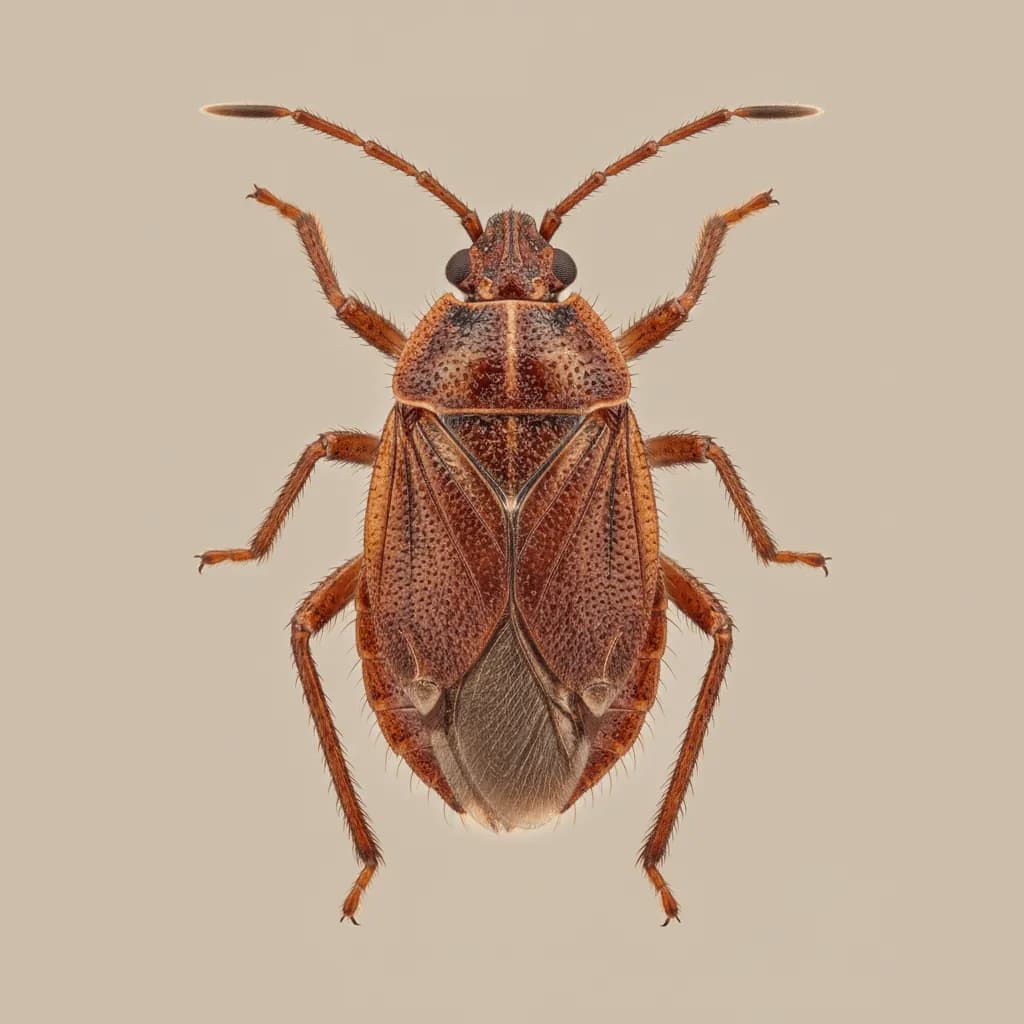
Swallow Bug
Oeciacus vicarius
Also known as: Cliff Swallow Bug
The Swallow Bug is a blood-feeding parasite of cliff swallows and barn swallows. It infests nests attached to building eaves and when swallows depart in fall, hungry swallow bugs can migrate indoors in search of blood meals. They are a significant nuisance in areas with large swallow colonies on structures.
Identification
Size
3-5 mm
Color
Grayish-brown with longer body hair than bed bugs
Key Trait
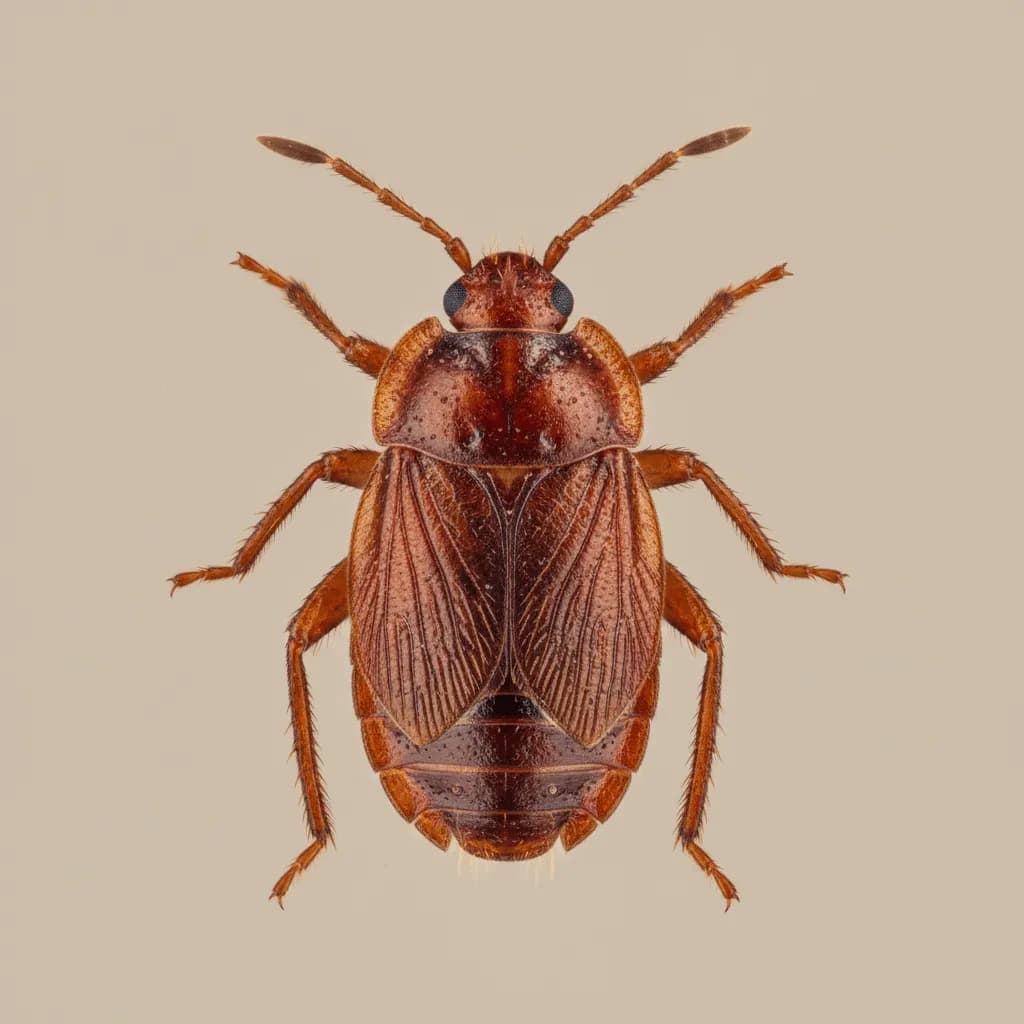
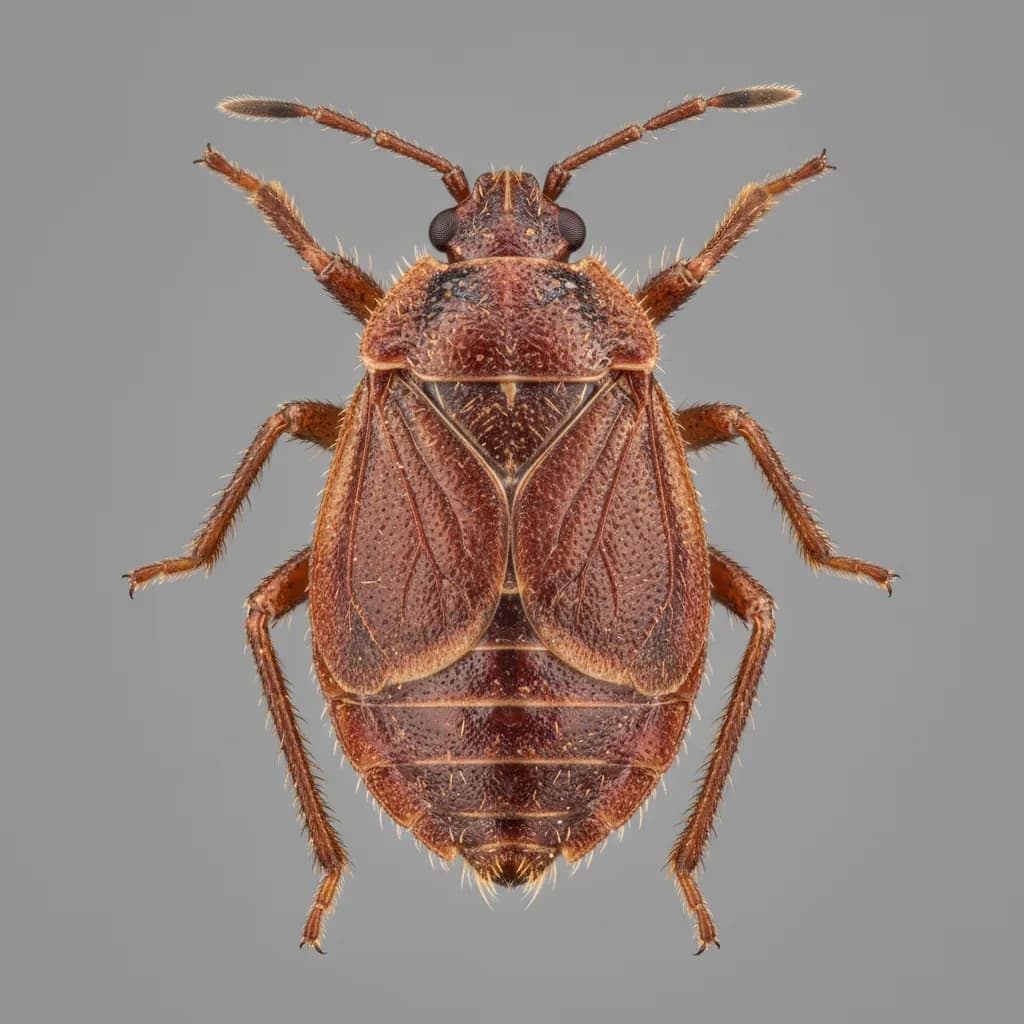
Similar to bed bugs but smaller and covered in longer, more visible body hair; associated exclusively with cliff swallow and barn swallow nests.
Behavior & Habitat
Feeds on swallows while they nest. When swallows migrate south in fall, swallow bugs leave empty nests and enter buildings through gaps near eaves and rooflines. Can survive 2-3 years without feeding, waiting for swallows to return.
Habitat: Cliff swallow and barn swallow mud nests on building eaves, bridges, and overpasses; enters interior spaces when swallows migrate.
Diet: Swallow blood preferentially; will bite humans opportunistically when swallow hosts are absent.
Signs of Infestation
- Small, hairy, bed-bug-like insects appearing in fall after swallows depart
- Active swallow nests on building eaves, overhangs, or under bridges
- Bug activity concentrated near upper floors, eaves, and roofline areas
Risks & Damage
Bites cause itchy welts similar to bed bug bites. Some individuals may experience allergic reactions.
Can invade in large numbers from swallow colonies and persist for years waiting for swallows to return.
Prevention Tips
- 1.Remove abandoned swallow nests from building eaves in fall after swallows migrate (check local wildlife regulations first)
- 2.Seal gaps between eaves, soffits, and the building exterior
- 3.Install bird exclusion devices to prevent new nest construction on the structure
Why DIY Treatment Often Falls Short
Swallow bugs originate from nests on building exteriors that require ladder access to treat. Their ability to survive 2-3 years without feeding means populations persist long after swallows leave.
Professional Treatment
Professionals remove abandoned swallow nests, treat nest sites and surrounding eave areas with residual products, seal entry points, and install bird exclusion to prevent re-nesting. Timing around swallow migration is critical.
Frequently Asked Questions
Can swallow bugs live without swallows?
Are swallow nests protected?
How do I tell swallow bugs from bed bugs?
Need Help With Swallow bug?
If you're seeing signs of swallow bug in or around your home, professional treatment is the fastest way to stop the problem. Lotus Pest Control offers free inspections to identify the issue and recommend the right solution.
At a Glance
- Category
- Bed Bugs
- Scientific Name
- Oeciacus vicarius
- Size
- 3-5 mm
- Color
- Grayish-brown with longer body hair than bed bugs
- Key Trait
- Similar to bed bugs but smaller and covered in longer, more visible body hair; associated exclusively with cliff swallow and barn swallow nests.
- Regions
- Midwest, Great Plains, Mountain West, West Coast
- Threat Level
- Low
- Risk Types
- healthnuisance
- Seasonal Activity
- MarAprMayJunJulAugSepOctNovDecJanFebnonelowmoderatehighpeak