
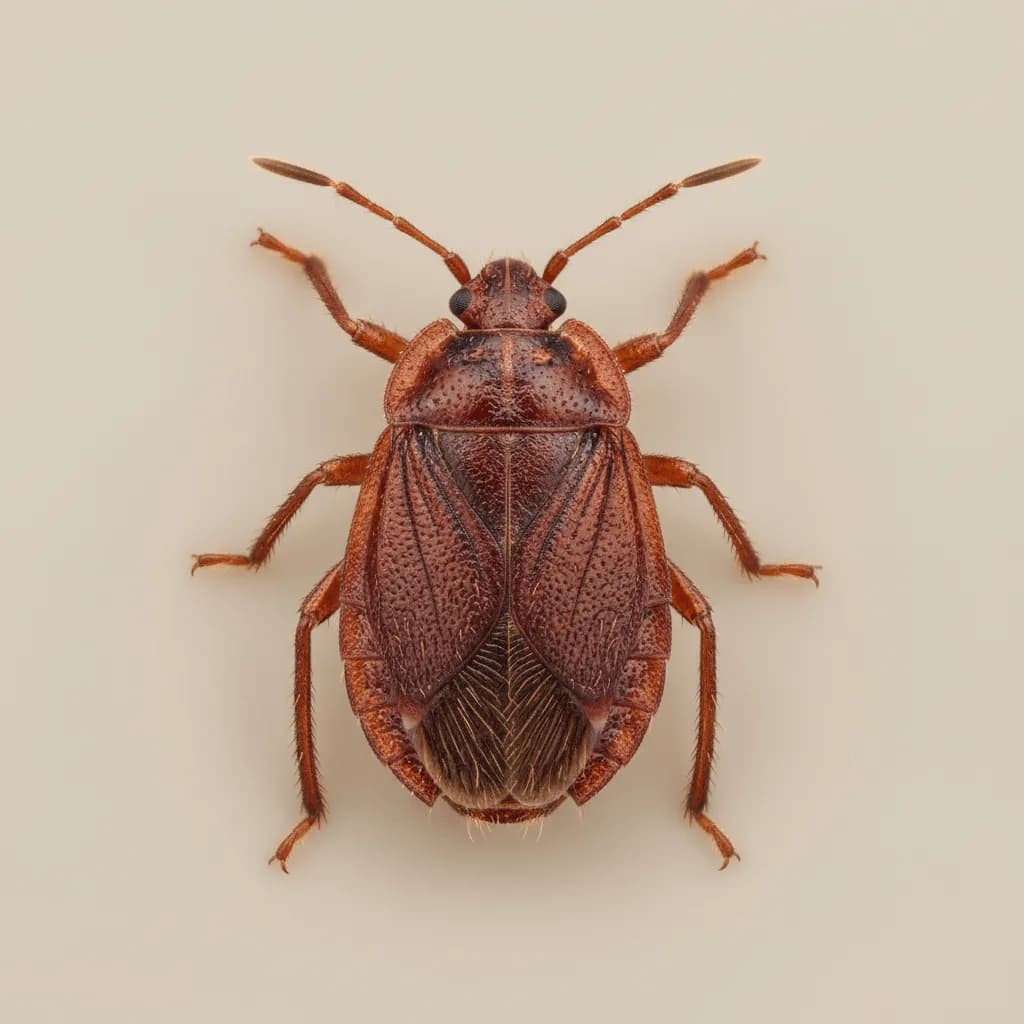
Tropical Bed Bug
Cimex hemipterus
Also known as: Tropical Bedbug
The Tropical Bed Bug is the warm-climate counterpart of the common bed bug, found primarily in tropical and subtropical regions. It is increasingly detected in the southern United States, particularly in Florida and along the Gulf Coast. Its biology and behavior are virtually identical to the common bed bug.
Identification
Size
5-7 mm
Color
Reddish-brown, very similar to common bed bug
Key Trait
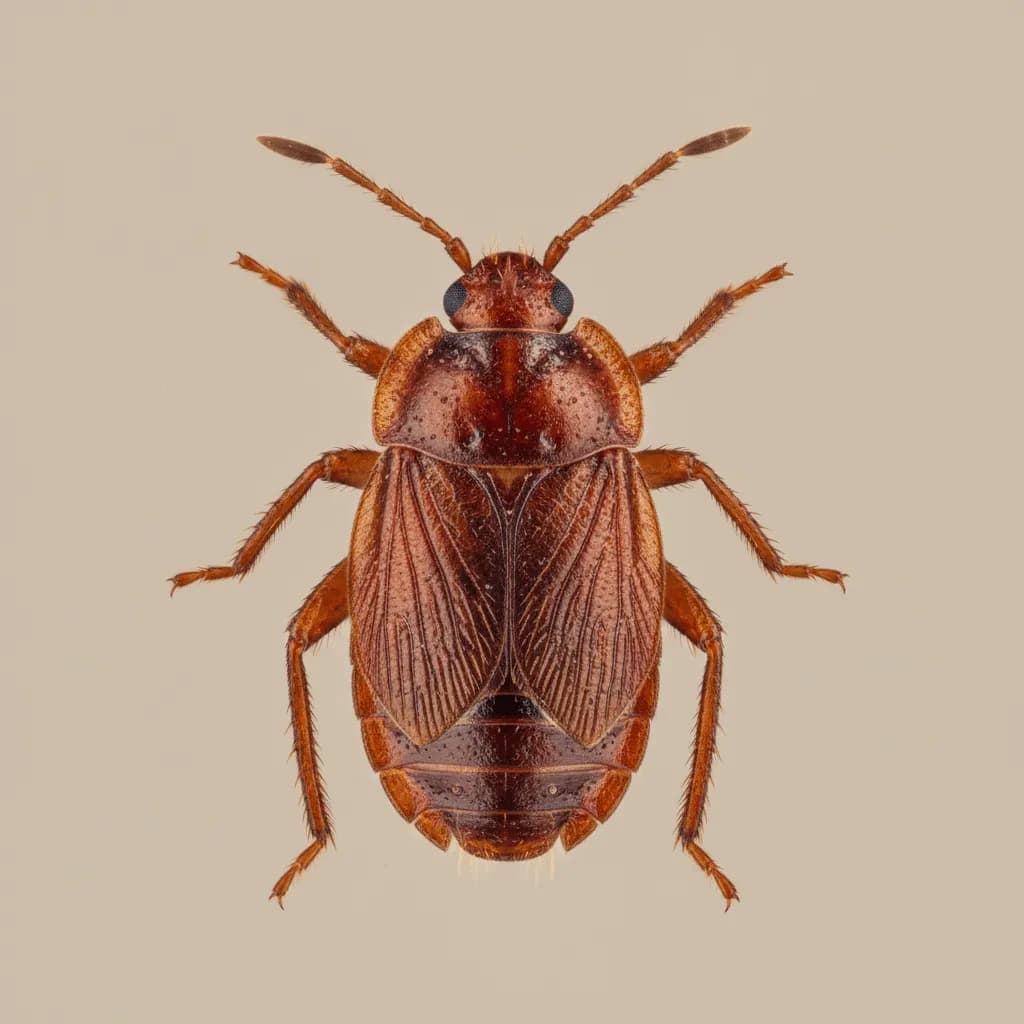
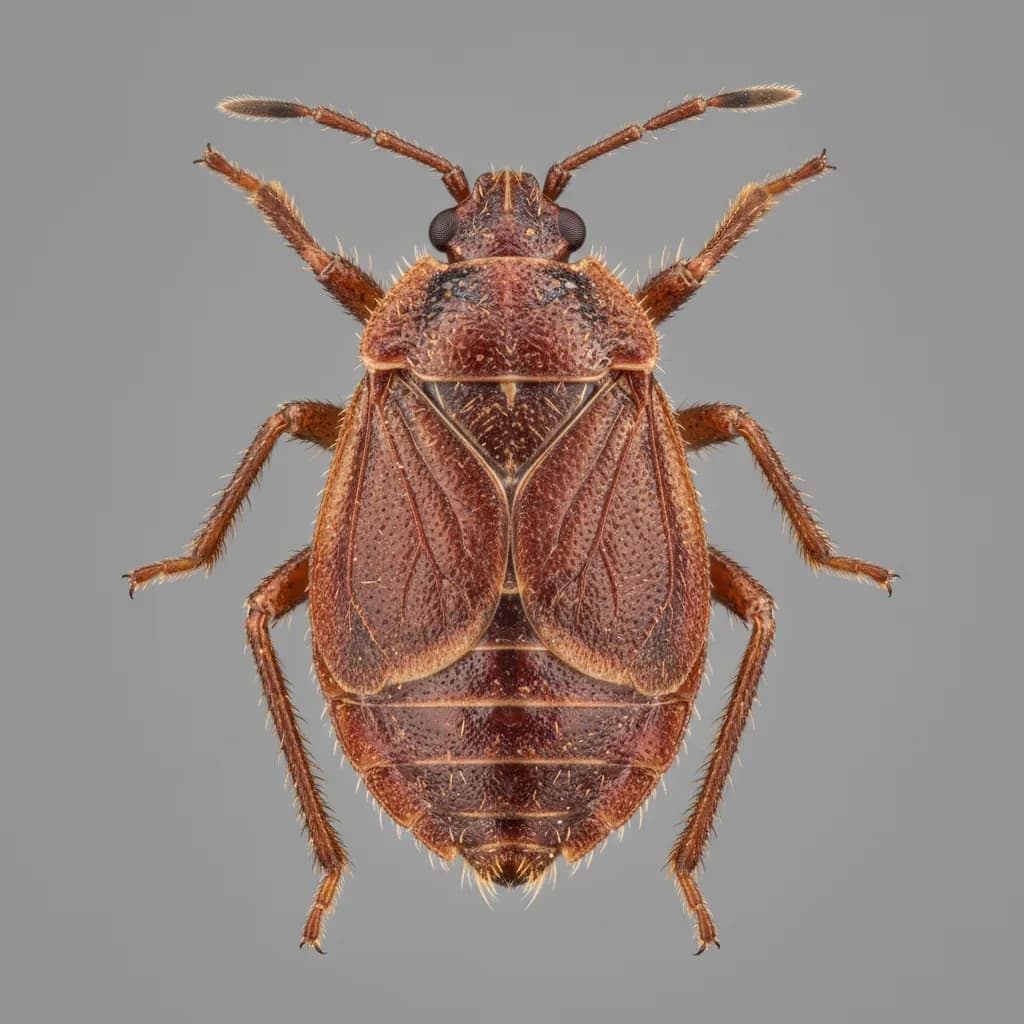
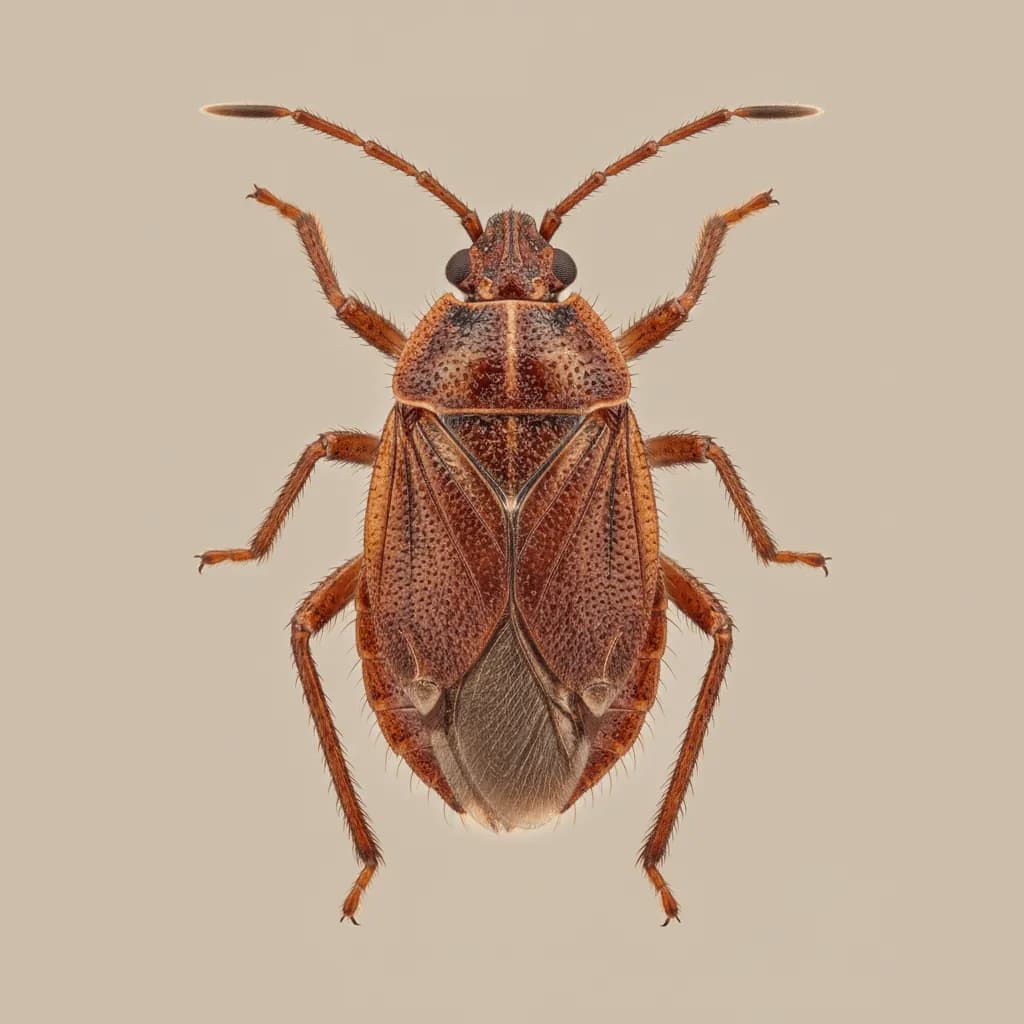
Nearly identical to the common bed bug; distinguished by a more protruding pronotum (wider, more flared shoulders) and slightly narrower body. Requires microscopic examination for definitive identification.
Behavior & Habitat
Identical to common bed bug - nocturnal blood feeder that hides in cracks near sleeping areas during the day. Prefers warmer temperatures than Cimex lectularius and is less cold-tolerant.
Habitat: Same as common bed bug - mattresses, headboards, bed frames, and crevices near sleeping areas. Predominates in tropical and subtropical climates.
Diet: Human blood exclusively. Feeding behavior identical to common bed bug.
Signs of Infestation
- Identical to common bed bug - fecal spots, shed skins, eggs, and bite reactions
- Occurrence in tropical and subtropical regions where common bed bugs are less prevalent
- May require professional identification to distinguish from common bed bug
Risks & Damage
Same bite reactions, secondary infections, and psychological impacts as common bed bug.
Equally difficult to control as common bed bug with similar pesticide resistance patterns.
Prevention Tips
- 1.Same preventive measures as common bed bug - encasements, inspection, and vigilance during travel
- 2.Be especially vigilant in tropical vacation destinations
- 3.Inspect and launder all clothing and luggage upon returning from tropical regions
Why DIY Treatment Often Falls Short
Same challenges as common bed bug - pesticide resistance, cryptic hiding behavior, and ability of a single female to reestablish an infestation. May have distinct resistance profiles from common bed bugs.
Professional Treatment
Identical to common bed bug treatment - integrated pest management combining heat treatments, targeted residual applications, desiccant dusts, and encasements. Professionals should identify the species as resistance profiles may differ.
Frequently Asked Questions
How is the tropical bed bug different from the common bed bug?
Can I encounter them in the US?
Does the treatment differ?
Need Help With Tropical bed bug?
If you're seeing signs of tropical bed bug in or around your home, professional treatment is the fastest way to stop the problem. Lotus Pest Control offers free inspections to identify the issue and recommend the right solution.
At a Glance
- Category
- Bed Bugs
- Scientific Name
- Cimex hemipterus
- Size
- 5-7 mm
- Color
- Reddish-brown, very similar to common bed bug
- Key Trait
- Nearly identical to the common bed bug; distinguished by a more protruding pronotum (wider, more flared shoulders) and slightly narrower body. Requires microscopic examination for definitive identification.
- Regions
- Gulf Coast, Southeast, Southwest, West Coast
- Threat Level
- Very High
- Risk Types
- healthnuisance
- Seasonal Activity
- MarAprMayJunJulAugSepOctNovDecJanFebnonelowmoderatehighpeak