
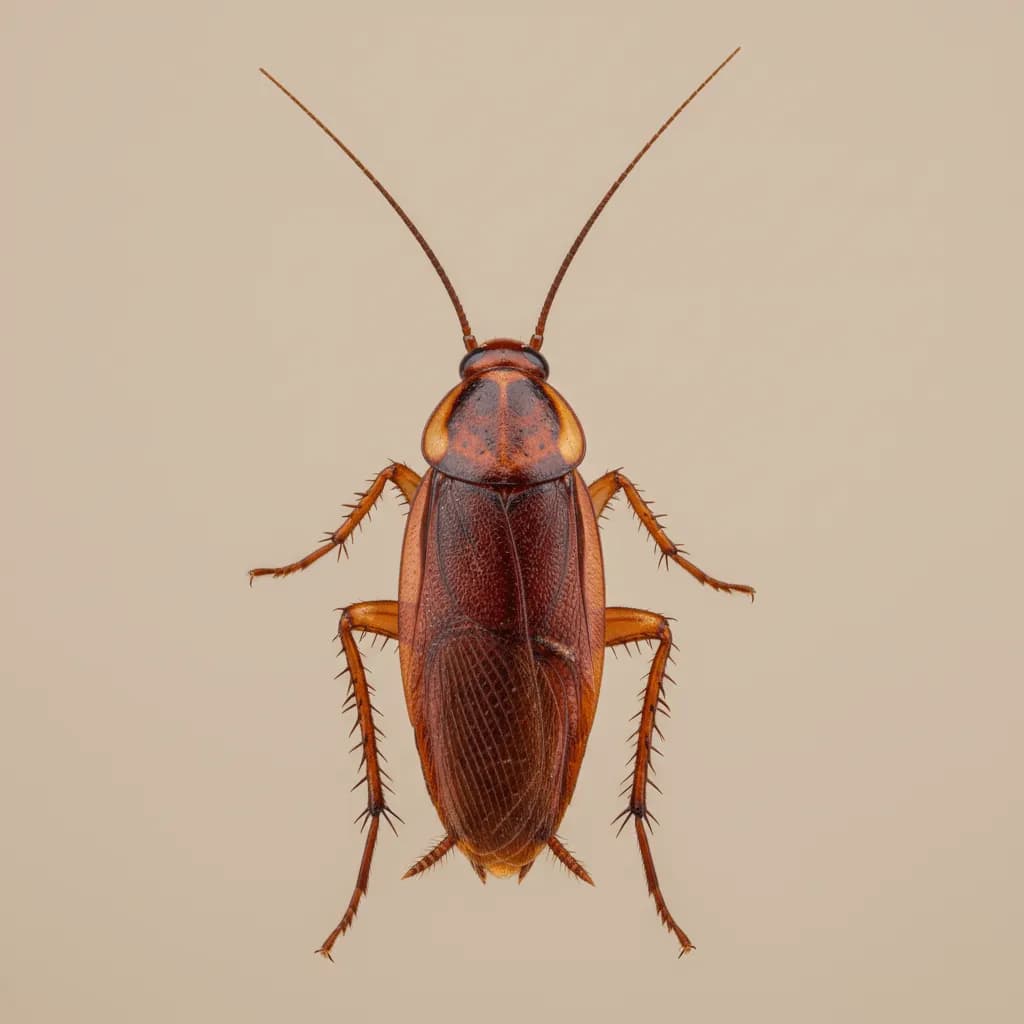
Asian Cockroach
Blattella asahinai
The Asian Cockroach looks almost indistinguishable from the German Cockroach but differs dramatically in behavior. It is an outdoor species that lives in mulch and leaf litter and is a strong, sustained flier attracted to light. First detected in Florida in 1986, it has spread across the Gulf Coast states.
Identification
Size
13-16 mm
Color
Light brown to tan with two dark stripes on the pronotum - nearly identical to the German cockroach
Key Trait
Virtually identical to the German cockroach in appearance but is a strong flier attracted to light and lives outdoors in leaf litter.
Behavior & Habitat
Adults take sustained flight at dusk, drawn to illuminated doors and windows. Unlike German cockroaches, they prefer outdoor habitats and do not establish colonies in kitchens. They land on TVs, computer screens, and people, causing nuisance.
Habitat: Leaf litter, mulch beds, and shaded lawn areas. Large populations build up in landscapes with heavy mulching. Enters homes by flying to lights but does not establish indoor breeding populations in most cases.
Diet: Decaying vegetation, fruit, and plant material in leaf litter.
Signs of Infestation
- Small tan cockroaches flying to porch lights and entering through doors at dusk
- Roaches landing on lighted screens and TV sets
- Large numbers found in mulch and leaf litter when raking
Risks & Damage
Flies into homes in large numbers at dusk, landing on people and electronic screens.
Prevention Tips
- 1.Reduce mulch depth and replace mulch near the home with gravel or pine straw
- 2.Switch to amber or yellow exterior light bulbs
- 3.Keep doors and windows closed at dusk or use tightly fitting screens
- 4.Treat lawn and mulch areas with granular bait in spring
Why DIY Treatment Often Falls Short
Because Asian cockroaches breed in landscaping across large outdoor areas, indoor sprays and traps do not address the source population. The outdoor habitat must be managed to reduce their numbers.
Professional Treatment
Professionals apply granular bait and residual treatments to landscaping, mulch beds, and leaf litter - the outdoor breeding habitat. Exterior light modification and perimeter exclusion reduce indoor entry. This is fundamentally different from German cockroach treatment.
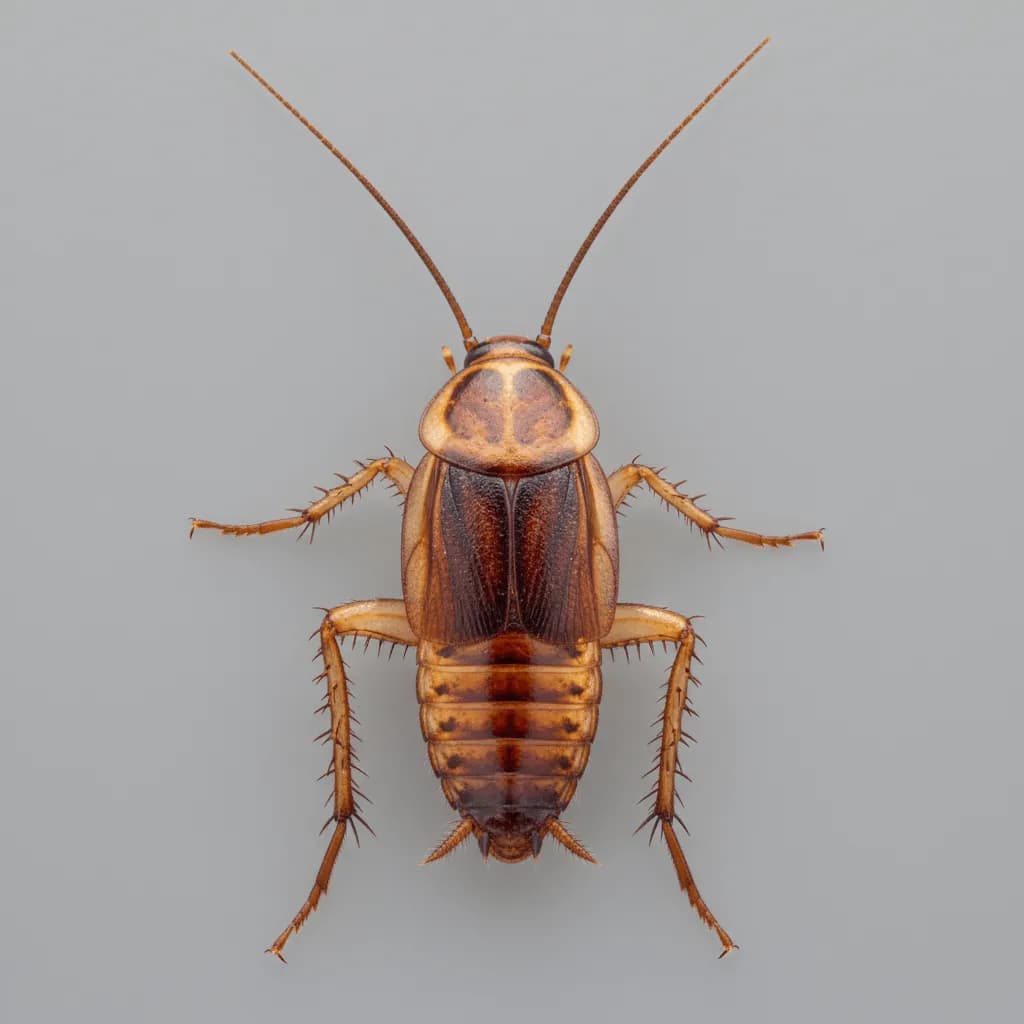
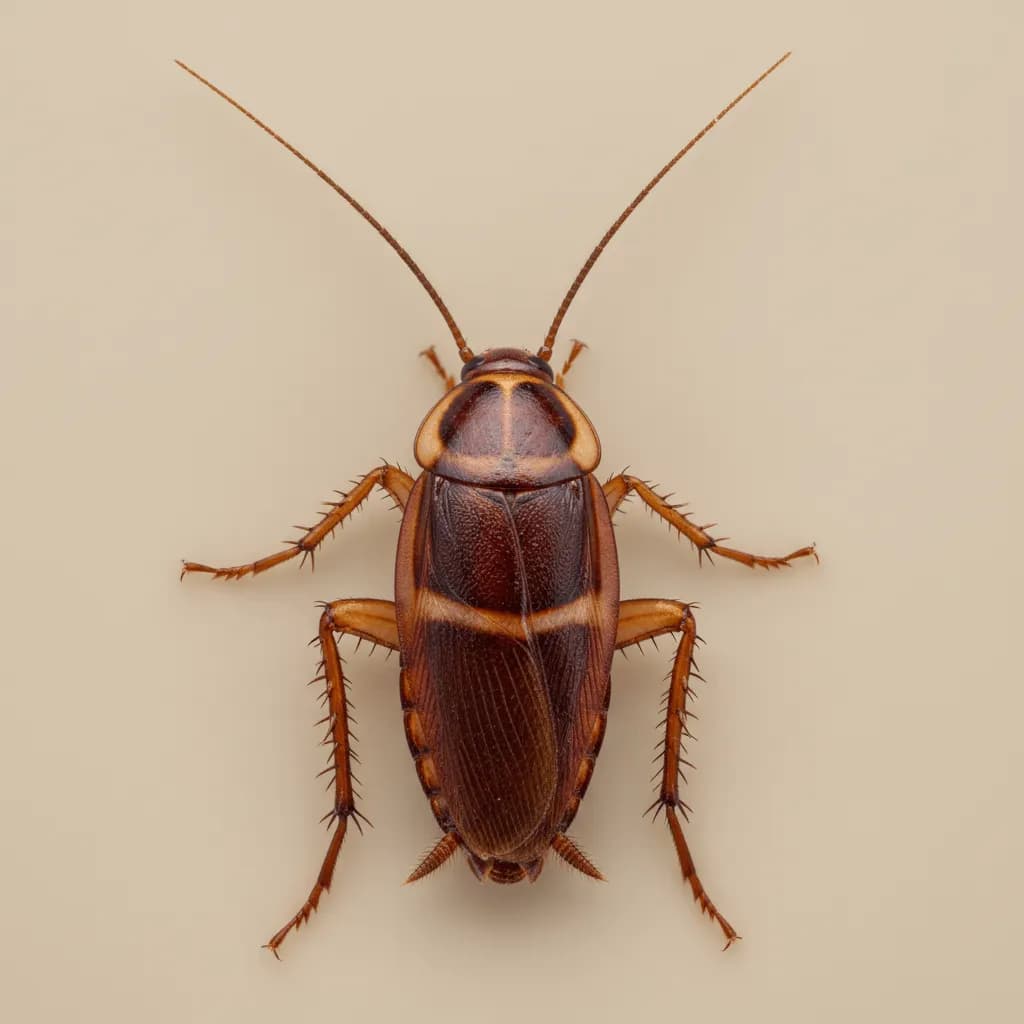
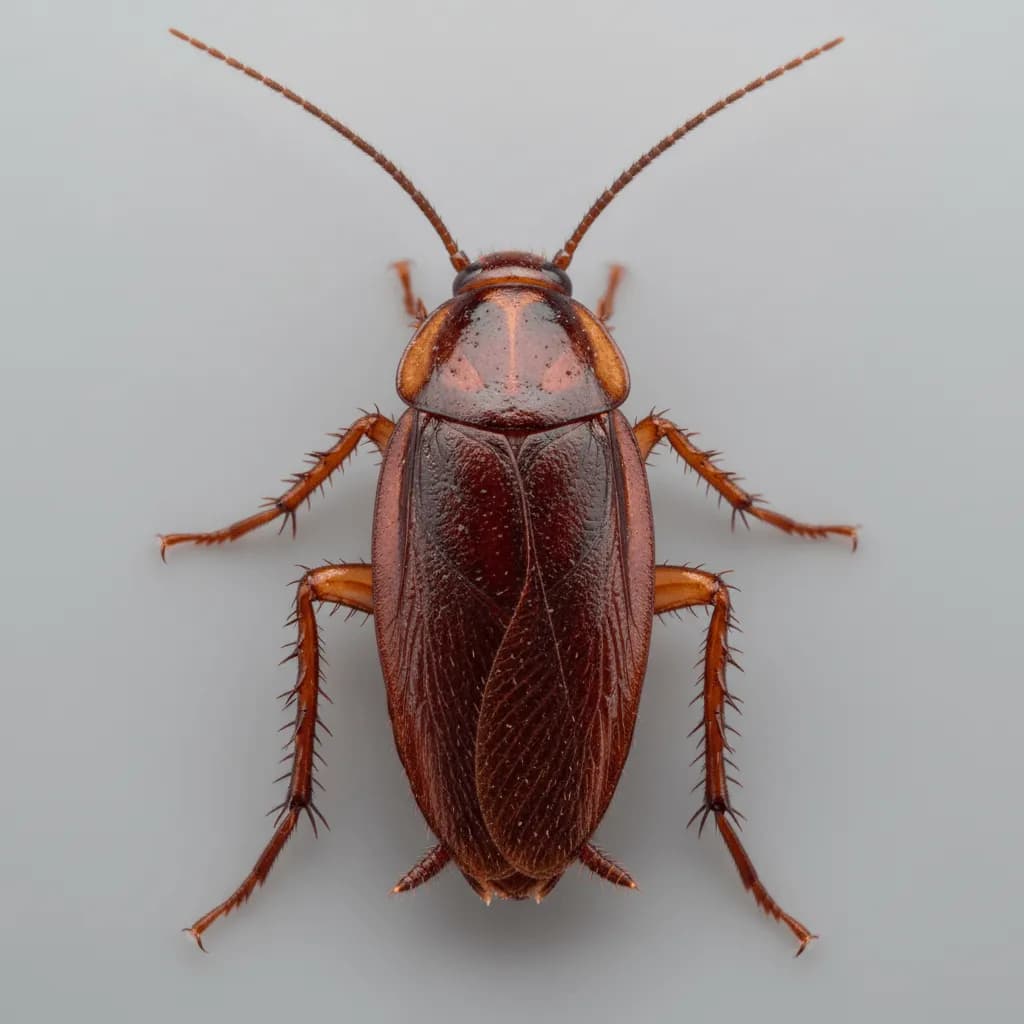
Related Pests
Frequently Asked Questions
How do I tell an Asian cockroach from a German cockroach?
Will Asian cockroaches infest my kitchen?
Can Asian and German cockroaches interbreed?
Need Help With Asian cockroach?
If you're seeing signs of asian cockroach in or around your home, professional treatment is the fastest way to stop the problem. Lotus Pest Control offers free inspections to identify the issue and recommend the right solution.
At a Glance
- Category
- Cockroaches
- Scientific Name
- Blattella asahinai
- Size
- 13-16 mm
- Color
- Light brown to tan with two dark stripes on the pronotum - nearly identical to the German cockroach
- Key Trait
- Virtually identical to the German cockroach in appearance but is a strong flier attracted to light and lives outdoors in leaf litter.
- Regions
- Southeast, South Central
- Threat Level
- Low
- Risk Types
- nuisance
- Seasonal Activity
- MarAprMayJunJulAugSepOctNovDecJanFebnonelowmoderatehighpeak