
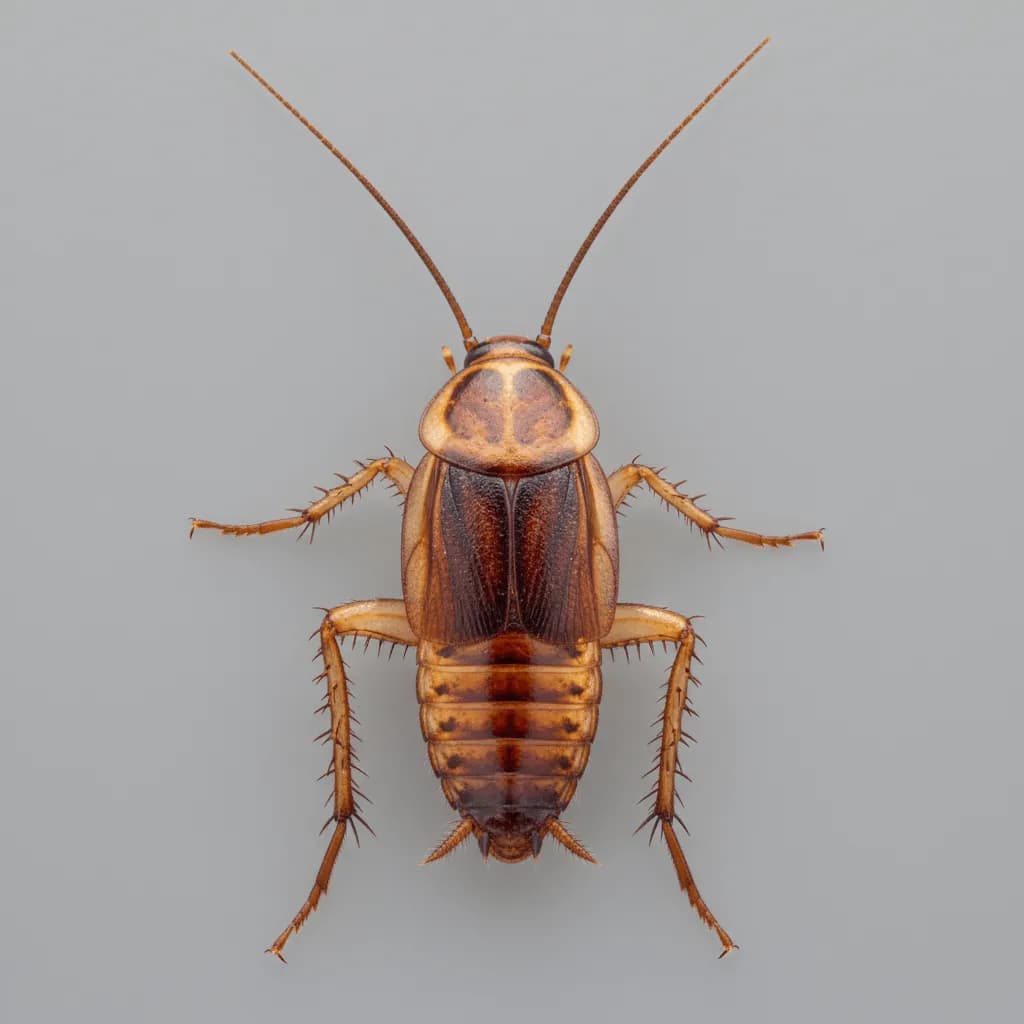
German Cockroach
Blattella germanica
Also known as: Kitchen Roach
The German Cockroach is the most common and economically important pest cockroach worldwide. It reproduces faster than any other residential cockroach, with a single female producing over 300 offspring in her lifetime. It is found almost exclusively indoors, thriving in kitchens and bathrooms where warmth, moisture, and food are abundant.
Identification
Size
13-16 mm
Color
Light brown to tan with two dark parallel stripes on the pronotum
Key Trait
Two dark longitudinal stripes behind the head; small size; found almost exclusively indoors near heat and moisture.
Behavior & Habitat
Nocturnal and highly gregarious, German cockroaches hide in cracks and crevices by day and forage at night. Seeing roaches during daylight indicates severe overcrowding. Nymphs and adults aggregate in harborage sites marked by pheromones and fecal spotting.
Habitat: Kitchens, bathrooms, and food preparation areas in homes, apartments, restaurants, and hotels. They prefer warm, humid spaces behind appliances, under sinks, inside control panels, and along plumbing chases. They do not live outdoors in temperate climates.
Diet: Omnivorous scavenger; eats any organic material including crumbs, grease, soap, toothpaste, book bindings, and garbage.
Signs of Infestation
- Dark fecal spotting (looks like pepper) in cabinet corners and along edges
- Musty, oily odor in heavily infested areas
- Egg cases (oothecae) found in crevices or attached to surfaces
- Live roaches seen when lights are turned on at night
- Cast skins accumulating behind appliances
Risks & Damage
Allergens from droppings, cast skins, and body parts trigger asthma and allergic reactions, especially in children.
Contaminates food and food-contact surfaces with bacteria including Salmonella and E. coli.
Prevention Tips
- 1.Clean behind and under kitchen appliances regularly
- 2.Fix plumbing leaks and eliminate standing water
- 3.Store food in sealed containers and take out trash nightly
- 4.Seal cracks around pipes, outlets, and cabinet edges
- 5.Inspect grocery bags, boxes, and secondhand appliances before bringing them inside
- 6.Use door sweeps and weatherstripping to limit entry points
Why DIY Treatment Often Falls Short
German cockroaches have developed resistance to many over-the-counter insecticides. Foggers and bombs drive roaches deeper into walls, spreading the infestation rather than eliminating it. Without targeting harborage sites and using rotation-resistant baits, populations rebound within weeks.
Professional Treatment
Licensed technicians conduct a thorough inspection to identify harborage sites and apply professional-grade gel baits, insect growth regulators, and targeted crack-and-crevice treatments. Integrated Pest Management (IPM) protocols include sanitation recommendations and monitoring with sticky traps. Follow-up visits are critical to break the reproductive cycle.
Related Pests
Frequently Asked Questions
Why are German cockroaches so hard to get rid of?
Do German cockroaches fly?
Can German cockroaches cause asthma?
Need Help With German cockroach?
If you're seeing signs of german cockroach in or around your home, professional treatment is the fastest way to stop the problem. Lotus Pest Control offers free inspections to identify the issue and recommend the right solution.
At a Glance
- Category
- Cockroaches
- Scientific Name
- Blattella germanica
- Size
- 13-16 mm
- Color
- Light brown to tan with two dark parallel stripes on the pronotum
- Key Trait
- Two dark longitudinal stripes behind the head; small size; found almost exclusively indoors near heat and moisture.
- Regions
- Northeast, Southeast, Midwest, Southwest, South Central
- Threat Level
- Very High
- Risk Types
- healthfood
- Seasonal Activity
- MarAprMayJunJulAugSepOctNovDecJanFebnonelowmoderatehighpeak