
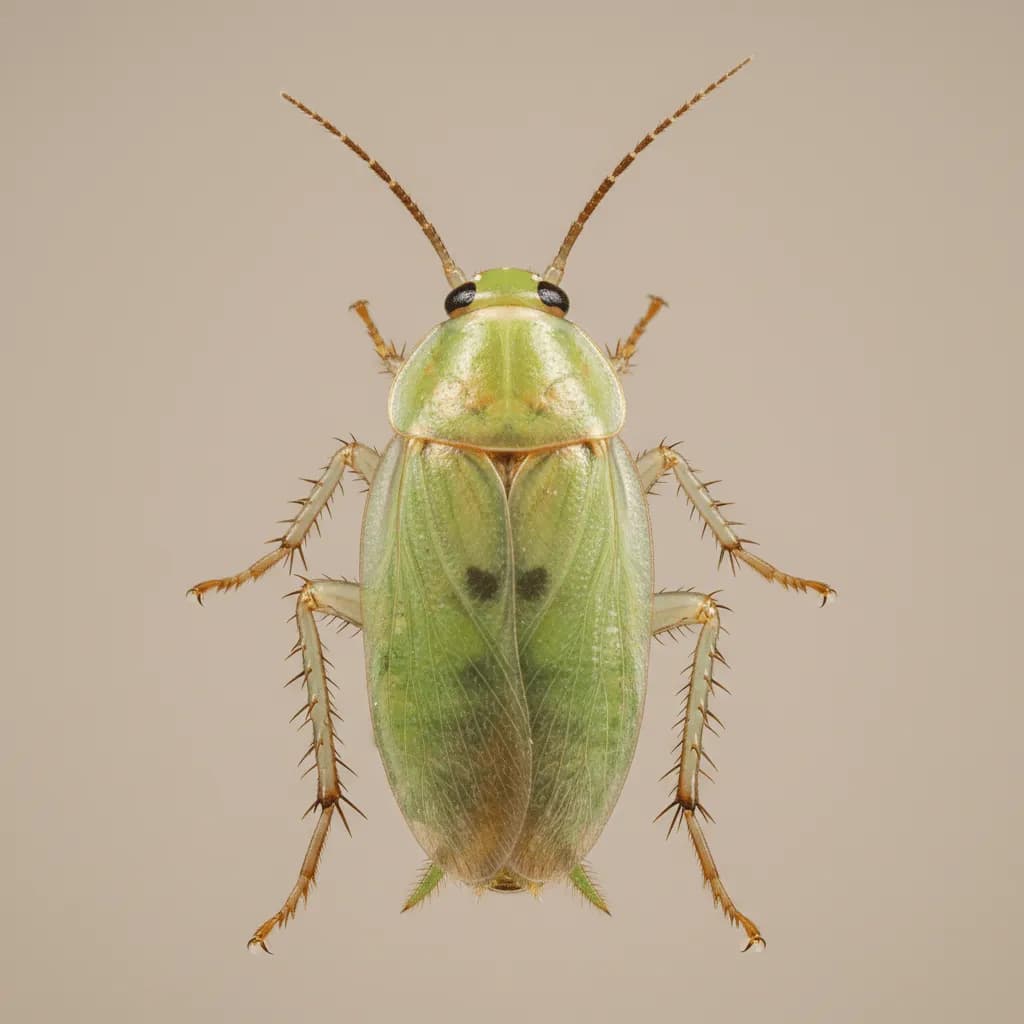
Cuban Cockroach
Panchlora nivea
Also known as: Green Banana Cockroach, Green Cockroach
The Cuban Cockroach is one of the few brightly colored cockroaches encountered in the United States. Its vivid green appearance often causes it to be mistaken for a leaf or other insect rather than a cockroach. It is primarily an outdoor species that is strongly attracted to artificial lights, which brings it into contact with homes and businesses.
Identification
Size
12-24 mm
Color
Bright pale green as adults; dark brown to black as nymphs
Key Trait
Bright green coloration unique among common cockroach species; strong flier readily attracted to lights at night.
Behavior & Habitat
Highly attracted to lights at night and a strong flier. Primarily lives outdoors in trees, shrubs, and leaf litter. Does not typically establish breeding populations indoors but may enter structures in large numbers when drawn to lighting.
Habitat: Trees, shrubs, leaf litter, woodpiles, and landscaped areas in tropical and subtropical regions. Occasionally found inside homes near light sources.
Diet: Decaying plant material, fruit, leaf litter, and other organic debris. Does not typically feed on household food items.
Signs of Infestation
- Green cockroaches found around porch lights and illuminated windows at night
- Green roaches inside the home near light fixtures or windowsills
- Dark brown nymphs in leaf litter and mulch beds near the structure
Risks & Damage
Attracted to lights in large numbers, causing distress despite being primarily an outdoor species that rarely breeds indoors.
Prevention Tips
- 1.Switch exterior lighting to yellow or sodium vapor bulbs that are less attractive to insects
- 2.Keep doors and windows closed or screened during evening hours
- 3.Reduce landscape debris and leaf litter near the structure
Why DIY Treatment Often Falls Short
Since Cuban cockroaches live outdoors and are drawn inside by lights, indoor treatments do not address the source population. The attraction to light ensures continued entry.
Professional Treatment
Professionals focus on exterior habitat reduction, perimeter treatments, and light management strategies. Granular baits in landscape beds and targeted exterior applications reduce the population near the structure.
Frequently Asked Questions
Is a green cockroach normal?
Will they infest my house?
Are they harmful?
Need Help With Cuban cockroach?
If you're seeing signs of cuban cockroach in or around your home, professional treatment is the fastest way to stop the problem. Lotus Pest Control offers free inspections to identify the issue and recommend the right solution.
At a Glance
- Category
- Cockroaches
- Scientific Name
- Panchlora nivea
- Size
- 12-24 mm
- Color
- Bright pale green as adults; dark brown to black as nymphs
- Key Trait
- Bright green coloration unique among common cockroach species; strong flier readily attracted to lights at night.
- Regions
- Southeast, Gulf Coast, Southwest
- Threat Level
- Very Low
- Risk Types
- nuisance
- Seasonal Activity
- MarAprMayJunJulAugSepOctNovDecJanFebnonelowmoderatehighpeak