
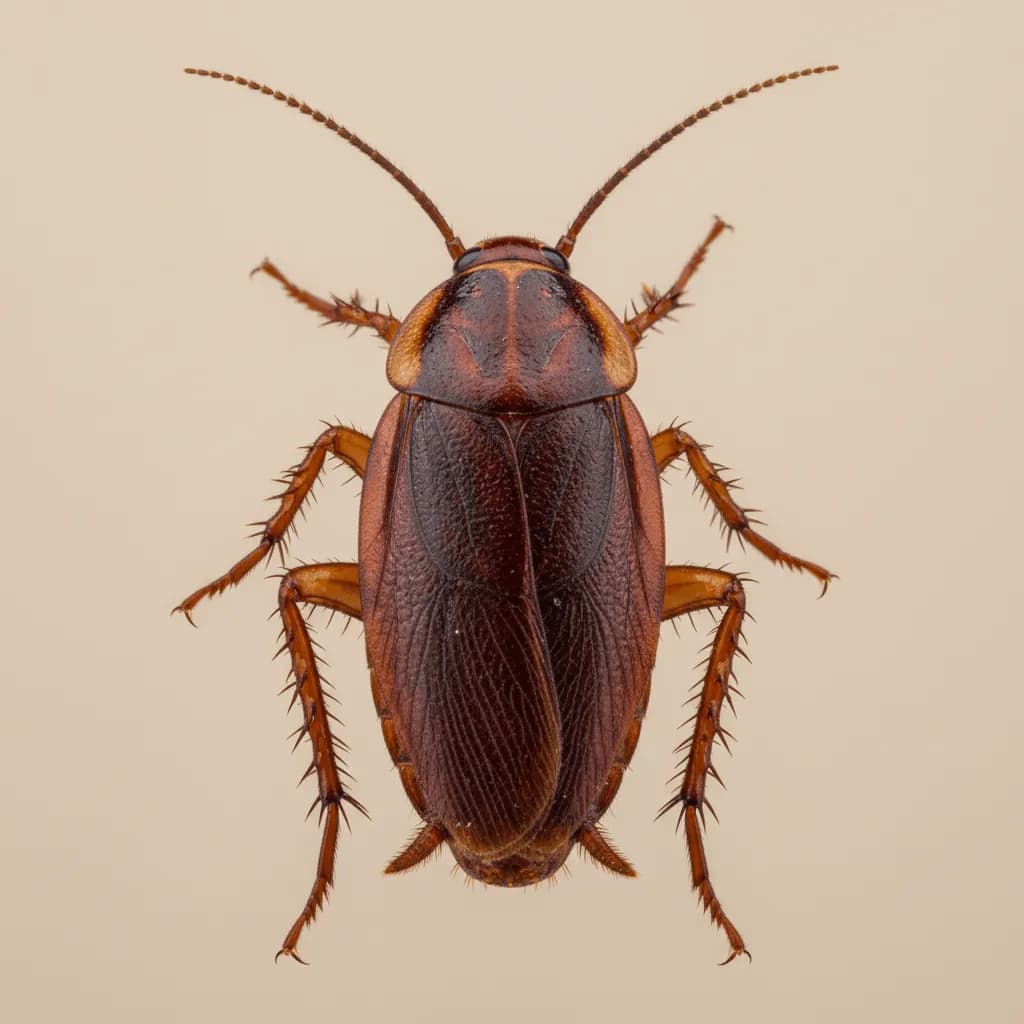
Florida Woods Cockroach
Eurycotis floridana
Also known as: Palmetto Bug, Stinking Cockroach, Florida Stinkroach
The Florida Woods Cockroach is a large, slow-moving roach native to the southeastern United States. It is most notable for its chemical defense mechanism: when threatened, it sprays a noxious, foul-smelling liquid that can irritate skin and eyes. It is primarily an outdoor species found in damp, sheltered environments.
Identification
Size
30-40 mm
Color
Very dark reddish-brown to black, glossy
Key Trait
Large, wingless (or with very short vestigial wings), glossy black body; produces a foul-smelling defensive secretion when disturbed.
Behavior & Habitat
Slow-moving and flightless. When disturbed, ejects a foul-smelling defensive spray from abdominal glands that can travel several inches. Primarily nocturnal and tends to remain in damp, sheltered locations.
Habitat: Leaf litter, mulch, woodpiles, tree holes, palmetto groves, and under logs and landscape timbers. Enters structures through gaps around doors and ground-level openings, especially in humid conditions.
Diet: Decaying organic matter including leaf litter, rotting wood, and other decomposing plant material.
Signs of Infestation
- Large, dark, wingless cockroaches found in mulch beds, under potted plants, or in garages
- Foul chemical odor when roaches are disturbed or crushed
- Roaches entering through ground-level doors or gaps in humid weather
Risks & Damage
Their large size and defensive chemical spray cause significant distress; the spray can irritate eyes and skin on contact.
Prevention Tips
- 1.Remove leaf litter, woodpiles, and excess mulch from around the foundation
- 2.Seal gaps under doors with door sweeps and weatherstripping
- 3.Reduce moisture around the foundation with proper drainage and gutter maintenance
Why DIY Treatment Often Falls Short
As a primarily outdoor pest, indoor treatments do not reach the large population living in surrounding landscape debris. Their slow movement and chemical defense make them difficult to manage with contact sprays alone.
Professional Treatment
Professionals apply granular baits and residual treatments to landscape beds, mulch areas, and perimeter zones. Habitat modification including mulch reduction and moisture management is essential for long-term control.
Related Pests
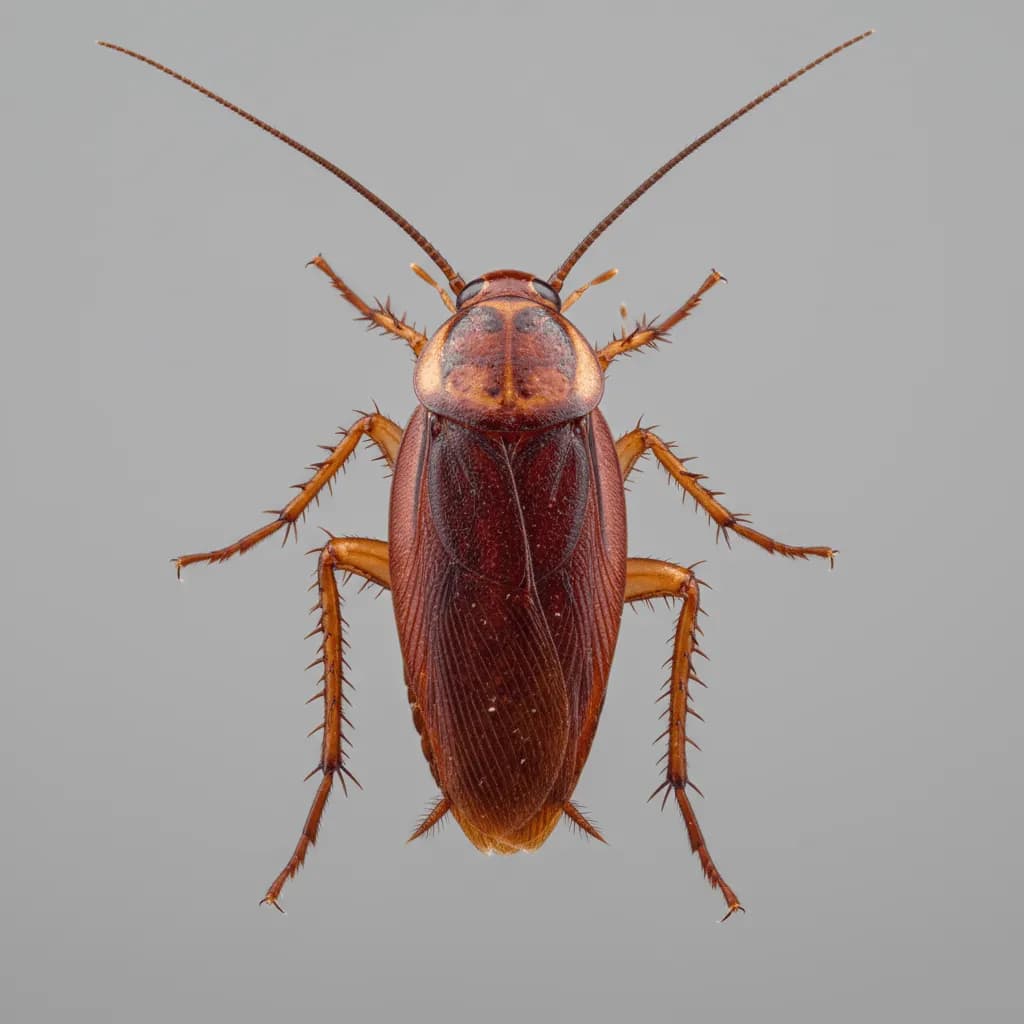
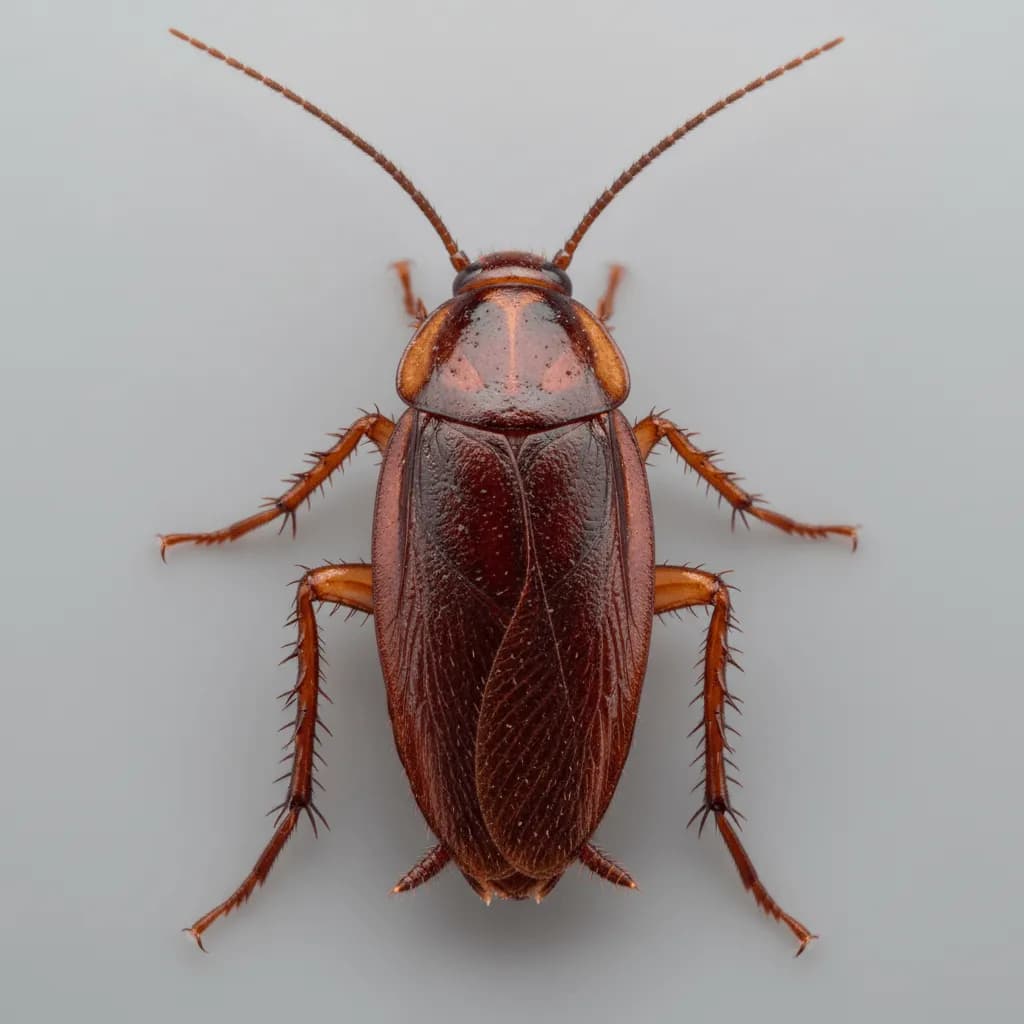
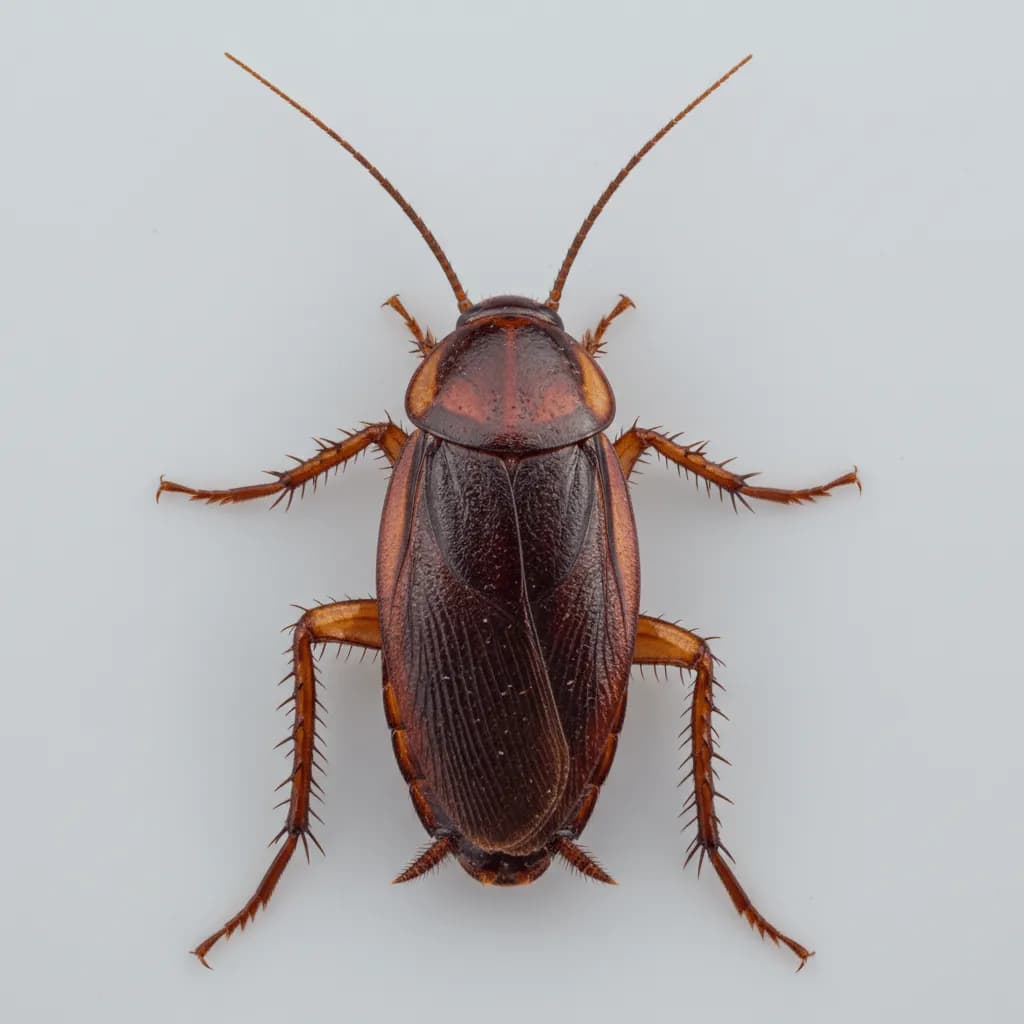
Frequently Asked Questions
What is that terrible smell?
Can they fly?
Are they the same as palmetto bugs?
Need Help With Florida woods cockroach?
If you're seeing signs of florida woods cockroach in or around your home, professional treatment is the fastest way to stop the problem. Lotus Pest Control offers free inspections to identify the issue and recommend the right solution.
At a Glance
- Category
- Cockroaches
- Scientific Name
- Eurycotis floridana
- Size
- 30-40 mm
- Color
- Very dark reddish-brown to black, glossy
- Key Trait
- Large, wingless (or with very short vestigial wings), glossy black body; produces a foul-smelling defensive secretion when disturbed.
- Regions
- Southeast, Gulf Coast
- Threat Level
- Low
- Risk Types
- nuisancehealth
- Seasonal Activity
- MarAprMayJunJulAugSepOctNovDecJanFebnonelowmoderatehighpeak