
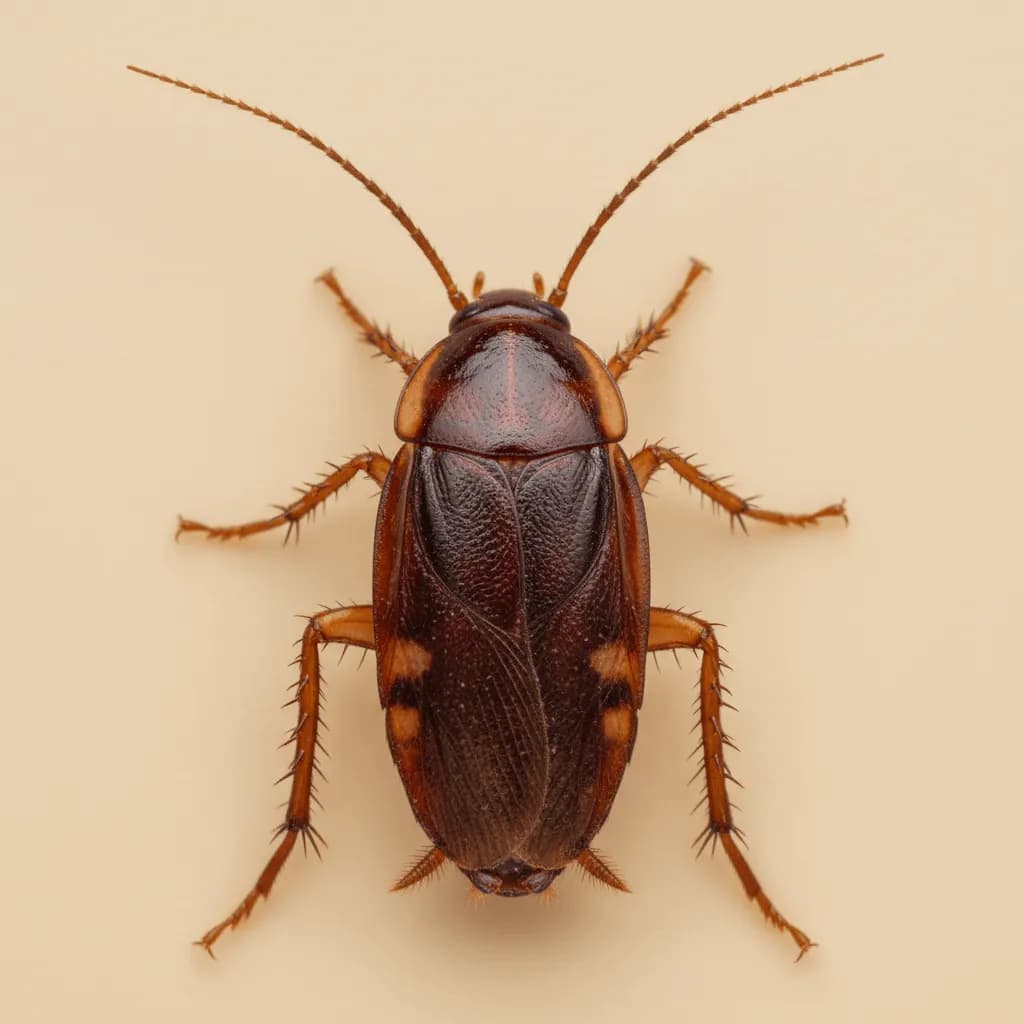
Surinam Cockroach
Pycnoscelus surinamensis
Also known as: Greenhouse Cockroach, Burrowing Cockroach
The Surinam Cockroach is a subtropical burrowing species that lives in soil, compost, and potted plant media. All populations in the United States are female and reproduce asexually through parthenogenesis. It is a common greenhouse pest and enters homes primarily through infested potting soil and mulch.
Identification
Size
18-25 mm
Color
Dark brown to black with a shiny olive-brown pronotum
Key Trait
Burrowing habit in soil and mulch; reproduces by parthenogenesis (all female colonies).
Behavior & Habitat
Burrows into loose soil and mulch during the day and feeds at night on plant roots and decaying vegetation. Not a strong flier. Frequently transported in nursery stock and bulk mulch shipments.
Habitat: Compost heaps, mulch beds, greenhouse soil, and potted plants. Can establish in crawl spaces with dirt floors. Requires warm, moist soil to thrive.
Diet: Plant roots, decaying vegetation, and organic matter in soil.
Signs of Infestation
- Cockroaches emerging from potted plants or mulch beds
- Damaged roots in greenhouse plants
- Roaches found in crawl spaces with dirt floors
Risks & Damage
Alarms homeowners when emerging from indoor potted plants.
Can damage plant roots in greenhouses and garden beds.
Prevention Tips
- 1.Inspect and quarantine potted plants from nurseries before bringing indoors
- 2.Use sterile potting mix for indoor container gardening
- 3.Keep mulch beds thin and away from the foundation
- 4.Install a vapor barrier in dirt-floor crawl spaces
Why DIY Treatment Often Falls Short
Because they live in soil, surface sprays do not reach their harborage. Without addressing the infested soil medium, populations persist and re-emerge.
Professional Treatment
Technicians treat infested soil with granular or drench applications and address underlying moisture conditions. Heavily infested potted plants may need to be re-potted with sterile media. Crawl space treatments include soil-surface applications and moisture barriers.
Related Pests
Frequently Asked Questions
Can Surinam cockroaches infest my house?
How do they reproduce without males?
Are they common in potted plants?
Need Help With Surinam cockroach?
If you're seeing signs of surinam cockroach in or around your home, professional treatment is the fastest way to stop the problem. Lotus Pest Control offers free inspections to identify the issue and recommend the right solution.
At a Glance
- Category
- Cockroaches
- Scientific Name
- Pycnoscelus surinamensis
- Size
- 18-25 mm
- Color
- Dark brown to black with a shiny olive-brown pronotum
- Key Trait
- Burrowing habit in soil and mulch; reproduces by parthenogenesis (all female colonies).
- Regions
- Southeast, South Central, Southwest
- Threat Level
- Very Low
- Risk Types
- nuisancelawn
- Seasonal Activity
- MarAprMayJunJulAugSepOctNovDecJanFebnonelowmoderatehighpeak