
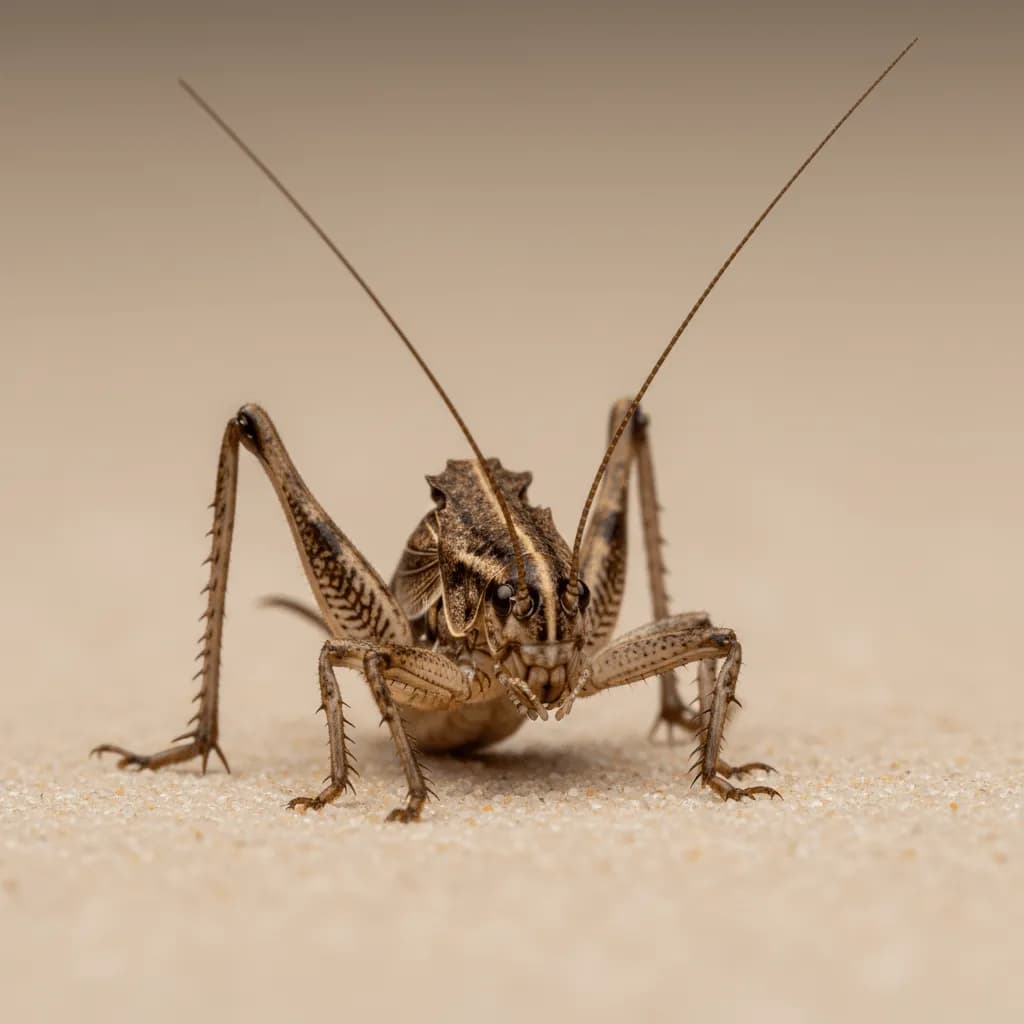
Camel Cricket
Ceuthophilus spp.
Also known as: Cave Cricket, Spider Cricket, Spricket
Camel crickets are wingless, humpbacked crickets that inhabit dark, moist spaces. Unlike house crickets, they do not chirp. They are commonly found in basements and crawl spaces and are known for their startling habit of jumping toward people when disturbed.
Identification
Size
13-33 mm
Color
Tan to dark brown, often mottled
Key Trait
Humpbacked appearance; extremely long antennae and hind legs; wingless - cannot chirp; jumps erratically toward perceived threats.
Behavior & Habitat
Nocturnal and moisture-dependent. Lives in dark, damp environments. Jumps erratically and directly toward perceived threats as a defensive behavior, which startles people. Does not chirp because it lacks wings.
Habitat: Caves, cellars, crawl spaces, basements, well houses, and under stones and logs in shaded moist areas.
Diet: Fungi, decaying organic matter, fabric, cardboard, and other organic materials in damp environments.
Signs of Infestation
- Large, wingless, humpbacked crickets in basements and crawl spaces
- Damage to stored cardboard boxes and fabrics in damp areas
- Presence indicates excessive moisture in the infested area
Risks & Damage
Startling jumping behavior and damage to stored items in damp areas.
Prevention Tips
- 1.Reduce basement and crawl space humidity below 60% with dehumidifiers
- 2.Remove cardboard boxes and organic debris from damp storage areas
- 3.Seal foundation cracks and install door sweeps on basement entries
Why DIY Treatment Often Falls Short
Camel crickets thrive in damp, dark spaces that are often poorly accessible. Sprays degrade quickly in humid environments, and the underlying moisture problem continues to attract new individuals.
Professional Treatment
Professionals use residual treatments and sticky traps in crawl spaces and basements, address moisture issues with vapor barriers and dehumidification, and seal entry points.
Related Pests
Frequently Asked Questions
Why do they jump at me?
Why can't they chirp?
Do they indicate a moisture problem?
Need Help With Camel cricket?
If you're seeing signs of camel cricket in or around your home, professional treatment is the fastest way to stop the problem. Lotus Pest Control offers free inspections to identify the issue and recommend the right solution.
At a Glance
- Category
- Occasional Invaders
- Scientific Name
- Ceuthophilus spp.
- Size
- 13-33 mm
- Color
- Tan to dark brown, often mottled
- Key Trait
- Humpbacked appearance; extremely long antennae and hind legs; wingless - cannot chirp; jumps erratically toward perceived threats.
- Regions
- Southeast, Mid Atlantic, Northeast, Midwest
- Threat Level
- Very Low
- Risk Types
- nuisance
- Seasonal Activity
- MarAprMayJunJulAugSepOctNovDecJanFebnonelowmoderatehighpeak