
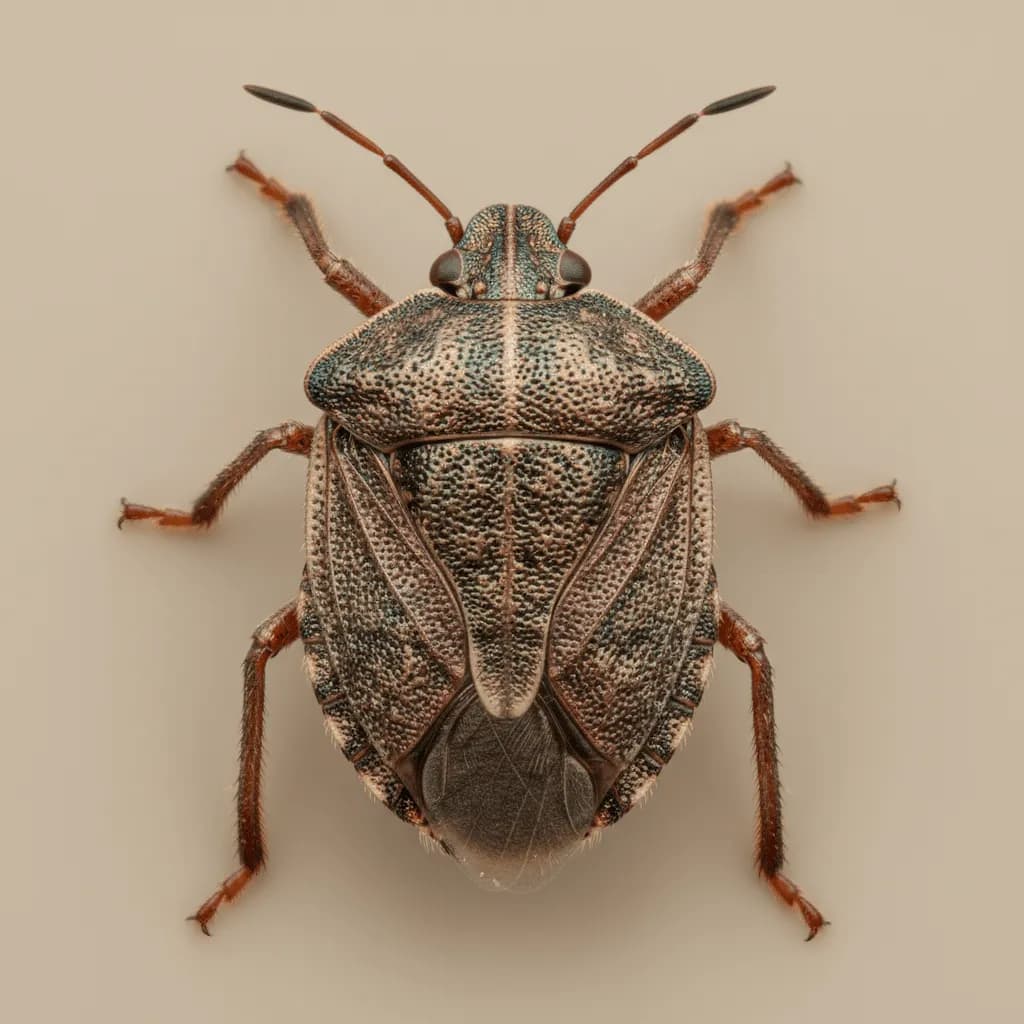
Kudzu Bug
Megacopta cribraria
Also known as: Bean Plataspid, Globular Stink Bug, Lablab Bug
The Kudzu Bug is an invasive species from Asia first detected in Georgia in 2009. It feeds on kudzu and soybeans and has become both an agricultural pest and a major fall home invader in the southeastern United States. Its defensive secretions are especially potent and can cause skin welts.
Identification
Size
4-6 mm
Color
Olive-green to brown with a mottled pattern; globular body shape
Key Trait
Very small and nearly round (globular); resembles a tiny beetle more than a typical stink bug; emits an extremely pungent defensive odor and can cause skin irritation.
Behavior & Habitat
Feeds on kudzu and legumes during summer. Aggregates on light-colored buildings in fall to overwinter. Produces an extremely foul-smelling defensive secretion that can cause skin irritation and welts on contact. Attracted to light colors and sunny surfaces.
Habitat: Kudzu patches, soybean fields, and legume crops in summer; exterior walls (especially light-colored), attics, and wall voids in fall and winter.
Diet: Kudzu vine, soybeans, wisteria, and other leguminous plants. Does not feed indoors.
Signs of Infestation
- Small, round, olive-green bugs aggregating on light-colored exterior walls in fall
- Extremely strong, unpleasant odor when bugs are disturbed or crushed
- Skin irritation or welts from contact with defensive secretions
Risks & Damage
Powerful defensive secretions cause an intense odor and can irritate skin, causing welts.
Significant pest of soybeans, reducing yields by up to 19% in affected areas.
Defensive chemicals can cause contact dermatitis and skin welts in sensitive individuals.
Prevention Tips
- 1.Seal all exterior gaps and cracks before fall, especially on light-colored walls
- 2.Avoid crushing them - use a vacuum or soapy water to collect them
- 3.Remove kudzu vines from the property if present
Why DIY Treatment Often Falls Short
Kudzu bugs aggregate in huge numbers and hide in wall voids. Their potent defensive secretions make handling and crushing counterproductive, and surface sprays do not reach overwintering populations.
Professional Treatment
Professionals apply preventive perimeter treatments in late summer, perform exclusion work, and use specialized removal methods that minimize exposure to the potent defensive secretions.
Related Pests
Frequently Asked Questions
Can kudzu bugs hurt me?
Where did they come from?
Do they only affect kudzu?
Need Help With Kudzu bug?
If you're seeing signs of kudzu bug in or around your home, professional treatment is the fastest way to stop the problem. Lotus Pest Control offers free inspections to identify the issue and recommend the right solution.
At a Glance
- Category
- Occasional Invaders
- Scientific Name
- Megacopta cribraria
- Size
- 4-6 mm
- Color
- Olive-green to brown with a mottled pattern; globular body shape
- Key Trait
- Very small and nearly round (globular); resembles a tiny beetle more than a typical stink bug; emits an extremely pungent defensive odor and can cause skin irritation.
- Regions
- Southeast, Gulf Coast, Mid Atlantic, Southwest
- Threat Level
- Low
- Risk Types
- nuisanceagriculturalhealth
- Seasonal Activity
- MarAprMayJunJulAugSepOctNovDecJanFebnonelowmoderatehighpeak