
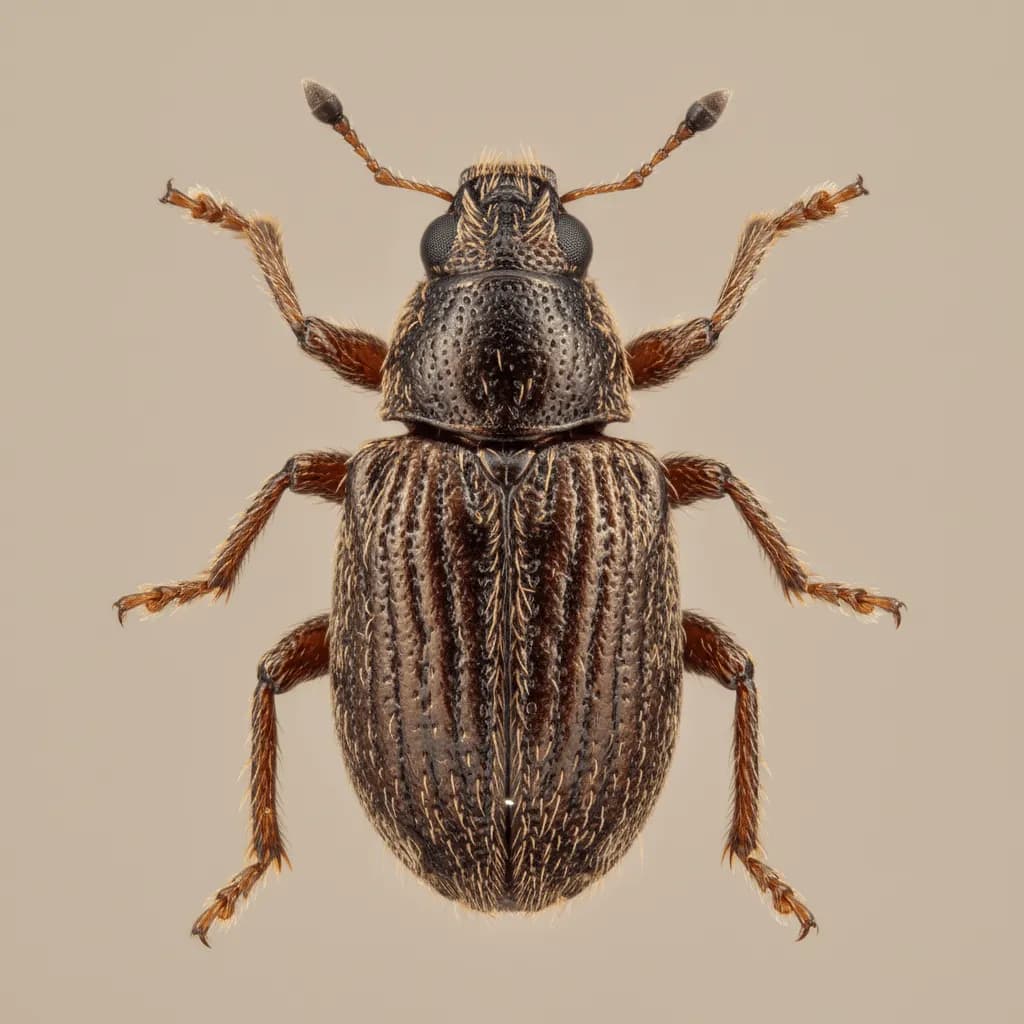
Bean Weevil
Acanthoscelides obtectus
Also known as: Common Bean Weevil
The Bean Weevil infests dried beans and other legumes both in the field and in storage. Larvae develop inside individual beans, and adults emerge through round exit holes, leaving infested beans riddled with holes and unsuitable for consumption.
Identification
Size
2.5-3.5 mm
Color
Olive-brown to gray with darker mottled markings
Key Trait
Infests dried beans and legumes; adults emerge from stored beans leaving round exit holes.
Behavior & Habitat
Females lay eggs on or inside dried beans. Larvae bore into the bean and complete development inside. Multiple larvae can infest a single bean.
Habitat: Dried bean storage in pantries, warehouses, and agricultural facilities.
Diet: Dried beans (kidney, pinto, navy, lima) and other legumes.
Signs of Infestation
- Small beetles in stored dried beans
- Beans with round exit holes
- Powdery residue in bean containers
Risks & Damage
Infested beans are riddled with holes and contaminated with frass.
Prevention Tips
- 1.Store dried beans in sealed containers
- 2.Freeze beans for 48 hours after purchase
- 3.Inspect beans before cooking
Why DIY Treatment Often Falls Short
Larvae are hidden inside beans, protected from external treatments. Infested products must be discarded.
Professional Treatment
Discard infested products, clean storage areas, and treat shelving cracks. Fumigation for commercial bean storage.
Frequently Asked Questions
Are beans with weevil holes safe to eat?
How do weevils get in my beans?
Can bean weevils infest other foods?
Need Help With Bean weevil?
If you're seeing signs of bean weevil in or around your home, professional treatment is the fastest way to stop the problem. Lotus Pest Control offers free inspections to identify the issue and recommend the right solution.
At a Glance
- Category
- Pantry Pests
- Scientific Name
- Acanthoscelides obtectus
- Size
- 2.5-3.5 mm
- Color
- Olive-brown to gray with darker mottled markings
- Key Trait
- Infests dried beans and legumes; adults emerge from stored beans leaving round exit holes.
- Regions
- Southeast, South Central, Midwest
- Threat Level
- Very Low
- Risk Types
- food
- Seasonal Activity
- MarAprMayJunJulAugSepOctNovDecJanFebnonelowmoderatehighpeak