
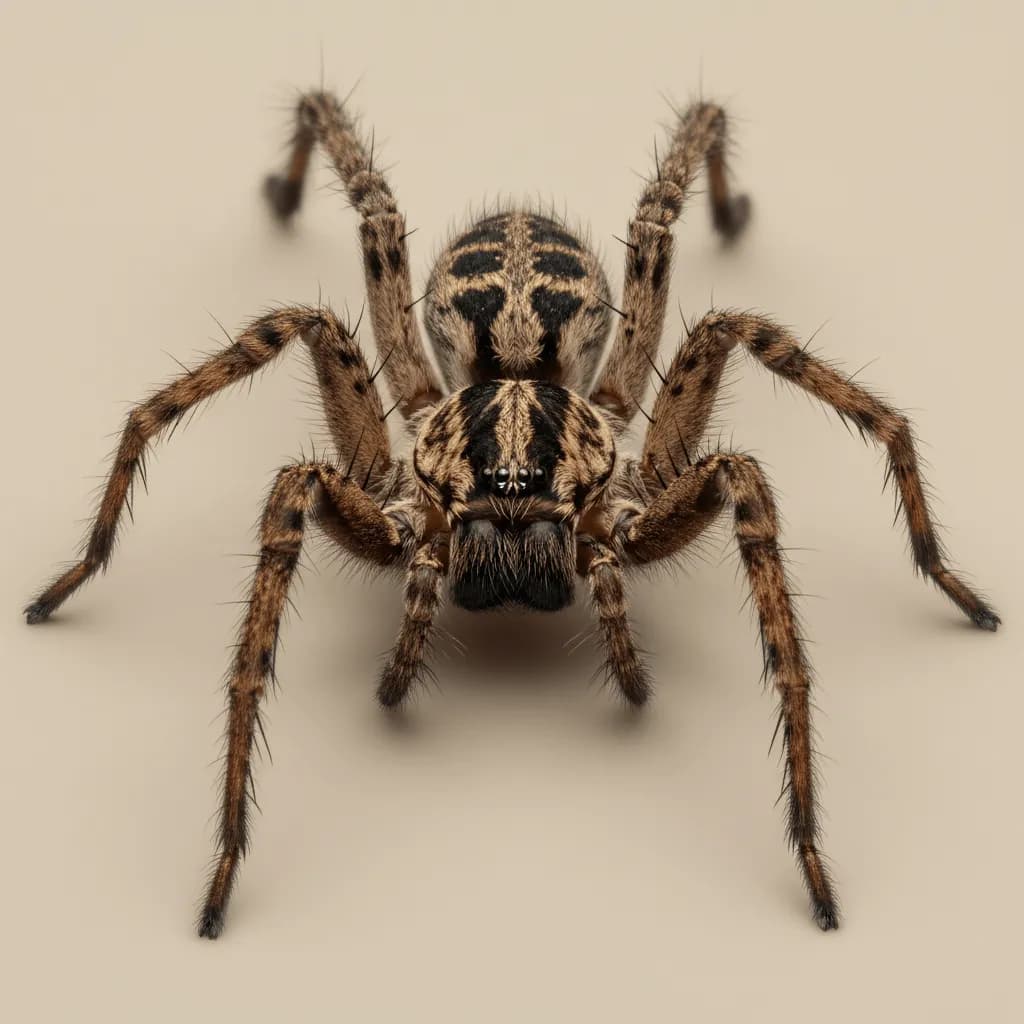
Carolina Wolf Spider
Hogna carolinensis
The Carolina Wolf Spider is the largest wolf spider in North America. It hunts actively at night rather than building webs. Despite its alarming size, it is harmless to humans and is beneficial as a predator of pest insects. Females are frequently encountered carrying a large egg sac or dozens of spiderlings on their abdomen.
Identification
Size
18-35 mm (body length - one of the largest wolf spiders)
Color
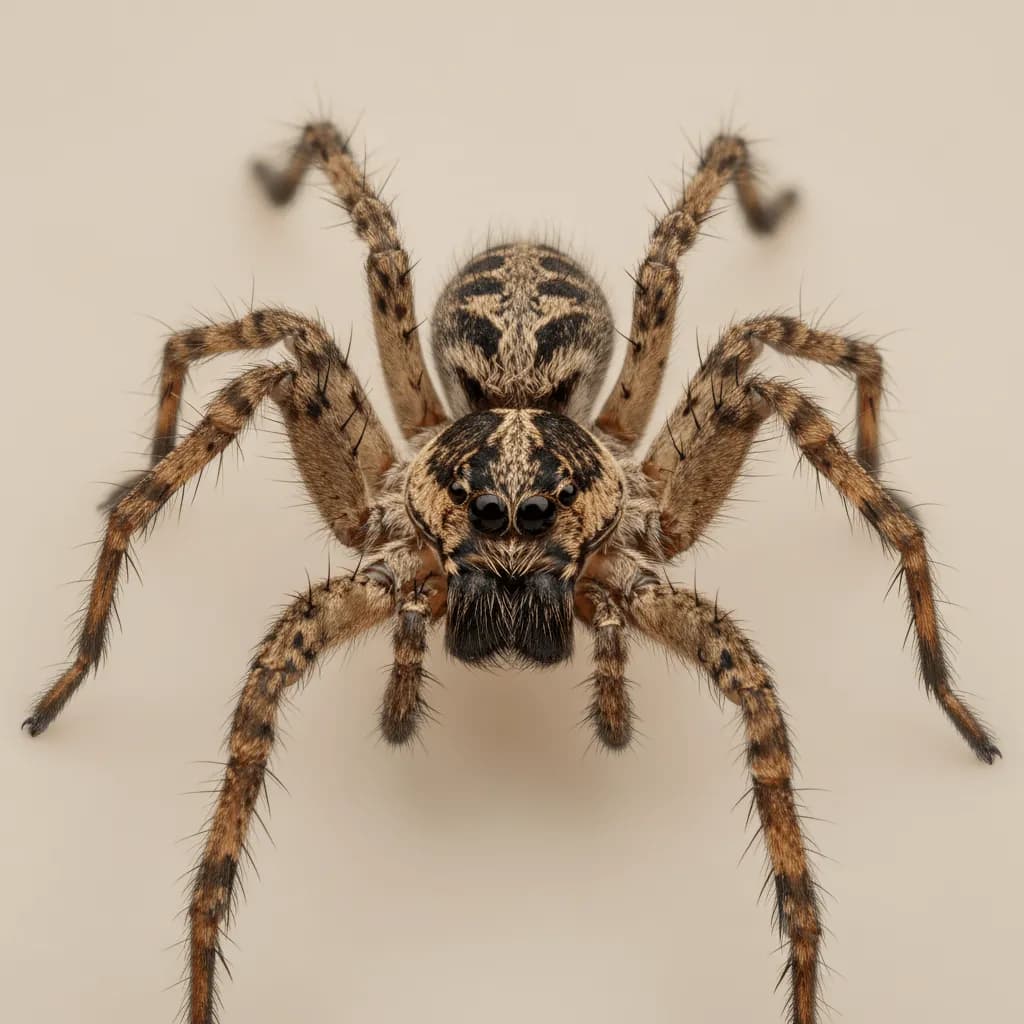
Mottled brown and gray with darker markings
Key Trait
Very large size; does not spin webs; females carry egg sacs on their spinnerets and carry spiderlings on their backs.
Behavior & Habitat
Nocturnal ground hunter that runs down prey. Retreats to burrows or leaf litter during the day. Not aggressive but may bite if handled. Females carry eggs and spiderlings, making them appear even larger.
Habitat: Fields, gardens, forests, and around homes. Commonly enters garages, basements, and ground-floor rooms in fall when seeking shelter.
Diet: Insects, other spiders, and small invertebrates.
Signs of Infestation
- Very large brown spiders running across floors at night
- Spiders carrying a round egg sac or babies on their abdomen
- Occasional sightings in garages and basements
Risks & Damage
Large size causes significant alarm but they are harmless and beneficial.
Prevention Tips
- 1.Seal gaps under doors and around ground-level openings
- 2.Reduce ground-level clutter and debris near the foundation
- 3.Install door sweeps on exterior doors
- 4.Turn off exterior lights that attract prey insects
Why DIY Treatment Often Falls Short
Wolf spiders are solitary wanderers, not colony pests. Spraying does not address the underlying reason they enter - hunting prey insects attracted to the home. Reducing prey and sealing entry points is more effective.
Professional Treatment
Professionals focus on exclusion work, exterior perimeter treatments to reduce prey insect populations, and targeted treatment of entry points. Indoor treatments are rarely necessary for wolf spiders.
Frequently Asked Questions
Are wolf spiders dangerous?
Why is this spider carrying a ball on its back?
Should I kill wolf spiders in my home?
Need Help With Carolina wolf spider?
If you're seeing signs of carolina wolf spider in or around your home, professional treatment is the fastest way to stop the problem. Lotus Pest Control offers free inspections to identify the issue and recommend the right solution.
At a Glance
- Category
- Spiders
- Scientific Name
- Hogna carolinensis
- Size
- 18-35 mm (body length - one of the largest wolf spiders)
- Color
- Mottled brown and gray with darker markings
- Key Trait
- Very large size; does not spin webs; females carry egg sacs on their spinnerets and carry spiderlings on their backs.
- Regions
- Southeast, South Central, Midwest, Northeast
- Threat Level
- Very Low
- Risk Types
- nuisance
- Seasonal Activity
- MarAprMayJunJulAugSepOctNovDecJanFebnonelowmoderatehighpeak