
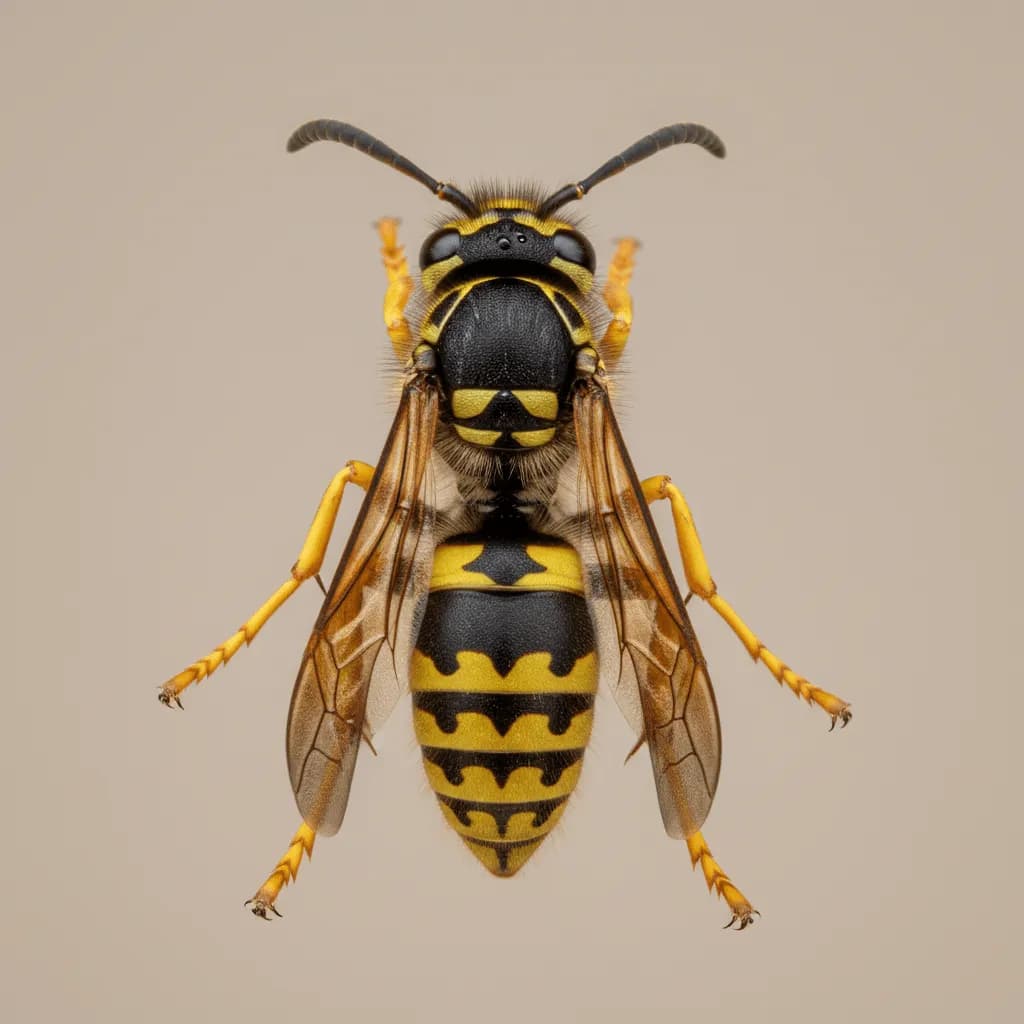
Western Yellowjacket
Vespula pensylvanica
Also known as: Prairie Yellowjacket
The Western Yellowjacket is the dominant yellowjacket species throughout the western United States and is responsible for the vast majority of stinging incidents in the region. It is an aggressive scavenger at outdoor dining events, barbecues, and trash receptacles. Colonies can contain thousands of workers and become most aggressive in late summer and fall.
Identification
Size
12-16 mm
Color
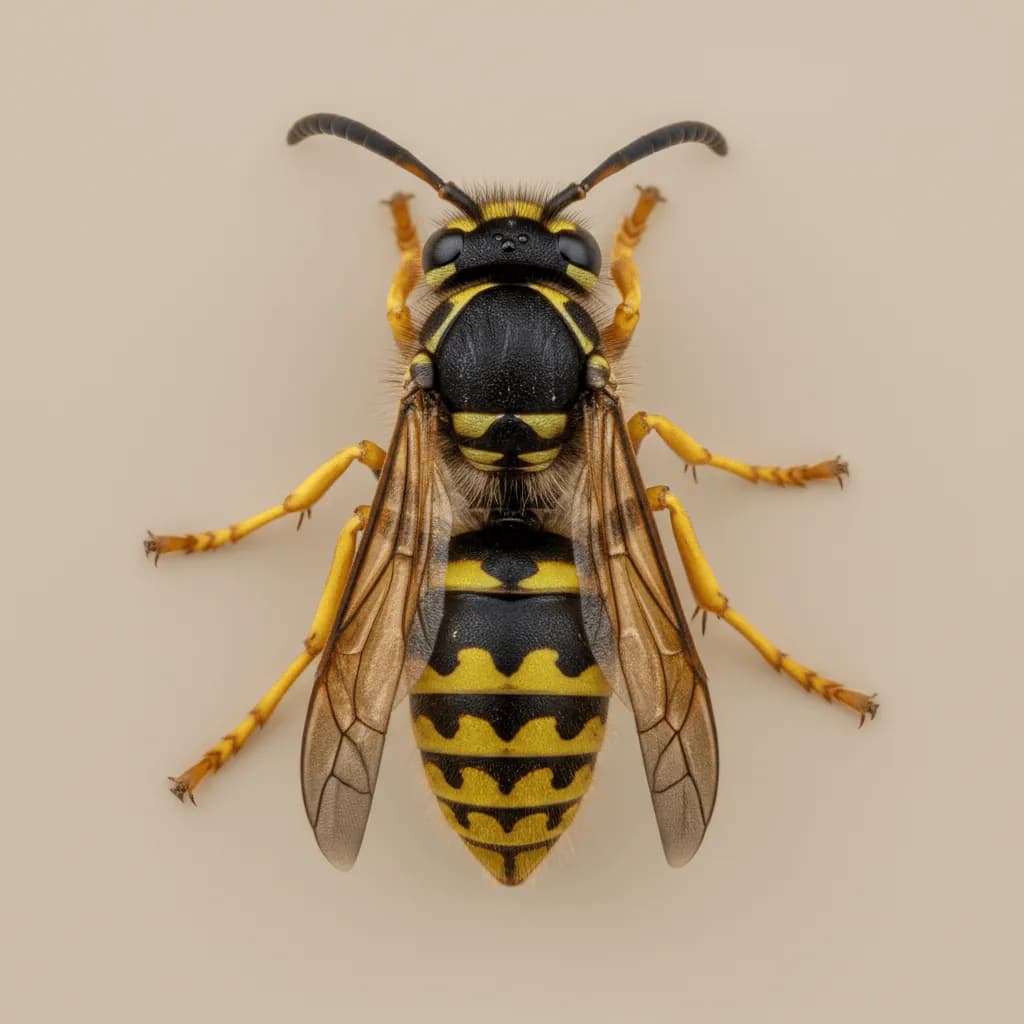
Bright yellow and black banding pattern with a predominantly yellow face
Key Trait
Most common yellowjacket in the western U.S.; almost entirely yellow face without black anchor-shaped marking found on eastern species; scavenges aggressively at outdoor food events.
Behavior & Habitat
Highly social with large colonies peaking in late summer. Workers aggressively scavenge protein and sugary foods from human sources. Increasingly aggressive as colonies reach maximum size in late summer and fall. Can sting repeatedly without losing the stinger.
Habitat: Nests in underground cavities, including rodent burrows, wall voids, attics, and hollow logs. Ground nests are especially hazardous as they can be accidentally disturbed by foot traffic or lawn mowers.
Diet: Generalist scavenger feeding on insects, carrion, fruit, sugary drinks, and human food. Workers hunt insects to feed larvae and forage for carbohydrates for themselves.
Signs of Infestation
- Yellowjackets entering and exiting a ground hole or wall gap in a steady stream
- Aggressive yellowjackets scavenging at outdoor meals, trash cans, or around fruit trees
- Sudden stinging incident when mowing lawn or walking in yard near hidden ground nest
Risks & Damage
Capable of repeated stinging; venom can cause severe allergic reactions (anaphylaxis) in sensitized individuals. Multiple stings can be dangerous even to non-allergic people.
Aggressive scavenging behavior disrupts outdoor dining and recreation, especially in late summer and fall.
Prevention Tips
- 1.Keep trash cans tightly sealed and clean to reduce scavenging
- 2.Cover food and drinks at outdoor events and clean up promptly
- 3.Mark and avoid ground nest entrances until professional removal can be arranged
Why DIY Treatment Often Falls Short
Underground nest entrances are difficult to treat effectively without specialized equipment, and disturbing a colony triggers mass defensive stinging. Over-the-counter aerosol sprays often fail to penetrate deep underground nests.
Professional Treatment
Professionals treat ground nests with professional-grade dust insecticides injected into the nest entrance at dusk when all workers have returned. Wall void nests are treated with dust formulations. Complete colony elimination typically occurs within 24-48 hours.
Frequently Asked Questions
Why are they so aggressive at my barbecue?
Can yellowjackets sting more than once?
How do I deal with a ground nest?
Need Help With Western yellowjacket?
If you're seeing signs of western yellowjacket in or around your home, professional treatment is the fastest way to stop the problem. Lotus Pest Control offers free inspections to identify the issue and recommend the right solution.
At a Glance
- Category
- Stinging Insects
- Scientific Name
- Vespula pensylvanica
- Size
- 12-16 mm
- Color
- Bright yellow and black banding pattern with a predominantly yellow face
- Key Trait
- Most common yellowjacket in the western U.S.; almost entirely yellow face without black anchor-shaped marking found on eastern species; scavenges aggressively at outdoor food events.
- Regions
- West Coast, Pacific Northwest, Mountain West, Southwest, Great Plains
- Threat Level
- High
- Risk Types
- healthnuisance
- Seasonal Activity
- MarAprMayJunJulAugSepOctNovDecJanFebnonelowmoderatehighpeak