
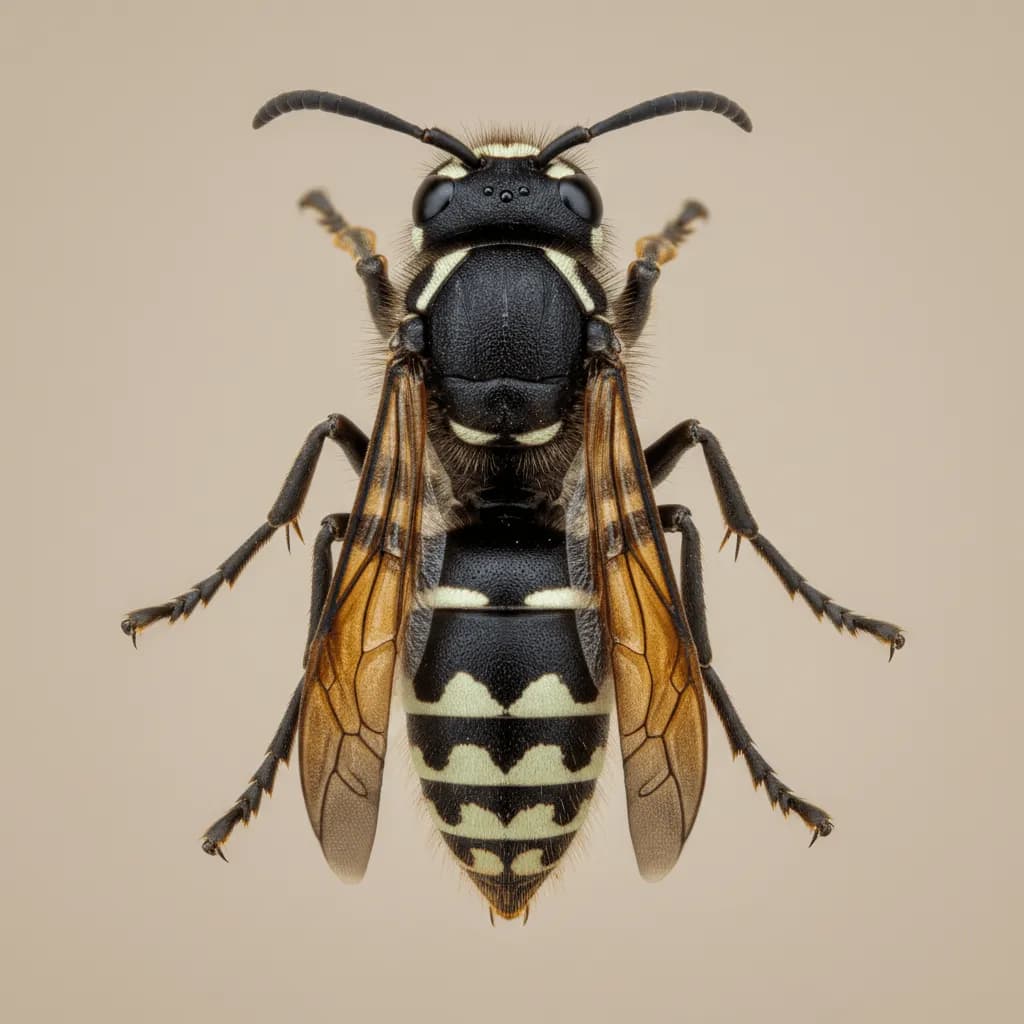
Bald-Faced Hornet
Dolichovespula maculata
Also known as: White-Faced Hornet
The Bald-Faced Hornet is a large, conspicuous wasp that builds impressive enclosed paper nests that can grow to the size of a basketball. Despite the name, it is technically a yellowjacket, not a true hornet. Colonies are highly defensive and can mount aggressive, coordinated attacks when the nest is disturbed.
Identification
Size
15-20 mm
Color
Black with white (ivory) facial markings and white-tipped abdomen
Key Trait
Large black-and-white body; builds large, enclosed, football-shaped paper nests in trees and on structures.
Behavior & Habitat
Colonies of 400-700 workers are fiercely protective of the nest. Guard workers patrol the area and will attack in force if the nest is jarred or approached too closely. They can sting repeatedly and may squirt venom at intruders' eyes.
Habitat: Large enclosed paper nests attached to tree branches, shrubs, building overhangs, and utility poles. Nests are gray, football-shaped, and can reach 24 inches in length.
Diet: Primarily predatory - hunts flies, yellowjackets, and other insects. Also feeds on fruit and nectar.
Signs of Infestation
- Large gray paper nest in a tree or on a building
- Aggressive black-and-white wasps patrolling an area
- Multiple stings when approaching a tree or shrub
Risks & Damage
Extremely aggressive nest defense; coordinated attacks can deliver dozens of stings. Life-threatening for venom-allergic individuals.
Prevention Tips
- 1.Monitor trees and eaves in spring for starter nests
- 2.Have nests near high-traffic areas treated early in the season while small
- 3.Do not attempt to remove or disturb a nest
Why DIY Treatment Often Falls Short
Disturbing a bald-faced hornet nest without proper equipment and training is one of the most dangerous DIY pest control activities. Coordinated attack from hundreds of workers can put the homeowner in serious medical danger.
Professional Treatment
Professionals treat the nest at dusk wearing full protective equipment, injecting fast-acting insecticide directly into the nest entrance. The nest is removed after all activity ceases. Nests high in trees may require aerial lift equipment.
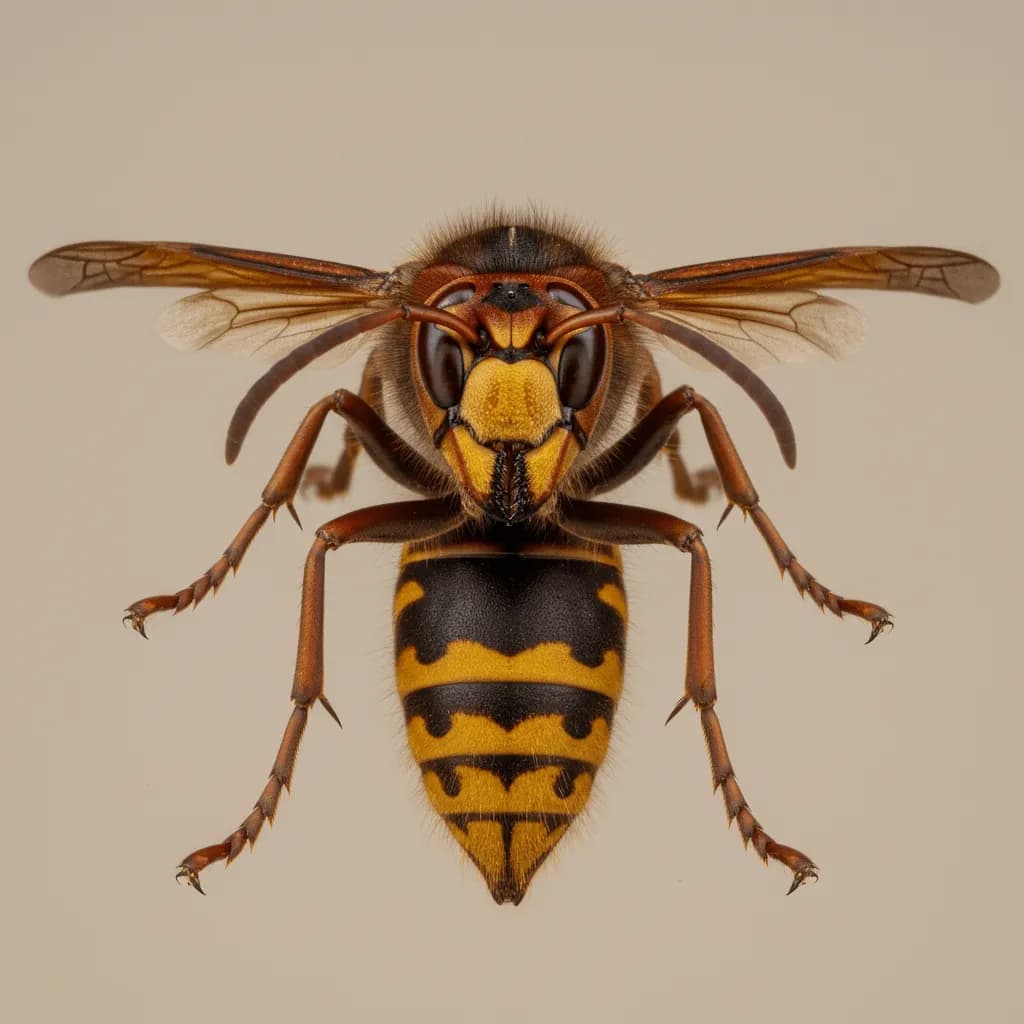
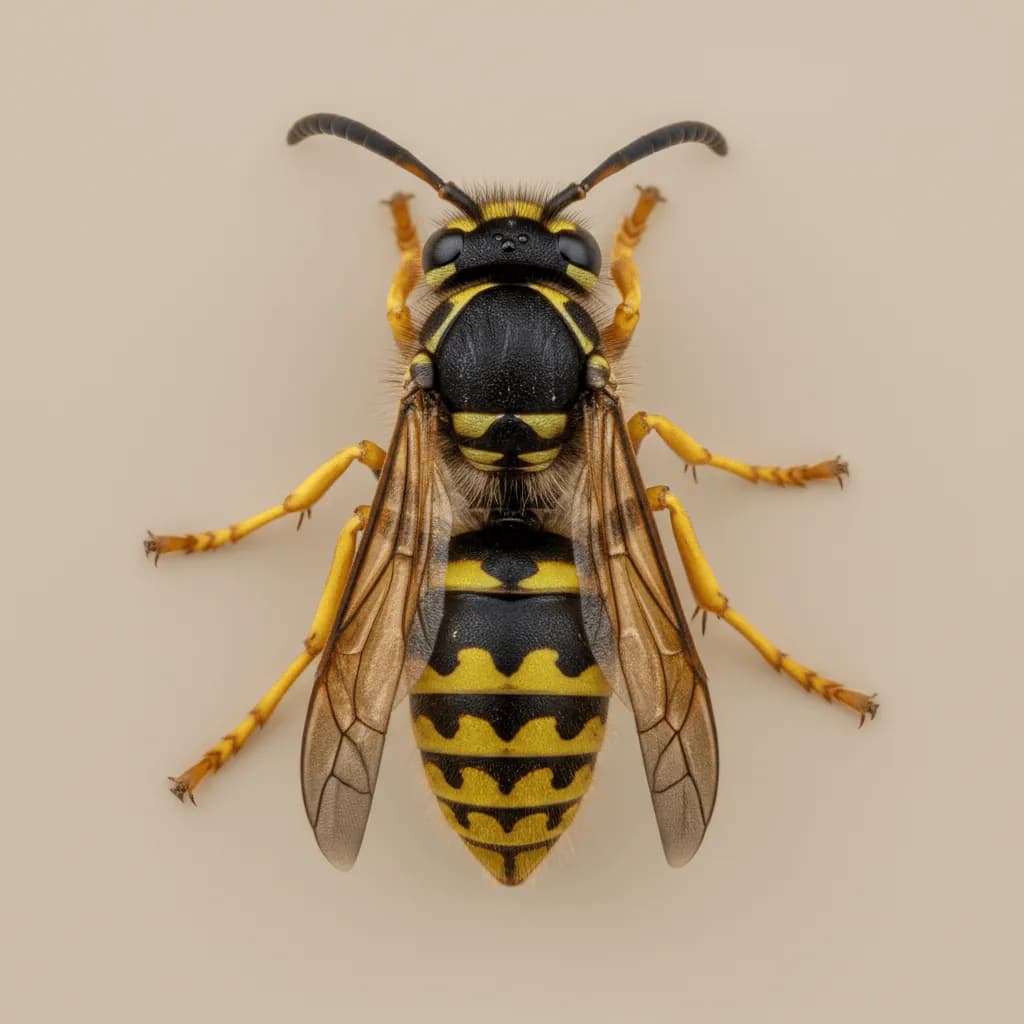
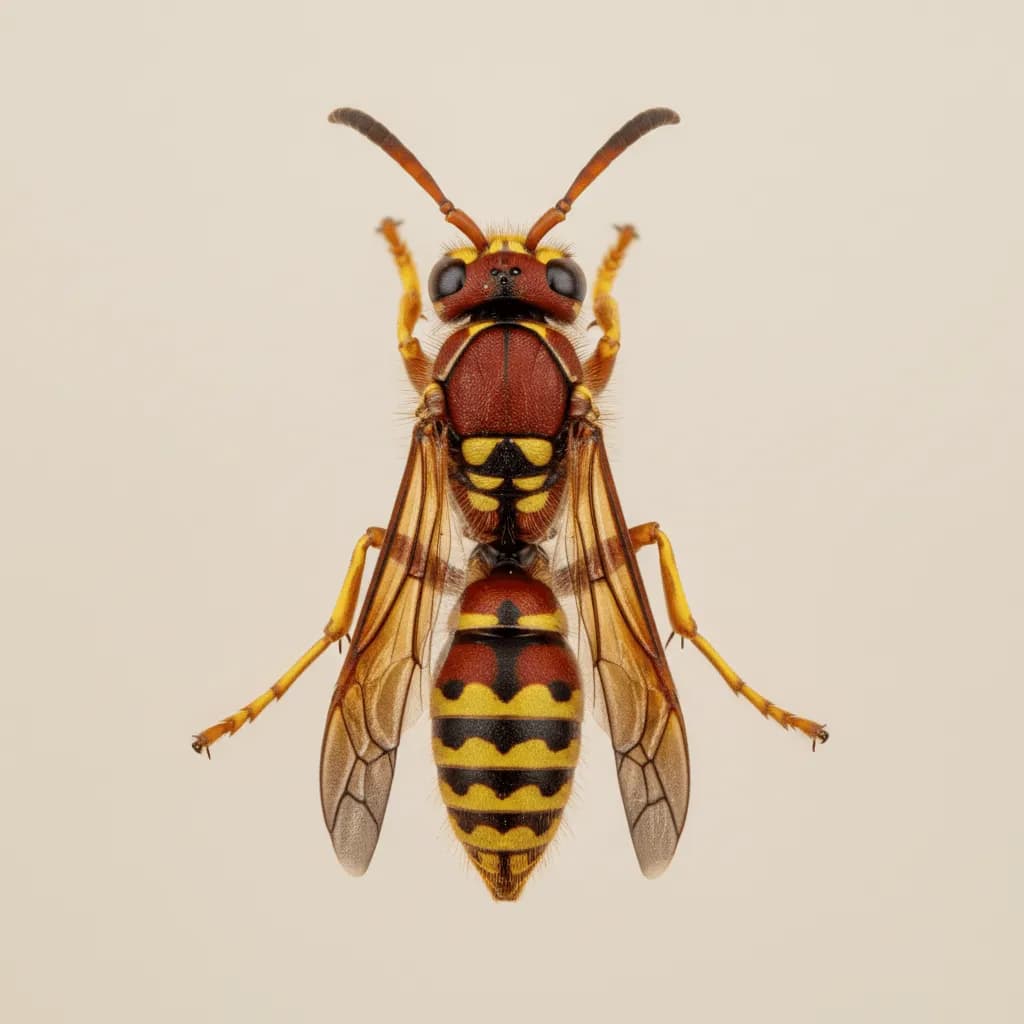
Related Pests
Frequently Asked Questions
How dangerous is a bald-faced hornet nest?
Should I remove the nest in winter?
Are they the same as European hornets?
Need Help With Bald-faced hornet?
If you're seeing signs of bald-faced hornet in or around your home, professional treatment is the fastest way to stop the problem. Lotus Pest Control offers free inspections to identify the issue and recommend the right solution.
At a Glance
- Category
- Stinging Insects
- Scientific Name
- Dolichovespula maculata
- Size
- 15-20 mm
- Color
- Black with white (ivory) facial markings and white-tipped abdomen
- Key Trait
- Large black-and-white body; builds large, enclosed, football-shaped paper nests in trees and on structures.
- Regions
- Northeast, Midwest, Southeast, Pacific Northwest
- Threat Level
- High
- Risk Types
- health
- Seasonal Activity
- MarAprMayJunJulAugSepOctNovDecJanFebnonelowmoderatehighpeak