
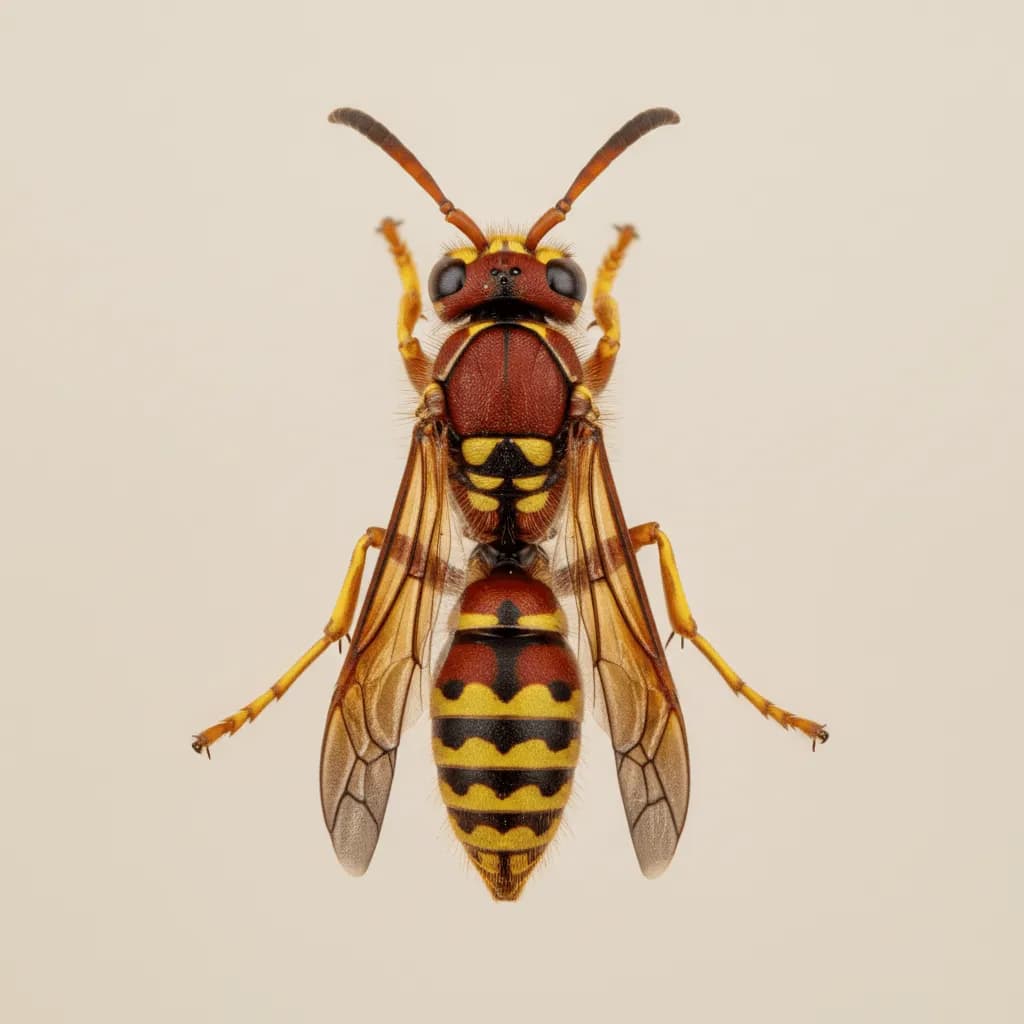
Northern Paper Wasp
Polistes fuscatus
Also known as: Paper Wasp
The Northern Paper Wasp is one of the most common stinging insects around homes in the eastern United States. It builds open, umbrella-shaped paper nests under eaves, porch ceilings, and deck railings. While less aggressive than yellowjackets, they will sting repeatedly to defend their nest.
Identification
Size
15-21 mm
Color
Dark brown to reddish-brown with yellow markings on the face and body
Key Trait
Slender waist, long dangling legs in flight, and open-comb paper nests hung from a single stalk under eaves.
Behavior & Habitat
Semi-social wasps that build small colonies of 20-75 individuals. Workers forage for caterpillars and other insects to feed larvae. Defensive around the nest but generally docile when foraging away from it.
Habitat: Under eaves, porch ceilings, deck railings, window frames, shutters, and any sheltered horizontal surface. Nests are small, open combs without an outer envelope.
Diet: Adults feed on nectar and fruit juices; larvae are fed masticated caterpillars and other insects.
Signs of Infestation
- Open, umbrella-shaped paper nest hanging from a stalk under eaves or porch ceilings
- Wasps hovering near doorways and windows
- Increased wasp activity in spring as new nests are started
Risks & Damage
Stings are painful and can trigger severe allergic reactions (anaphylaxis) in sensitized individuals.
Prevention Tips
- 1.Inspect under eaves and porch ceilings in early spring and remove starter nests before they grow
- 2.Seal gaps in soffits and trim where wasps enter to build nests
- 3.Paint or varnish bare wood - unpainted wood provides nesting material
- 4.Keep outdoor food and drink covered during warm months
Why DIY Treatment Often Falls Short
Knocking down nests without treating them allows surviving wasps to rebuild within days. Self-treatment of nests near doorways and high locations risks stings, especially for individuals who may not know they are allergic.
Professional Treatment
Technicians treat active nests with quick-knockdown products and remove the nest. Preventive treatments applied to eaves and soffits in early spring deter nest construction. High or hard-to-reach nests are safely handled with professional equipment.
Related Pests
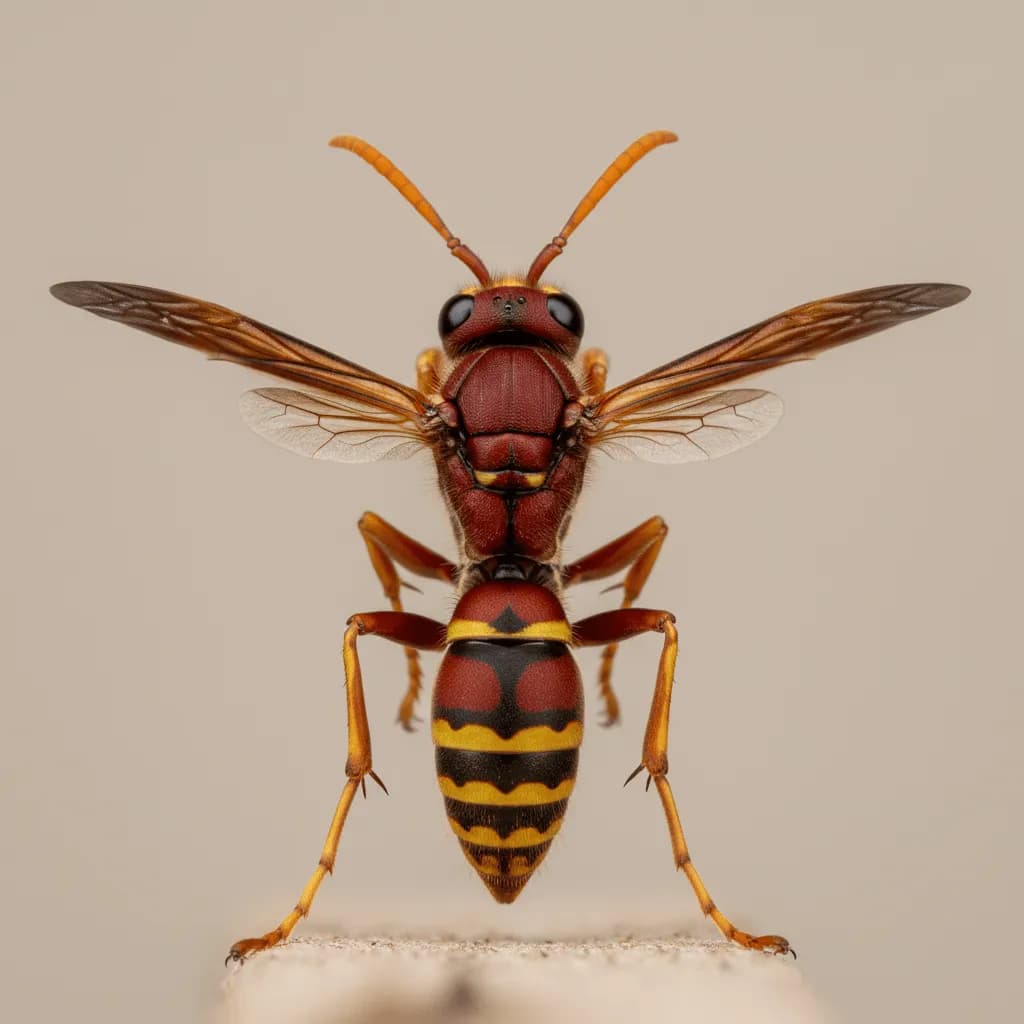
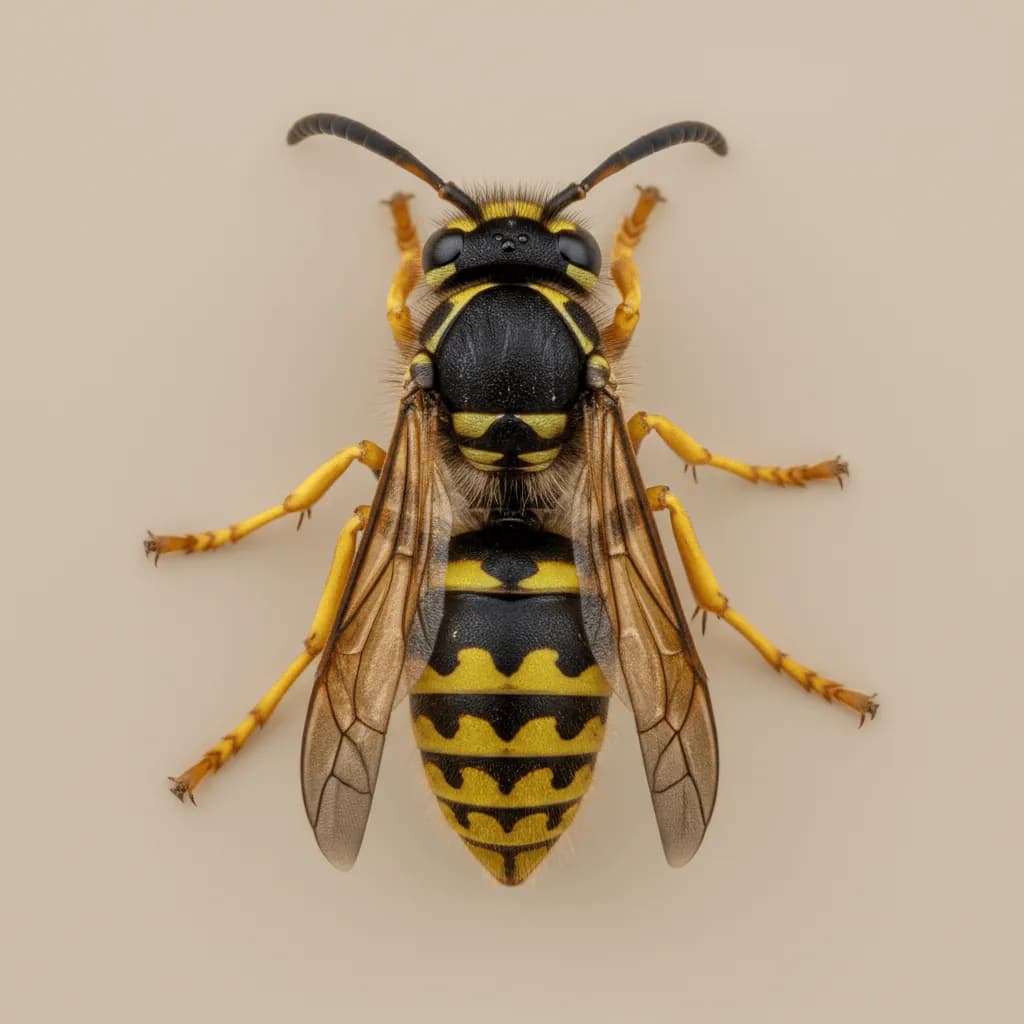
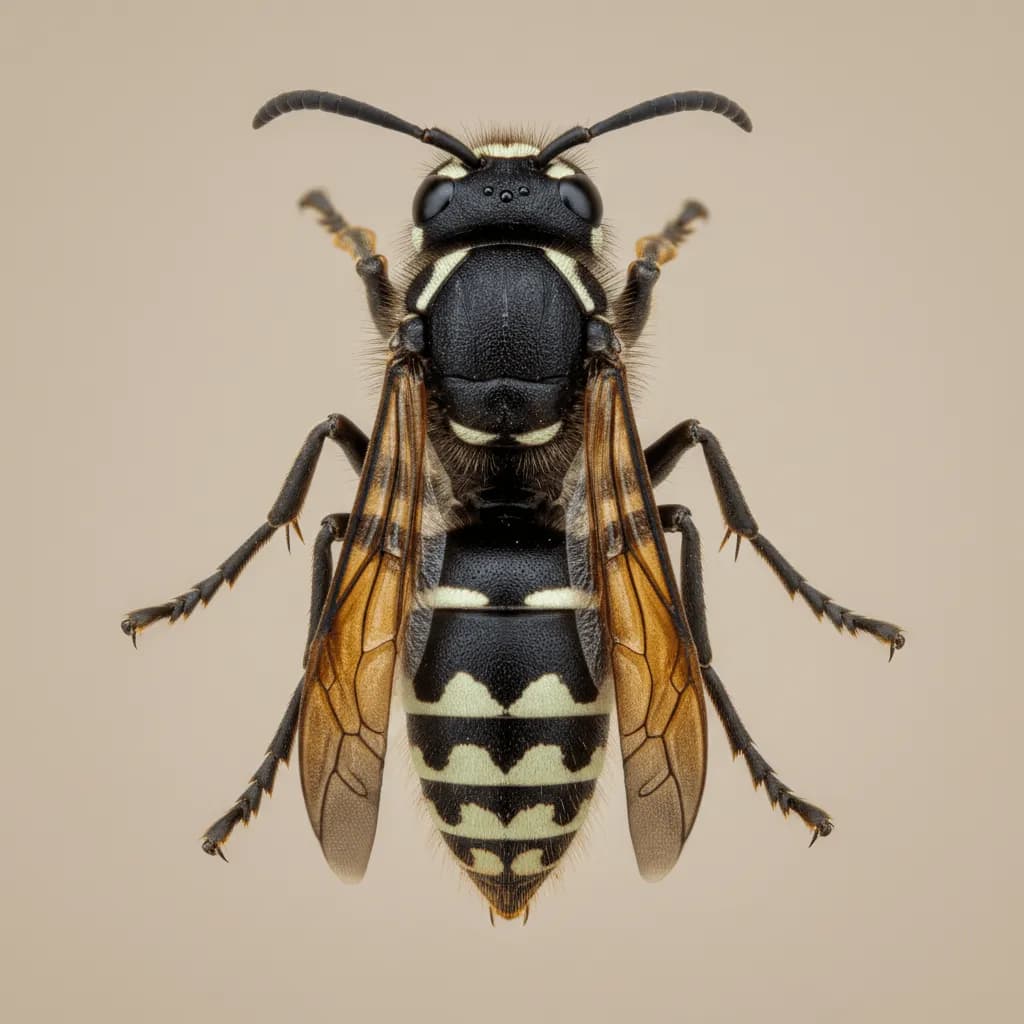
Frequently Asked Questions
Are paper wasps aggressive?
Should I remove paper wasp nests?
When is the best time to treat a paper wasp nest?
Need Help With Northern paper wasp?
If you're seeing signs of northern paper wasp in or around your home, professional treatment is the fastest way to stop the problem. Lotus Pest Control offers free inspections to identify the issue and recommend the right solution.
At a Glance
- Category
- Stinging Insects
- Scientific Name
- Polistes fuscatus
- Size
- 15-21 mm
- Color
- Dark brown to reddish-brown with yellow markings on the face and body
- Key Trait
- Slender waist, long dangling legs in flight, and open-comb paper nests hung from a single stalk under eaves.
- Regions
- Northeast, Midwest, Mid Atlantic, Southeast
- Threat Level
- Moderate
- Risk Types
- health
- Seasonal Activity
- MarAprMayJunJulAugSepOctNovDecJanFebnonelowmoderatehighpeak