
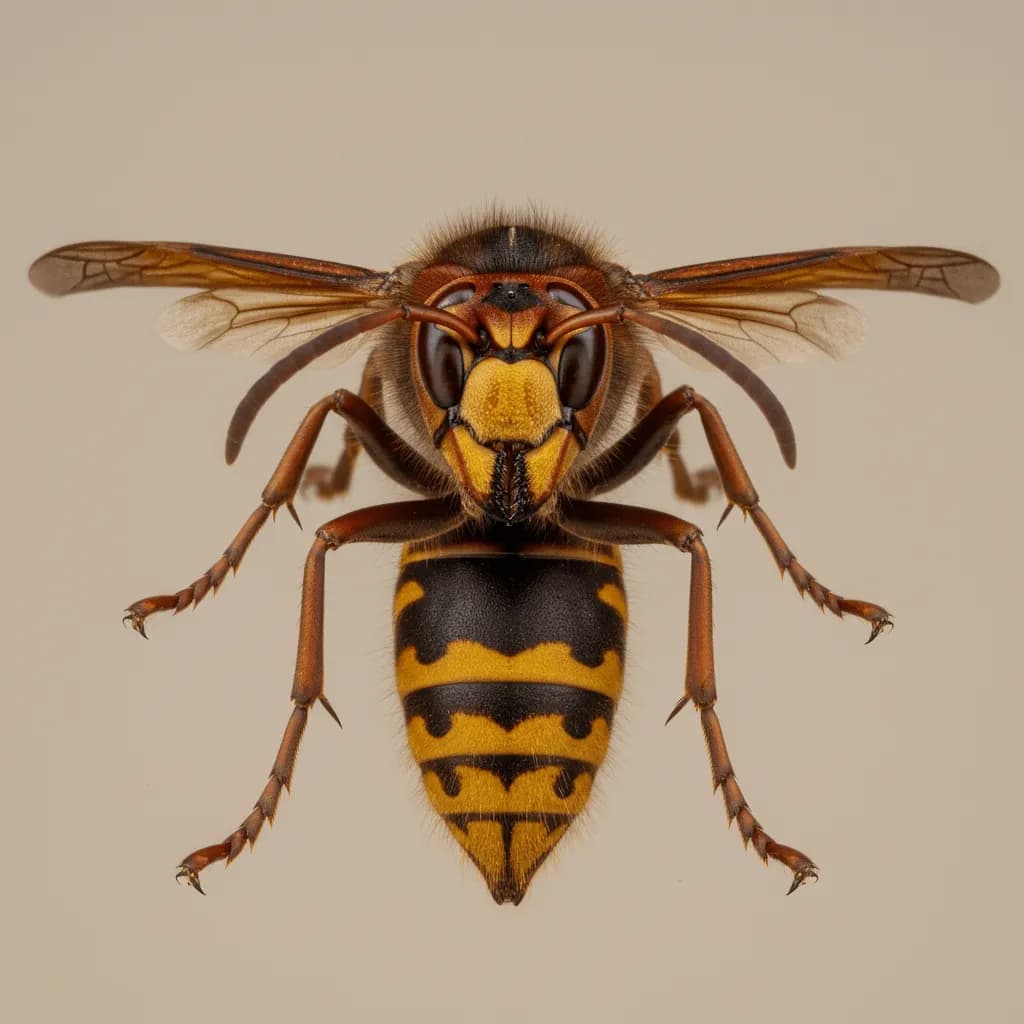
European Hornet
Vespa crabro
Also known as: Giant Hornet, Brown Hornet
The European Hornet is the only true hornet (genus Vespa) established in North America. It is large and intimidating but actually less aggressive than yellowjackets when away from the nest. Uniquely among wasps, it is active at night and attracted to lights.
Identification
Size
25-35 mm
Color
Brown and yellow with reddish-orange head and thorax
Key Trait
The only true hornet in North America; large size; active at night and attracted to lights.
Behavior & Habitat
Active during the day and at night. Attracted to porch lights and may bang against illuminated windows. Strips bark from trees and shrubs to build nests and feed on sap. Colonies contain 300-1,000 workers.
Habitat: Hollow trees, wall voids, attics, and barn lofts. Builds enclosed paper nests inside cavities. Found across the eastern United States.
Diet: Predatory on large insects including grasshoppers, dragonflies, and other wasps. Also feeds on tree sap and fruit.
Signs of Infestation
- Very large brown-and-yellow wasps at porch lights at night
- Bark stripped from shrubs and tree branches
- Wasps entering a tree hollow or gap in siding
Risks & Damage
Painful sting; defensive around the nest. Night activity near lights increases encounter risk.
Prevention Tips
- 1.Seal gaps in siding and soffits to prevent nesting
- 2.Switch to amber or yellow exterior lights to reduce nighttime attraction
- 3.Have hollow trees near the home inspected in spring
Why DIY Treatment Often Falls Short
Nests inside wall voids and tree hollows are inaccessible to consumer products. Night activity makes them unpredictable to encounter.
Professional Treatment
Technicians treat the nest cavity with dust or aerosol injection at dusk. Wall-void nests are treated through drilled access points. Exterior lighting modifications reduce nighttime encounters.
Related Pests
Frequently Asked Questions
Are European hornets aggressive?
Why are they stripping bark from my shrubs?
Why are they at my porch light?
Need Help With European hornet?
If you're seeing signs of european hornet in or around your home, professional treatment is the fastest way to stop the problem. Lotus Pest Control offers free inspections to identify the issue and recommend the right solution.
At a Glance
- Category
- Stinging Insects
- Scientific Name
- Vespa crabro
- Size
- 25-35 mm
- Color
- Brown and yellow with reddish-orange head and thorax
- Key Trait
- The only true hornet in North America; large size; active at night and attracted to lights.
- Regions
- Northeast, Mid Atlantic, Southeast, Midwest
- Threat Level
- Moderate
- Risk Types
- health
- Seasonal Activity
- MarAprMayJunJulAugSepOctNovDecJanFebnonelowmoderatehighpeak