
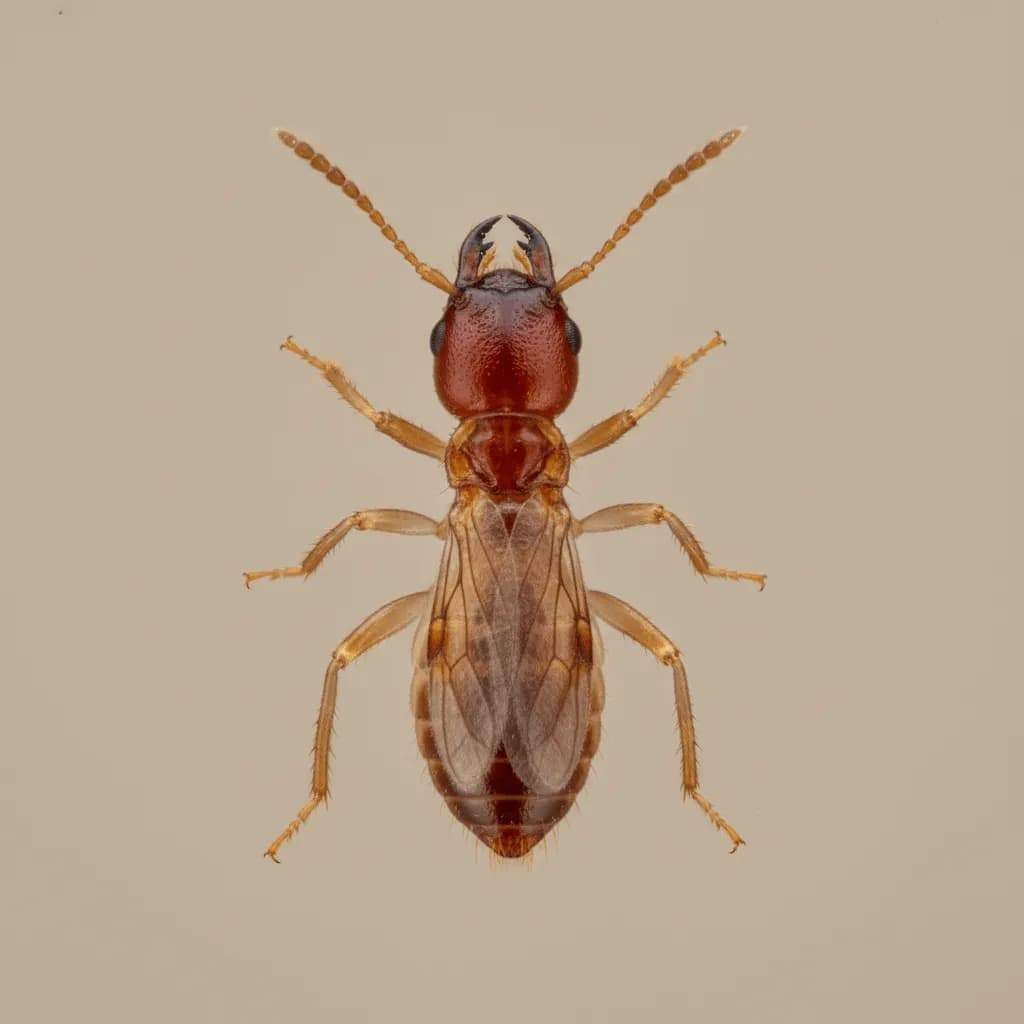
Dark Southeastern Subterranean Termite
Reticulitermes virginicus
The Dark Southeastern Subterranean Termite is the second most common subterranean termite in the eastern United States. It often co-exists with the Eastern Subterranean Termite in the same property. Its biology and damage potential are similar, though colonies tend to be somewhat smaller.
Identification
Size
3-4 mm (workers)
Color
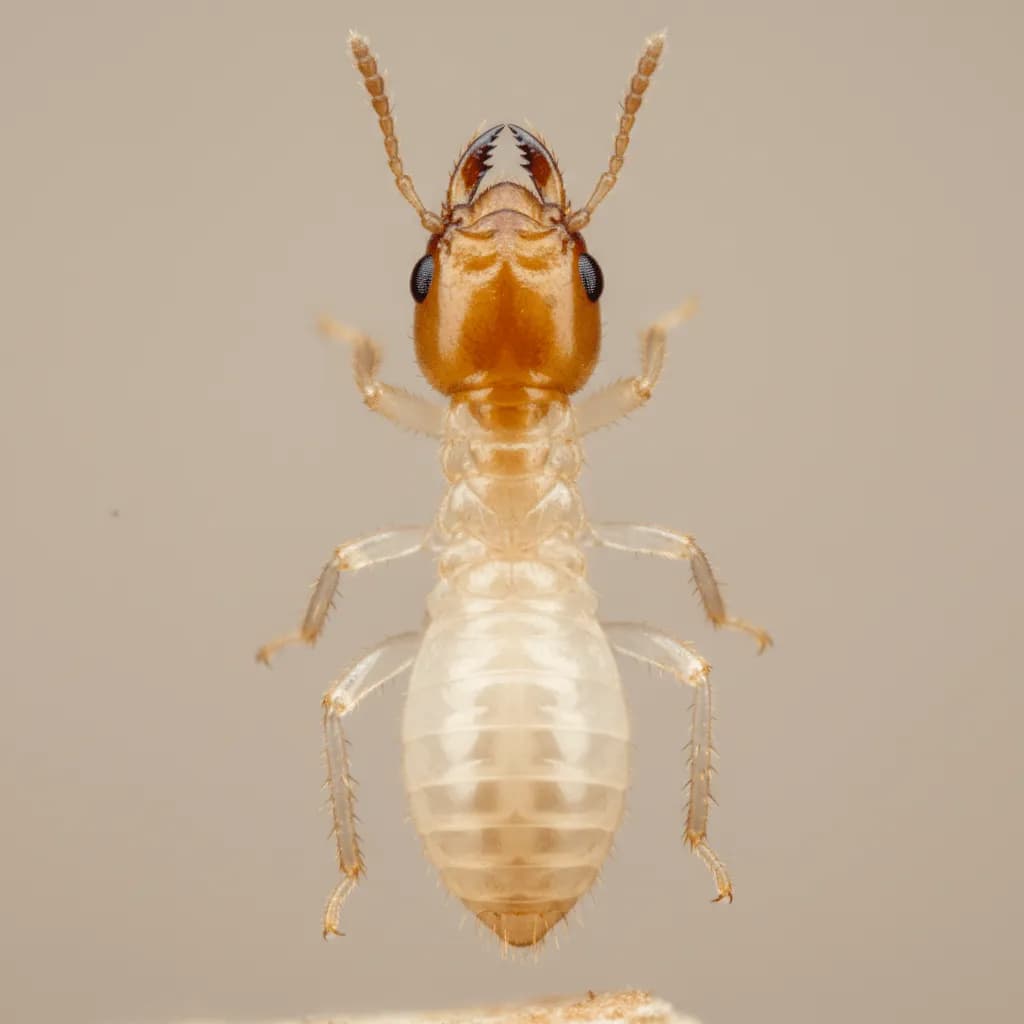
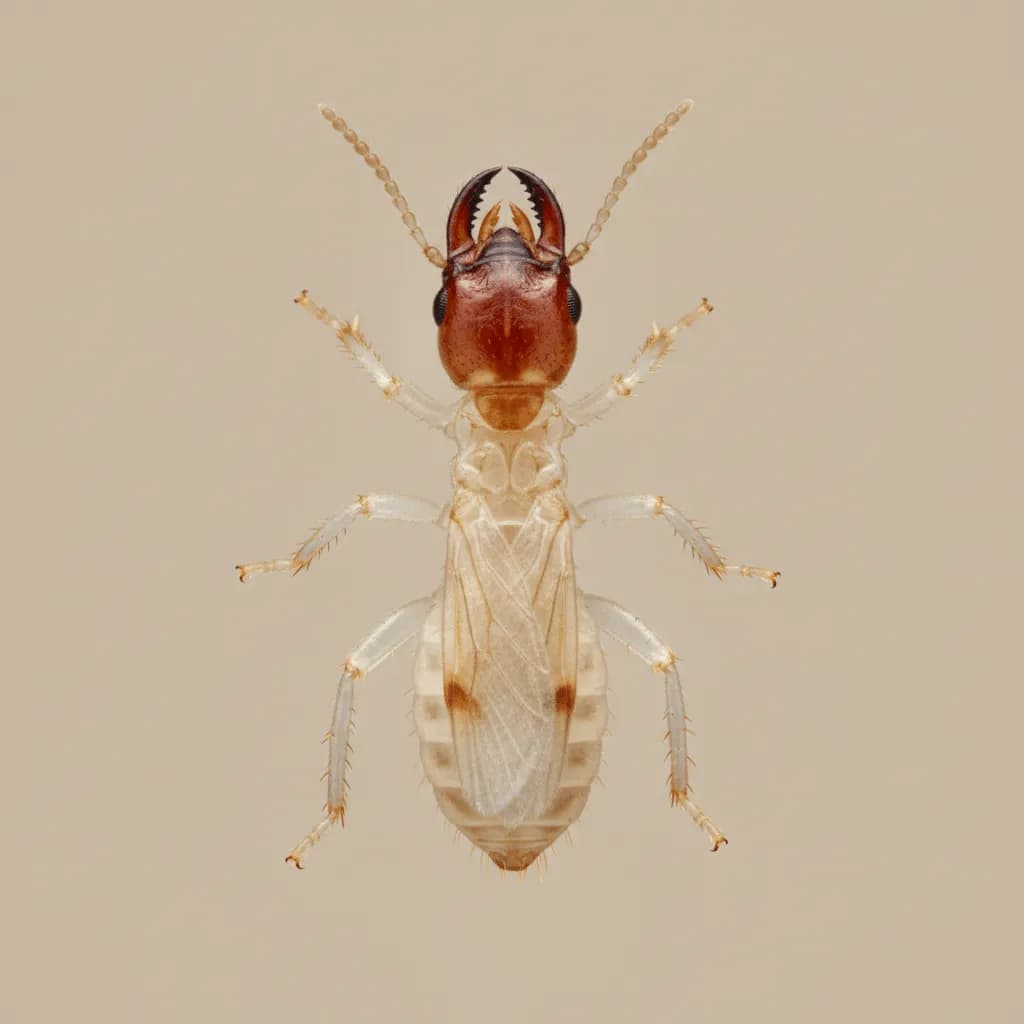
Workers are cream-white; swarmers are dark brownish-black
Key Trait
Similar to the Eastern subterranean termite but slightly smaller with darker swarmers that emerge slightly earlier in spring.
Behavior & Habitat
Foraging and nesting behavior mirrors the Eastern Subterranean Termite. Swarms tend to occur slightly earlier in spring and on slightly cooler days. Workers build mud tubes and forage for cellulose.
Habitat: Soil beneath and around structures, identical to other subterranean termites. Often found co-infesting with the Eastern Subterranean Termite.
Diet: Cellulose in wood, paper, and plant-based materials.
Signs of Infestation
- Mud tubes on foundation walls
- Early-spring swarms of dark-winged termites indoors
- Hollow-sounding or probe-damaged wood
Risks & Damage
Causes the same type of hidden structural damage as the Eastern Subterranean Termite.
Prevention Tips
- 1.Same prevention measures as for Eastern Subterranean Termites
- 2.Annual professional inspections are essential
- 3.Maintain soil moisture barriers and proper drainage
- 4.Eliminate wood-to-soil contact
Why DIY Treatment Often Falls Short
Like all subterranean termites, this species is hidden underground and inside wood, beyond the reach of consumer products. Professional soil treatment or baiting is required.
Professional Treatment
Treatment protocols are identical to those for Eastern Subterranean Termites: liquid soil barriers, bait monitoring systems, and ongoing professional inspections. Co-infestations with other subterranean species are treated with the same comprehensive approach.
Frequently Asked Questions
Is this termite as damaging as the Eastern Subterranean?
Can two termite species infest the same house?
When do Dark Southeastern termites swarm?
Need Help With Dark southeastern subterranean termite?
If you're seeing signs of dark southeastern subterranean termite in or around your home, professional treatment is the fastest way to stop the problem. Lotus Pest Control offers free inspections to identify the issue and recommend the right solution.
At a Glance
- Category
- Termites
- Scientific Name
- Reticulitermes virginicus
- Size
- 3-4 mm (workers)
- Color
- Workers are cream-white; swarmers are dark brownish-black
- Key Trait
- Similar to the Eastern subterranean termite but slightly smaller with darker swarmers that emerge slightly earlier in spring.
- Regions
- Southeast, Mid Atlantic, South Central
- Threat Level
- Very High
- Risk Types
- structural
- Seasonal Activity
- MarAprMayJunJulAugSepOctNovDecJanFebnonelowmoderatehighpeak