
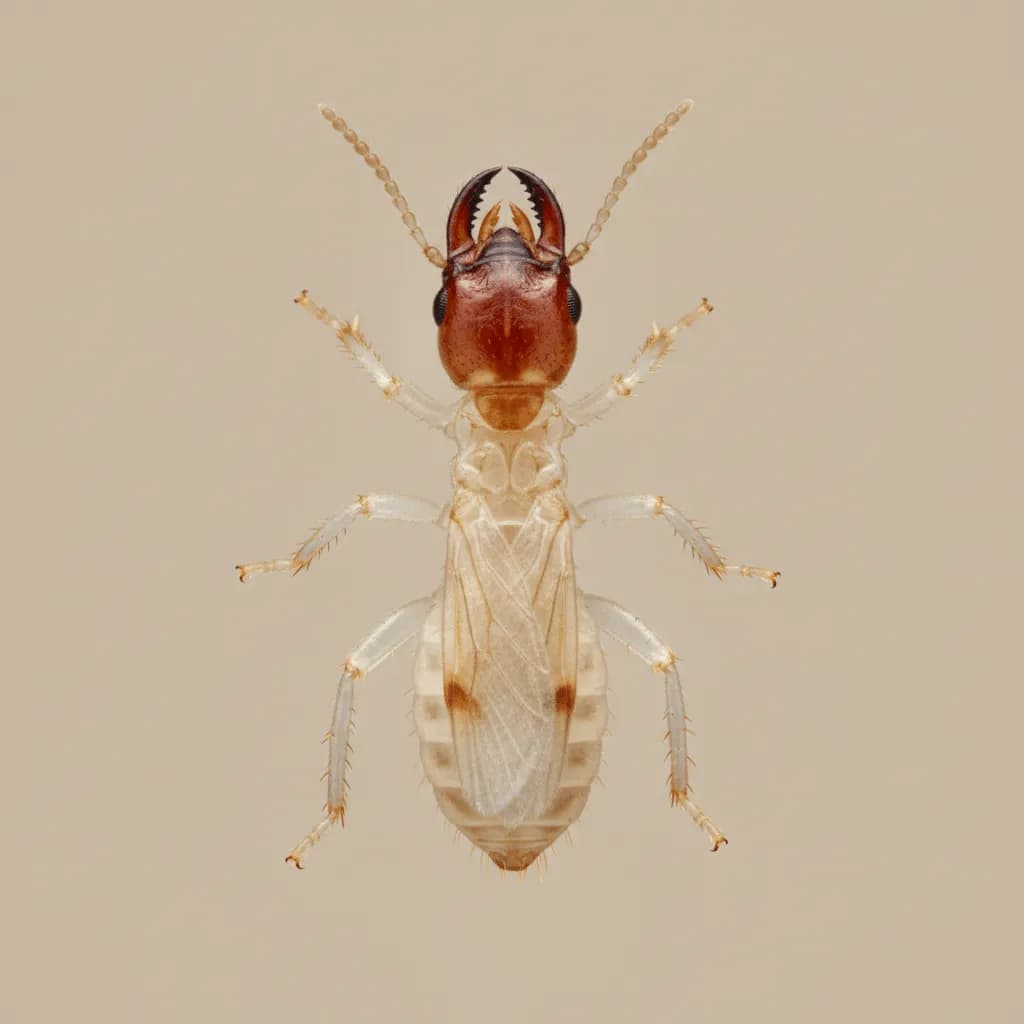
Formosan Subterranean Termite
Coptotermes formosanus
Also known as: Super Termite
The Formosan Subterranean Termite is the most destructive termite species in the United States. Originally from East Asia, it was introduced via shipping after World War II. Colonies can contain millions of workers - ten times the size of native subterranean termite colonies. They build carton nests inside wall voids that hold moisture, allowing them to survive without ground contact.
Identification
Size
5-6 mm (workers)
Color
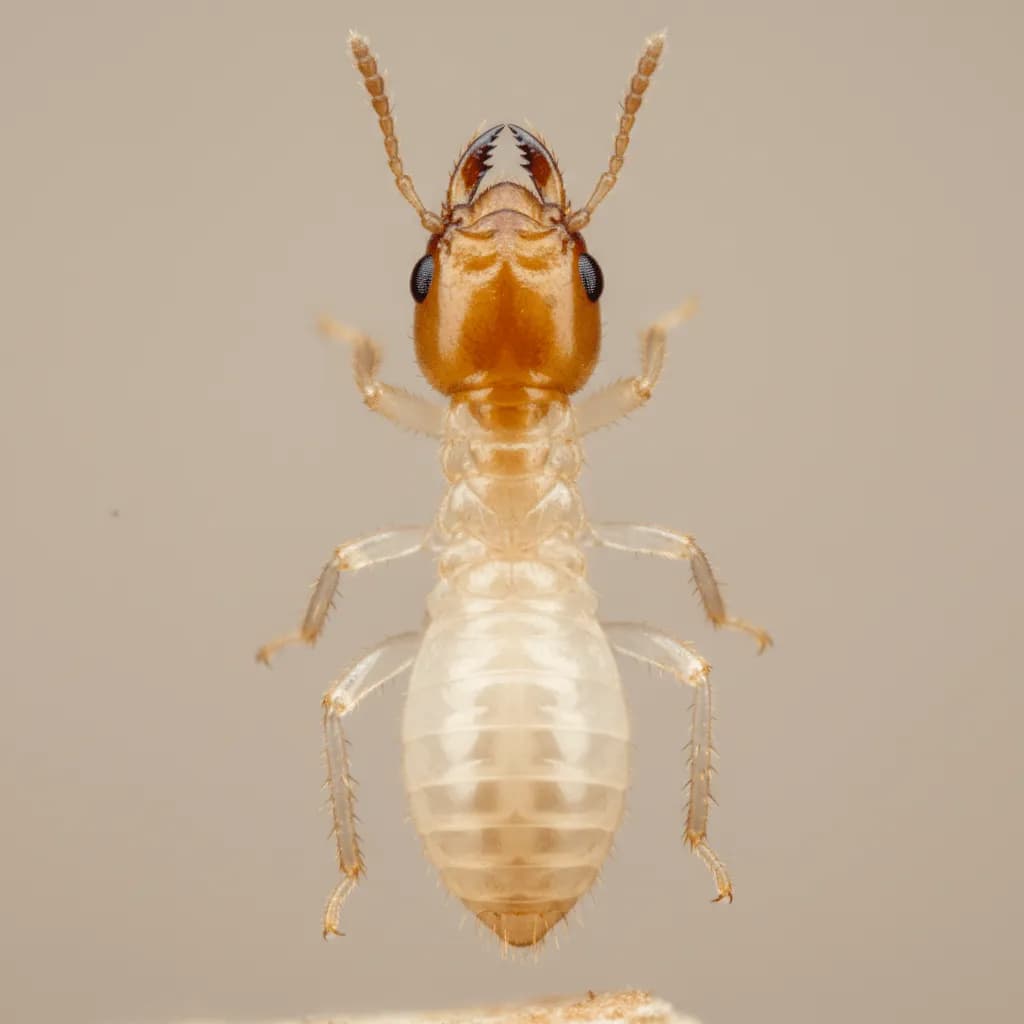
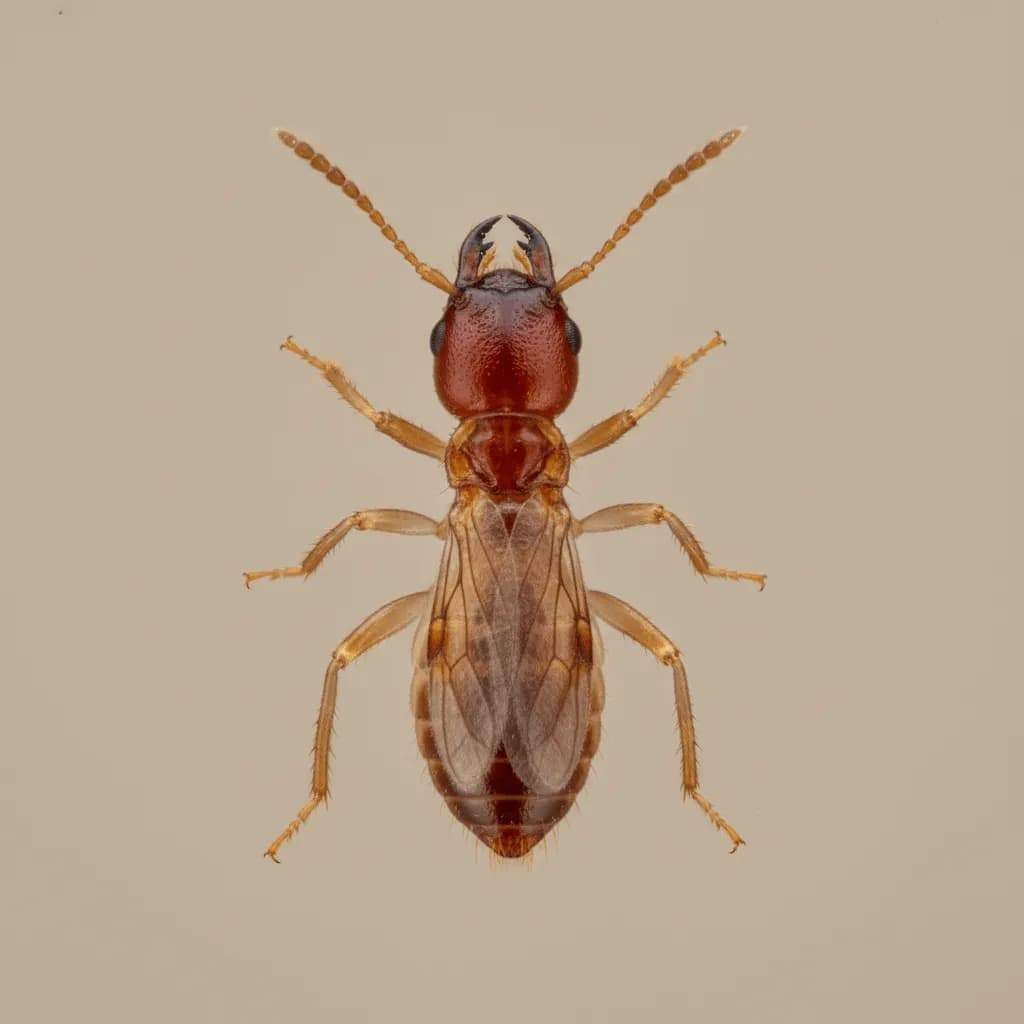
Workers are cream-colored; swarmers are yellowish-brown with hairy wings
Key Trait
Builds carton nests (hardened muddy material) inside walls that retain moisture, allowing colonies to live above ground without soil contact.
Behavior & Habitat
Extremely aggressive feeders that consume wood at a much faster rate than native termites. Workers build carton nests from soil, wood, and fecal material that can span entire wall cavities. Massive swarming events occur on warm, humid evenings from late April through June.
Habitat: Soil and above-ground carton nests in wall voids, flat roofs, and tree trunks. Common in the Gulf Coast states and Hawaii. Infestations can occur high in a building because carton nests provide their own moisture.
Diet: Cellulose in wood, paper, cardboard, and living trees.
Signs of Infestation
- Massive evening swarms of yellowish termites around lights in late spring
- Large mud tubes on exterior walls and in crawl spaces
- Soft, moist spots in walls indicating carton nest material behind the surface
- Severely damaged wood that appears layered and honeycombed
- Damaged living trees with hollowed trunks
Risks & Damage
Can cause severe structural damage in as little as two years due to colony size and aggressive feeding rate.
Prevention Tips
- 1.Install and maintain a professional termite monitoring and baiting system
- 2.Ensure proper drainage and eliminate standing water near the foundation
- 3.Remove dead trees and stumps from the property
- 4.Have annual professional termite inspections with a focus on Formosan activity
- 5.Seal gaps in roofing and siding that could allow aerial colony establishment
Why DIY Treatment Often Falls Short
Formosan termite colonies are massive, often containing millions of workers, and their ability to build above-ground carton nests means they can infest areas far from the soil. No consumer product can address a colony of this scale. Professional equipment and expertise are essential.
Professional Treatment
Treatment requires a comprehensive approach combining liquid termiticide barriers around the entire structure with bait systems to target the colony. Carton nests must be located and treated directly. In severe cases, fumigation of the structure may be necessary. Annual monitoring is critical.
Frequently Asked Questions
Why are Formosan termites called super termites?
Can Formosan termites live without soil contact?
Where are Formosan termites found in the US?
Need Help With Formosan subterranean termite?
If you're seeing signs of formosan subterranean termite in or around your home, professional treatment is the fastest way to stop the problem. Lotus Pest Control offers free inspections to identify the issue and recommend the right solution.
At a Glance
- Category
- Termites
- Scientific Name
- Coptotermes formosanus
- Size
- 5-6 mm (workers)
- Color
- Workers are cream-colored; swarmers are yellowish-brown with hairy wings
- Key Trait
- Builds carton nests (hardened muddy material) inside walls that retain moisture, allowing colonies to live above ground without soil contact.
- Regions
- Southeast, South Central, Mid Atlantic
- Threat Level
- Very High
- Risk Types
- structural
- Seasonal Activity
- MarAprMayJunJulAugSepOctNovDecJanFebnonelowmoderatehighpeak