

Groundhog
Marmota monax
Also known as: Woodchuck, Whistle Pig, Land Beaver
The Groundhog is the largest member of the squirrel family in the eastern United States. Its extensive burrow systems, which can span 14 meters or more with multiple chambers and exits, cause serious damage to foundations, farm equipment, retaining walls, and agricultural fields. Groundhogs are voracious herbivores capable of devastating home gardens.
Identification
Size
400-650 mm body; 2-6 kg weight
Color
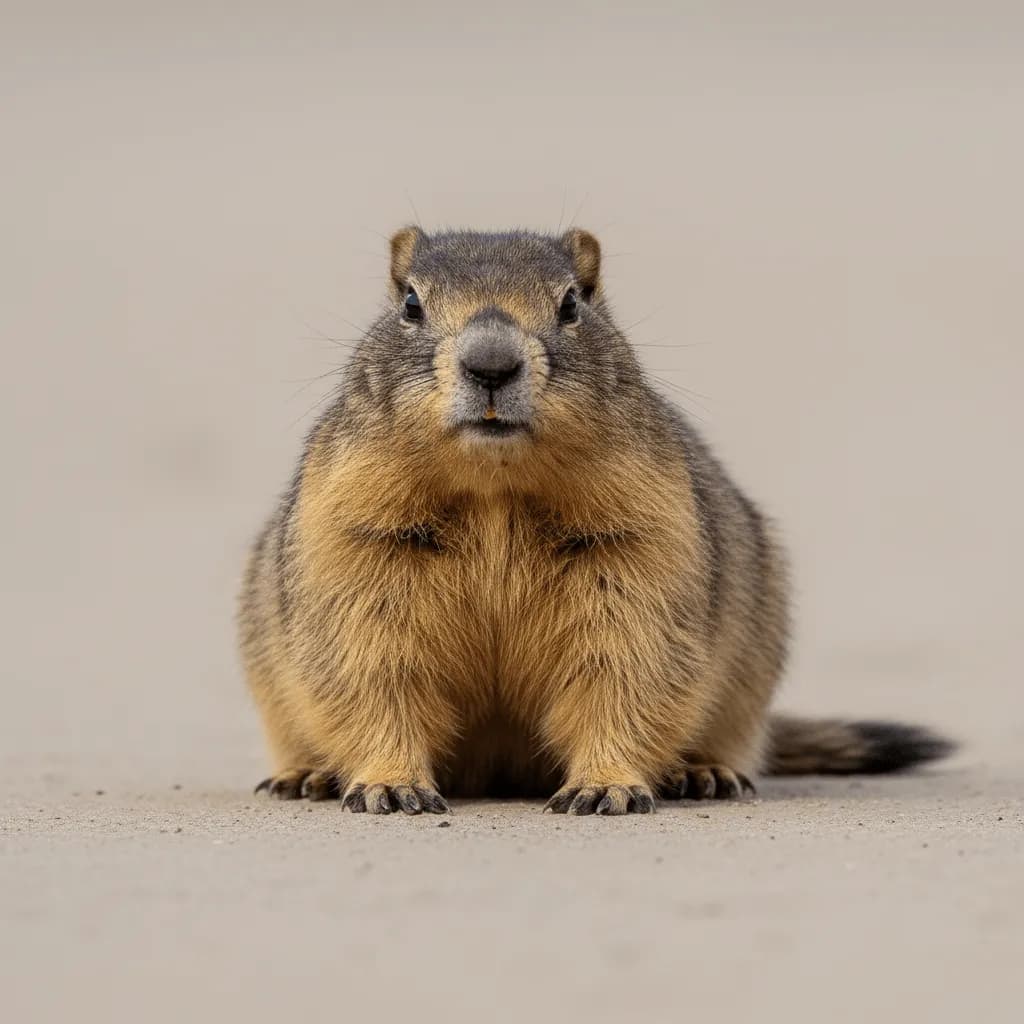
Grizzled brown with a frosted appearance; darker feet and face; lighter underside
Key Trait
Stocky, heavy-bodied ground squirrel with short, powerful legs adapted for digging; short, bushy tail; large burrow mounds with crescent-shaped excavated soil piles.
Behavior & Habitat
Diurnal. True hibernator - enters deep torpor from October through February. Digs extensive burrow systems with main entrances marked by large mounds of excavated earth. Capable of moving over 300 kg of soil for a single burrow. Excellent swimmer and can climb trees and fences.
Habitat: Fields, meadows, forest edges, suburban yards, along foundations, under sheds, and in agricultural areas. Prefers areas with both open foraging space and nearby cover.
Diet: Grasses, clover, alfalfa, dandelions, garden vegetables (especially beans, peas, squash, and lettuce), and occasional insects and snails.
Signs of Infestation
- Large burrow entrances (15-30 cm diameter) with crescent-shaped mounds of excavated soil
- Extensive feeding damage to garden vegetables, with plants cleanly bitten off near the base
- Worn pathways between the burrow entrance and feeding areas
Risks & Damage
Massive burrow systems undermine foundations, retaining walls, driveways, and pool decks, causing serious settling and collapse risk.
Devastating to home gardens and small farms; consumes large quantities of vegetables and field crops.
Burrow mounds and excavated soil damage lawns and create tripping hazards.
Prevention Tips
- 1.Install buried fencing around gardens - at least 90 cm tall with 30 cm bent outward underground
- 2.Fill and monitor abandoned burrow entrances to detect re-occupation early
- 3.Remove dense brush and woodpiles that provide cover near vulnerable areas
Why DIY Treatment Often Falls Short
Groundhog burrows are deep and extensive, with multiple exits. Filling one entrance is ineffective. Fumigants require identifying all exits to work. Fencing that is not properly buried is quickly dug under.
Professional Treatment
Professionals use a combination of live trapping and burrow fumigation. Comprehensive exclusion fencing is installed around gardens and critical structures. Burrow systems are excavated or collapsed after the animals are removed.


Frequently Asked Questions
How much damage can a groundhog burrow cause?
Can a groundhog climb my garden fence?
When do groundhogs hibernate?
Need Help With Groundhog?
If you're seeing signs of groundhog in or around your home, professional treatment is the fastest way to stop the problem. Lotus Pest Control offers free inspections to identify the issue and recommend the right solution.
At a Glance
- Category
- Wildlife
- Scientific Name
- Marmota monax
- Size
- 400-650 mm body; 2-6 kg weight
- Color
- Grizzled brown with a frosted appearance; darker feet and face; lighter underside
- Key Trait
- Stocky, heavy-bodied ground squirrel with short, powerful legs adapted for digging; short, bushy tail; large burrow mounds with crescent-shaped excavated soil piles.
- Regions
- Northeast, Mid Atlantic, Midwest, Southeast, Great Plains
- Threat Level
- Moderate
- Risk Types
- structuralagriculturallawn
- Seasonal Activity
- MarAprMayJunJulAugSepOctNovDecJanFebnonelowmoderatehighpeak