
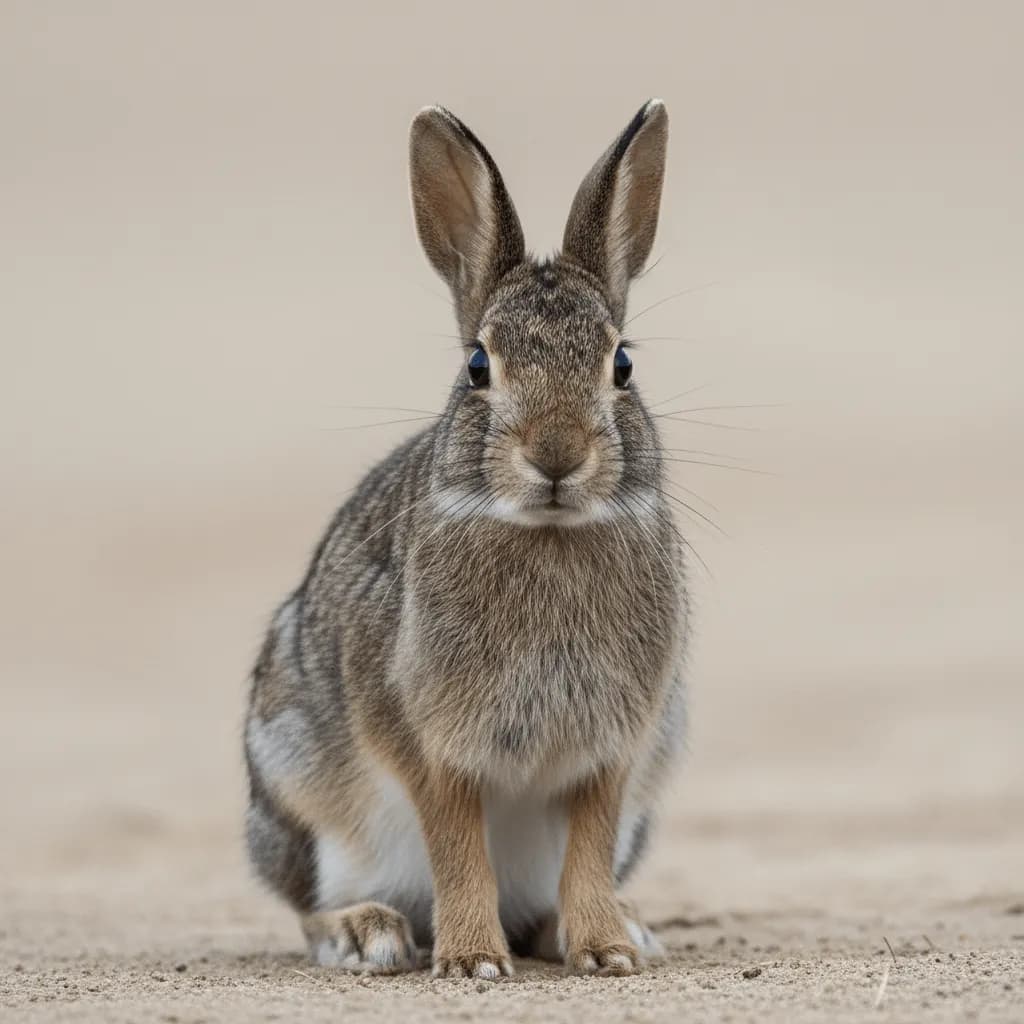
Eastern Cottontail
Sylvilagus floridanus
Also known as: Cottontail Rabbit, Cottontail
The Eastern Cottontail is the most common rabbit in North America and a major garden and landscape pest. It reproduces rapidly, with females producing up to 5 litters per year. Cottontails cause extensive damage to ornamental plantings, vegetable gardens, and young trees by gnawing bark and clipping stems.
Identification
Size
360-430 mm body; 0.8-1.5 kg weight
Color
Gray-brown agouti fur with a reddish-brown nape; white cottontail; white underside
Key Trait
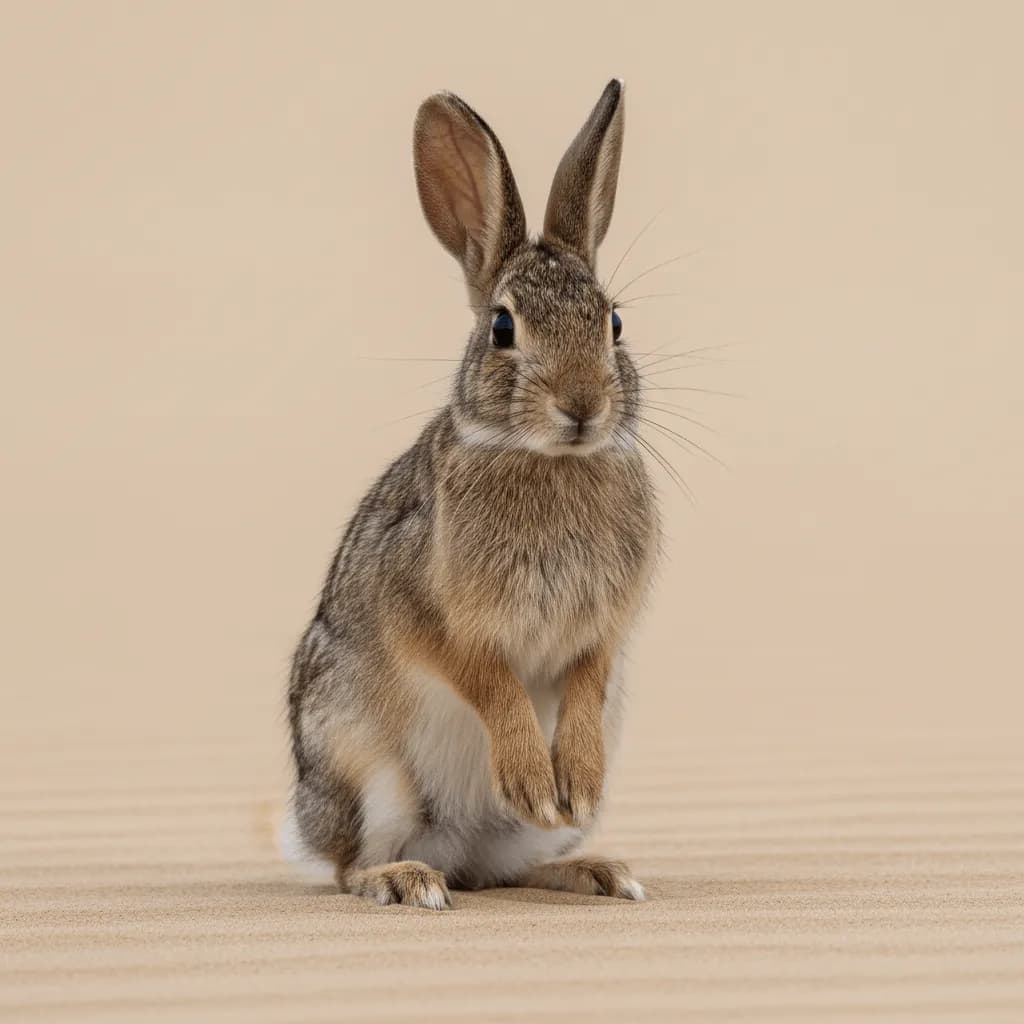
Conspicuous white, fluffy cottontail; large hind feet; long ears held upright; freezes motionless when threatened before bolting in a zigzag pattern.
Behavior & Habitat
Crepuscular (most active at dawn and dusk). Does not dig burrows but uses shallow depressions (forms) in dense cover. Females nest in shallow scrapes lined with fur and grass. Freezes when threatened, relying on camouflage, then bolts in a rapid zigzag if approached closely.
Habitat: Fields, meadows, brushy areas, suburban yards, gardens, and park edges. Uses dense shrubs, brush piles, and tall grass for cover.
Diet: Grasses, clover, garden vegetables, flower bulbs, and bark of young trees and shrubs during winter.
Signs of Infestation
- Clean, angled cuts on plant stems and flower stalks, as if clipped with scissors, at ground level to 50 cm height
- Small, round droppings (pea-sized) scattered on lawns and in garden beds
- Bark gnawed off young trees and shrubs in winter, often in a clean band up to 50 cm high
Risks & Damage
Destroys vegetable gardens, flower beds, and young crop plantings.
Gnaws bark from young trees and ornamental shrubs, often girdling and killing them in winter.
Carries tularemia (rabbit fever), transmissible through ticks, contact with carcasses, or rarely, through contaminated water.
Prevention Tips
- 1.Install chicken wire fencing (at least 90 cm tall) around vegetable gardens, buried 10 cm underground
- 2.Wrap young tree trunks with hardware cloth or tree guards from ground level to above the snow line
- 3.Remove brush piles and dense low cover near vulnerable plantings
Why DIY Treatment Often Falls Short
Rabbits reproduce extremely rapidly - a single pair can produce 25+ offspring per year. Without exclusion fencing, repellents provide only temporary relief as rabbits habituate to them. Trapping alone cannot keep pace with reproduction.
Professional Treatment
Professionals install rabbit-proof fencing around gardens and vulnerable plantings. Habitat modification reduces cover near target areas. Where local regulations permit, population management programs may be implemented.
Frequently Asked Questions
How fast do cottontails reproduce?
Will my dog keep rabbits away?
Do repellents work on rabbits?
Need Help With Eastern cottontail?
If you're seeing signs of eastern cottontail in or around your home, professional treatment is the fastest way to stop the problem. Lotus Pest Control offers free inspections to identify the issue and recommend the right solution.
At a Glance
- Category
- Wildlife
- Scientific Name
- Sylvilagus floridanus
- Size
- 360-430 mm body; 0.8-1.5 kg weight
- Color
- Gray-brown agouti fur with a reddish-brown nape; white cottontail; white underside
- Key Trait
- Conspicuous white, fluffy cottontail; large hind feet; long ears held upright; freezes motionless when threatened before bolting in a zigzag pattern.
- Regions
- Northeast, Midwest, Mid Atlantic, Southeast, Great Plains, Gulf Coast, Southwest
- Threat Level
- Low
- Risk Types
- agriculturallawnnuisance
- Seasonal Activity
- MarAprMayJunJulAugSepOctNovDecJanFebnonelowmoderatehighpeak