
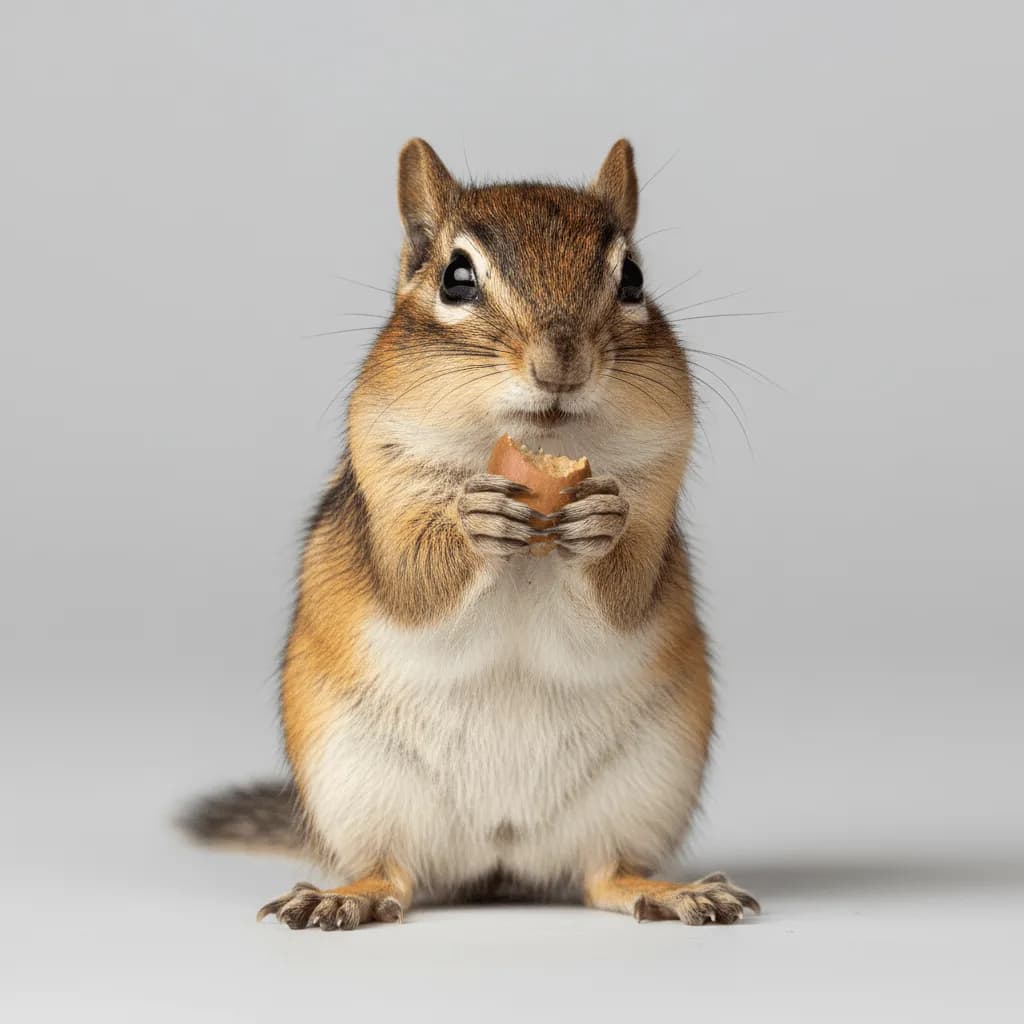
Eastern Chipmunk
Tamias striatus
Also known as: Chipmunk, Chippy, Ground Squirrel
The Eastern Chipmunk is a small, burrowing rodent found throughout eastern North America. While charming in appearance, its extensive burrow systems can undermine foundations, patios, retaining walls, and walkways. Chipmunks also raid gardens and birdseed supplies and can carry fleas, ticks, and occasionally plague bacteria.
Identification
Size
130-150 mm body; tail adds 70-100 mm
Color
Reddish-brown with five dark-brown and two light stripes on the back; stripes extend across the face; creamy underside
Key Trait
Small size with bold facial stripes extending through and below the eye; cheek pouches for carrying food; distinct 'chip-chip-chip' alarm call.
Behavior & Habitat
Diurnal and solitary. Digs burrow systems up to 3.5 meters long with multiple chambers for food storage, nesting, and waste. Cheek pouches allow transport of large quantities of seeds and nuts to underground caches. Enters a light torpor in winter but wakes frequently to feed from caches.
Habitat: Deciduous forests, forest edges, stone walls, gardens, and suburban yards with ground cover. Burrows along foundations, sidewalks, retaining walls, and under patios.
Diet: Seeds, nuts, acorns, berries, mushrooms, insects, bulbs, and birdseed. Caches enormous quantities of food underground.
Signs of Infestation
- Small, clean burrow openings (about 5 cm diameter) near foundations, walkways, or retaining walls - with no excavated soil pile
- Rapid 'chip-chip-chip' alarm calls from stone walls or garden borders
- Birdseed disappearing rapidly from ground-level feeders
Risks & Damage
Burrow systems undermine foundations, sidewalks, retaining walls, and patio pavers, causing settling and cracking.
Digs up flower bulbs and raids gardens; burrow entrances are unsightly in manicured landscapes.
Carries fleas and ticks; occasional vector for plague (Yersinia pestis) in western populations.
Prevention Tips
- 1.Remove ground-level bird feeders or use spill-proof designs
- 2.Install L-shaped hardware cloth barriers along foundations to block burrowing
- 3.Clear dense ground cover and leaf litter from around the foundation
Why DIY Treatment Often Falls Short
Chipmunk burrows have concealed entrances (the chipmunk carries excavated soil away), making it difficult to find and fill all openings. Populations rebound quickly, and trapping alone without habitat modification leads to rapid re-infestation.
Professional Treatment
Professionals use targeted trapping and burrow treatment combined with habitat modification - removing ground cover, sealing foundation gaps, and installing subsurface exclusion barriers. Gravel borders discourage burrowing near foundations.
Related Pests
Frequently Asked Questions
Can chipmunks damage my foundation?
Where does the dirt go when chipmunks dig?
Do chipmunks hibernate?
Need Help With Eastern chipmunk?
If you're seeing signs of eastern chipmunk in or around your home, professional treatment is the fastest way to stop the problem. Lotus Pest Control offers free inspections to identify the issue and recommend the right solution.
At a Glance
- Category
- Wildlife
- Scientific Name
- Tamias striatus
- Size
- 130-150 mm body; tail adds 70-100 mm
- Color
- Reddish-brown with five dark-brown and two light stripes on the back; stripes extend across the face; creamy underside
- Key Trait
- Small size with bold facial stripes extending through and below the eye; cheek pouches for carrying food; distinct 'chip-chip-chip' alarm call.
- Regions
- Northeast, Mid Atlantic, Midwest, Southeast, Great Plains
- Threat Level
- Low
- Risk Types
- structurallawnnuisance
- Seasonal Activity
- MarAprMayJunJulAugSepOctNovDecJanFebnonelowmoderatehighpeak